
Drywall Contractor & Drywall Repair in Westfield, TX | Spring Drywall Co.
Spring Drywall Co. is a drywall contractor serving Westfield, Texas. We handle drywall repair on walls already standing, cutting out damaged sections, fitting new gypsum board and finishing the seams with joint compound. For ceilings, we remove old sprayed texture, scrape the coating away and skim the board underneath until it is flat and ready for paint. If you are adding a room or opening up an existing space, we handle the framing, drywall installation and hanging from start to finish. We also install specialty board for damp rooms, repair older plaster, and prime and paint the surfaces we finish.
Westfield has a mix of older wall systems, later additions and newer subdivision construction, so we check what is behind the finish before pricing any work that opens a wall. Because each wall already has its own finished surface, we judge the repair by how well the new work matches that finish, not just by the patch itself.
We finish drywall to GA-214 standards, using either a Level 4 finish or a Level 5 skim, and our crews hang board in accordance with ASTM C840.
Westfield is part of the area we serve as a sheetrock contractor based in Spring, covering communities across north Harris County and Montgomery County. Call us at (936) 286-6045 or send the details through our quote form and tell us what the wall looks like now.
Why Choose Us
What Westfield Property Owners Get From Spring Drywall Co., a Drywall Contractor
Westfield is largely built out, so most drywall work here involves repairing existing walls rather than hanging new board in new construction. The goal is to leave the repaired area looking like one continuous surface again, which takes more time than new work and is the kind of work we have built the company around. We are insured, and we have worked as a drywall contractor for 15 years.
Owners in Westfield call us as a sheetrock contractor for everything from a single patched ceiling to an entire floor of walls, and every job comes with the same three things, all settled before you agree to the work.
- Your on-site estimate is free, and you receive the full price in writing.
- Each phase of the job appears on its own line of the estimate, so you can see exactly what each part costs.
- Financing is available for larger jobs involving several rooms or a full ceiling.
We also provide drywall services in neighboring Bammel.
Drywall Contractor Jobs We Handle in Westfield
Most of the drywall work we do in Westfield, Texas, starts with the walls and ceilings already in place. We handle twenty-four types of jobs here, grouped below by the part of the house they involve.
Drywall Repair
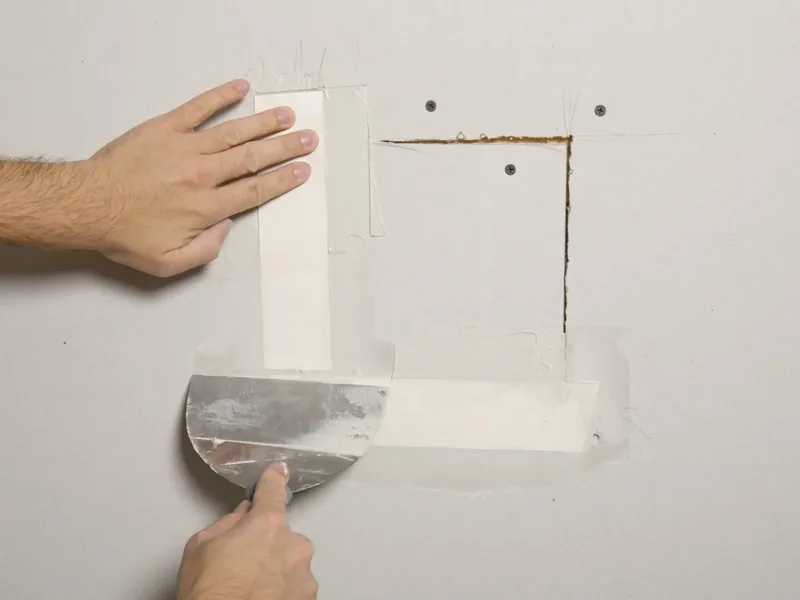
A hole, dented corner or split seam is standard drywall repair, or sheetrock repair. We cut the damaged area back to sound gypsum board, cover the joint with paper tape and float it with joint compound until the patch sits flat with the surrounding wall. Nail pops, where a fastener head pushes a bump through the finish, and ridges along a seam are signs of wear. Because the ground under Westfield swells and shrinks with the seasons, a crack that keeps reopening in the same place needs to be treated differently.
Drywall Installation
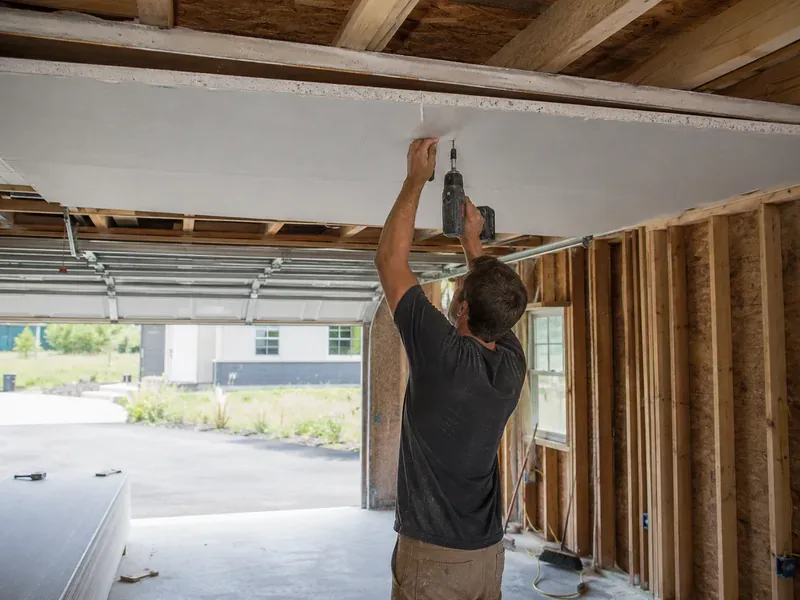
On the newer streets around Westfield, new board is drywall installation, and we hang and fasten it to ASTM C840. Ceilings go up first, seams are staggered, and each fastener head is set just below the surface without tearing the paper facing. Sheetrock installation includes a Level 4 finish, which is the standard finish for a painted wall you see every day. A Level 5 skim coat over the entire surface is priced separately rather than left as a vague allowance.
Water Damage Drywall Repair
Water from a Gulf storm or a failed supply line soaks into drywall and stays there until the damaged material is opened up. Our drywall repair starts by removing the water-damaged board and drying the assembly behind it. Before we close the wall, we compare moisture readings from the exposed framing and surrounding materials with readings from areas of the house that are known to be dry. Where the room calls for it, mold-resistant board goes back in. Where Texas law requires licensed mold assessment or remediation, that work is handled by a licensed mold professional first. The Texas Department of Licensing and Regulation licenses that work.
Drywall Finishing & Texturing
Finishing is the stage where joint compound becomes the surface you actually see. We tape, coat and sand every seam, inside corner and fastener head before any texture goes on, matching an existing finish just as carefully as we apply a new one. A properly taped and sanded wall takes texture evenly, while poor finishing shows through every pass. Every drywall repair has two parts: the board itself and the finish that goes over it.
Commercial Drywall
Stores, offices and other business interiors need the same basic walls and ceilings as a house, built on metal stud framing, which is the same wall carried on steel studs instead of wooden ones. As a drywall contractor working inside occupied spaces, we frame, hang and finish around your business schedule, not ours. We also install sheeting and tape to keep dust contained, with both containment and cleanup included in the base scope.
Ceilings & Popcorn Ceiling Removal
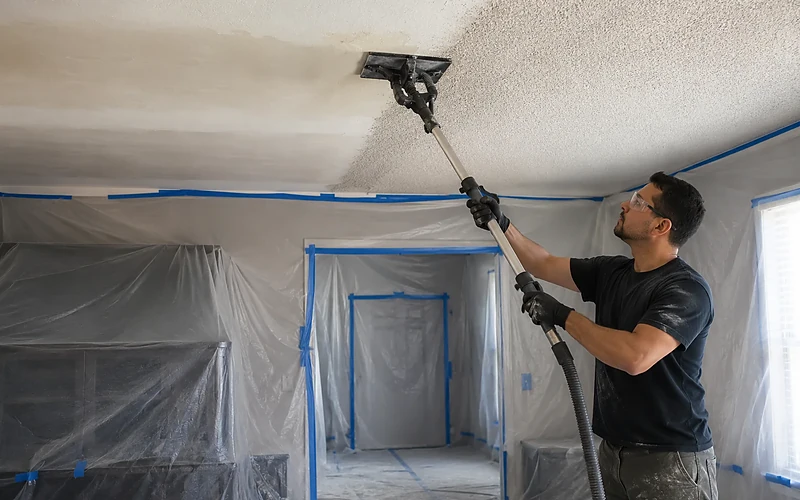
Ceilings are a separate part of the work. We handle ceiling drywall repair and replacement when a panel or seam has failed, ceiling drywall installation for rooms being added or opened up, popcorn ceiling removal, and acoustical ceilings built with grid and tile. Popcorn texture or other suspect material is tested by a qualified asbestos professional when its age or condition warrants testing before disturbance, and we scrape only material the results clear as safe. Where wet texture will be sprayed, the ceiling needs board rated for the spacing of the framing above it, and sag-resistant ceiling board is the right choice.
Drywall Types & Specialty Systems
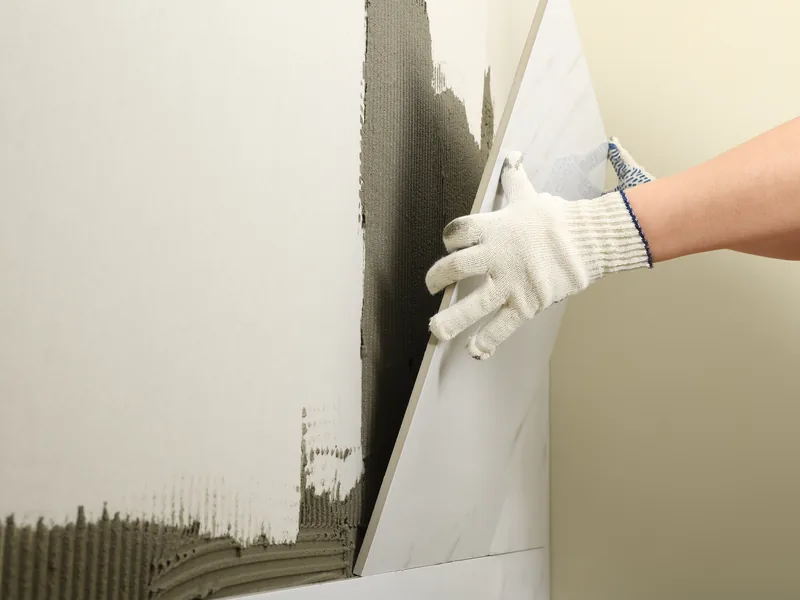
The board we use depends on what the room needs. We install moisture- and mold-resistant board in bathrooms outside the shower, laundry rooms and kitchens, where the air is damp but the wall does not take direct water. Drywall has a wet-area limit, so tub and shower zones that get wet directly use an approved tile-backer board instead. We use fire-rated drywall systems where a separation between spaces requires one. The fire rating belongs to the full tested fire-rated assembly, including framing, fasteners, layers, and joints. For soundproof drywall installation, we build the wall itself to reduce sound transmission, layering board over framing designed to carry the full assembly.
New Walls, From the Studs
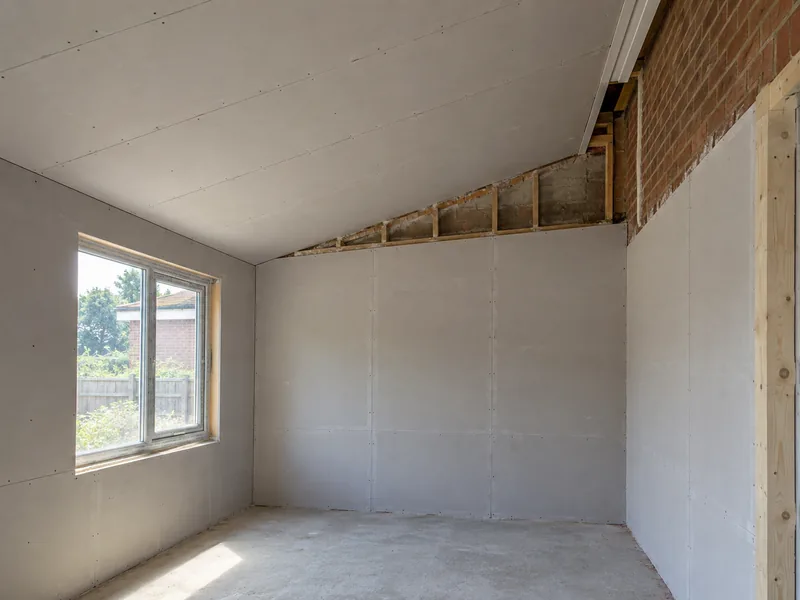
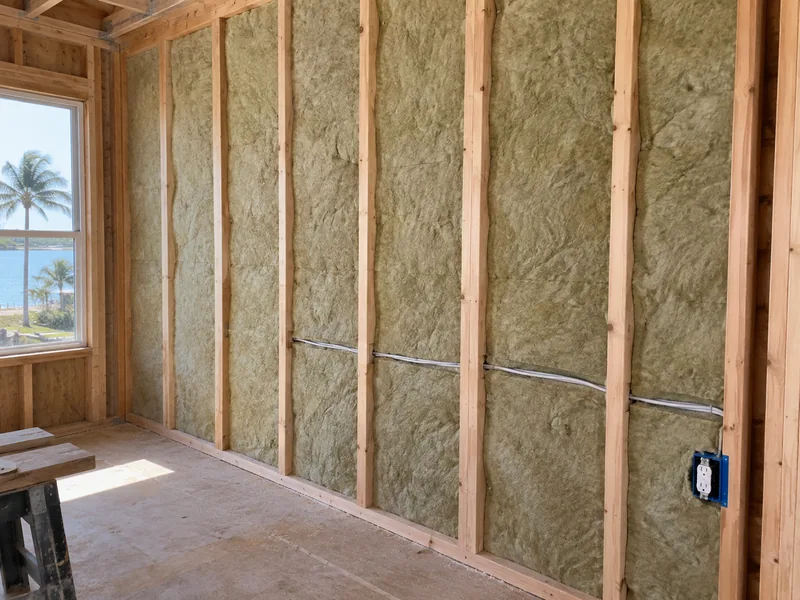
Closing in a garage or bonus room is the common version of this work on those newer streets, while a new house or addition requires the same process on a larger scale. We handle that with new construction drywall, use partition wall installation to divide rooms, and frame with metal studs where steel is better suited to the wall than wood. Insulation goes in before drywall installation because it fills the cavities between open studs; once sheetrock installation closes the wall, adding insulation means opening it again.
Detail and Surface Work
Smaller jobs complete the room and take care of the details around the main drywall work. Custom drywall and architectural features, along with drywall soffits and bulkheads, create the boxed-in shapes used for ceiling steps or to conceal ductwork. With corner bead installation and repair we put a straight, clean edge back on a damaged corner. Plaster repair, wallpaper removal, and rehanging or reattaching loose board are all repair work, while access panel installation leaves a small door where something behind the wall needs to remain reachable. We also handle drywall priming and painting, with primer used to even out how the finished wall takes paint.
What Drywall Work Costs in Westfield
Drywall repair cost in Westfield, Texas falls within established ranges. These prices reflect what the work runs here, not a quote for your specific job; we set your price after seeing the work in person.
- We patch a small to medium hole in the $200 to $600 range.
- We repair the drywall in one room in the $150 to $1,500 range.
- We repair a ceiling in the $400 to $1,300 range.
- We rebuild a wall after water damage in the $600 to $2,500 range.
- We hang, tape and finish new board to a Level 4 finish at $2.00 to $3.00 per square foot.
We price three parts of the work separately. Texture matching is its own line item rather than part of the patch, and matching an existing finish runs $150 to $350 because older textures take longer to reproduce. Your chosen finish also affects the price: a Level 4 finish coats the taped joints, while a Level 5 skim covers the entire surface and involves more material and labor. Where water has soaked a wall, we open the cavity and dry it before any new board goes up.

What Is Behind the Walls in Rail-Era and Oil-Boom Houses Along I-45
Westfield grew around the railroad beginning in the 1870s and expanded again after 1905 when the Humble oil field next door needed somewhere to put its workers, so homes along Interstate 45 were built across a much wider range of years than those in a single subdivision. A house facing I-45 and another three streets back can look identical at the surface while being built very differently underneath. No drywall contractor knows which wall system is in your house until the wall is opened.
In an older house, the surface behind the finish may be plaster, the traditional wall system applied in wet coats rather than hung in sheets, and plaster repair is different from patching gypsum board. You may also find gypsum board installed directly over an older surface during a remodel, which leaves that wall projecting farther into the room than the one beside it. An addition may be framed to a different depth than the room it connects to, so the wood framing, the wooden structure the wall is fastened to, sits farther back on one side of a doorway than the other. An older ceiling may also be built from a different material than the walls supporting it.
Before we price any work that requires cutting into a wall, we check three things first.
- What the surface is made of and whether a newer layer was installed over the original one.
- Whether the framing behind it still holds a screw firmly, since fasteners that worked in old lumber may not pull new board tight.
- How deep the framing sits where an addition meets the original room.
We price opening the wall separately from repairing what we find behind it, and your written estimate keeps those costs on separate lines so you can see which ones come from confirmed conditions and which are based on what we expect to find. Drywall repair and sheetrock repair in these houses are fully scoped after we open the wall, not before.
Drywall Contractor Work in the Communities Around Westfield
Westfield has no subdivision of its own, so the nearby communities that share Dekaney High School are the ones that define the area, including Cranbrook, Remington Ranch and Glen Abbey. The board behind the paint is similar across all three, but the finish over it varies, and that finish is what determines whether a repair blends in with the rest of the wall.
Cranbrook: Patching a Wall So the Repair Disappears
Cranbrook is the first of the three, and drywall repair is the main reason owners there call us. Cutting new board into the opening is the straightforward part of the job. When a sheetrock repair fails, it does not always crack; instead, a faint rectangle shows through whenever light moves across the wall.
Remington Ranch: Ceiling Repair and Replacement
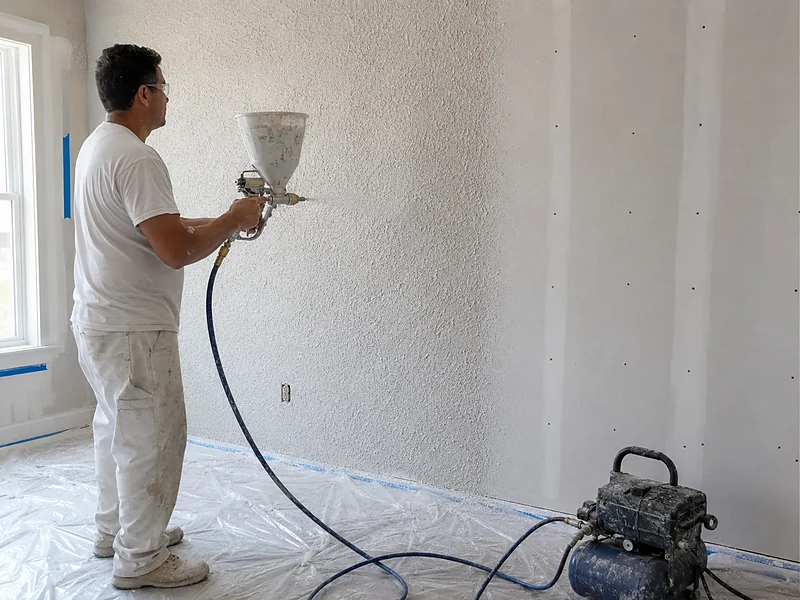
Remington Ranch sits between Interstate 45 and the Hardy Toll Road, an unincorporated community of about 2,100 single-family homes with first sales dating to 2004. Because the subdivision was built in one run, the same ceiling texture repeats from street to street. That helps with ceiling drywall repair, since the pattern we need to match is already overhead in the next room and often in the next house. We cut out the failed panel, repair or replace it, and then spray the new surface to match the rest of the ceiling.
Glen Abbey: Stripping Paper and Repainting the Wall Behind It
Glen Abbey is the third of the three. Where the board itself is sound, the work is in the finish over it, and old wallpaper rarely comes off cleanly. It leaves adhesive behind and pulls away patches of the drywall paper face as it is removed. We strip all of it, make the drywall repair the paper was hiding, then prepare the surface for the new finish. Our own crew primes the repairs and paints the room afterward, so you do not need to hire a second trade to finish the work we opened up.
Matching Orange Peel and Knockdown Across Westfield's Mixed Housing Stock
When we match a texture, we reproduce the finish already on your wall rather than choosing a new pattern from a list. Orange peel texture is a fine spatter that dries with the pitted look of citrus skin, while knockdown texture starts with that same spatter and is flattened with a blade into broader, mottled patches.
Both are common in Westfield, Texas, but the homes here were finished at different times by different crews. Two walls with the same texture name can look very different up close because the sprayer, the joint compound mix and the hand on the knife all affect the final surface. A drywall contractor who matches only the pattern name can leave a patch that still stands out from the hallway.
Knockdown is the harder of the two to match, and the difference comes down to weight rather than the pattern name. A heavier coat that firms up before the knife passes leaves broad, low peaks, while a thinner coat knocked down sooner creates smaller, tighter ones. We look at how heavily the original material was applied and how long it set, then adjust our own coat to match. Skip trowel texture, which is spread by hand so the blade skips and leaves bare gaps between the smears, is matched the same way.
Every drywall repair we make follows the same four steps, and each one is completed directly on your wall rather than on a shop bench.
- We spray test boards and adjust the mix until the sample matches the existing texture.
- We place that sample on the wall itself at the height and angle you normally view it from.
- We check it in the natural light the room gets through the day, not under a work lamp.
- We keep the sample until the paint is dry in case the finish changes as it cures.
Paint is the second half of the match. Fresh paint rarely blends invisibly into an older coat because the existing finish has faded unevenly over time, so stopping new paint at the edge of a patch leaves a brighter area that stands out. We usually carry the new coat from corner to corner across the entire wall, and your written estimate identifies exactly which walls are included before any sheetrock repair begins.
Permits for Drywall Work in Unincorporated Westfield
Westfield sits outside the limits of any city, which is what unincorporated means, so there is no city building department reviewing work at your address. Permitting is handled instead by Harris County through the Permits Office of the Harris County Engineering Department. That is the office a property owner in Westfield, Texas works with when a job requires approval, and since 2009 Harris County has required residential building permits for single-family and duplex homes in unincorporated areas. For commercial and multifamily buildings, the county enforces the construction codes it has adopted.
Routine drywall repair, replacement and refinishing generally do not require a permit because patching a hole, replacing board that was removed and recoating an existing surface restore the house without changing it. A drywall contractor is far more likely to work under a permit held by another trade than to pull one directly. That happens on projects that alter the building rather than simply restore what is already there.
- A remodel that moves, removes or adds a wall and changes the layout of the rooms.
- A garage, patio or porch that is enclosed and converted into heated living space.
- New wall and ceiling surfaces installed after structural, plumbing or electrical work is completed.
When your drywall work is part of a permitted project, we work under the permit you or your general contractor already holds and schedule our portion around the required inspections. A county permit stays with the property owner, and we do not apply for one in your name or on your behalf. Let us know during the estimate whether your project has an open permit so we will time the hanging, taping and finishing around the inspector's schedule.
FAQ
Westfield Drywall Questions, Answered
How big is too big for a drywall patch?
The size of the damaged area does not decide whether a patch is the right repair. A patch can span a stud, one of the vertical framing members behind the board, and where the opening has no solid support we add backing. We look instead at how far the damage extends, the condition of the surrounding board and where the nearest seams fall. In some cases, cutting back to a full section between seams makes the more reliable repair.
Can you match the texture that is already on my Westfield wall?
Usually, yes. What we will not do is price the match over the phone, because we base it on the actual finish on your wall during the free visit rather than on a description of it.
Do you work on plaster as well as drywall?
Yes, we handle plaster repair alongside gypsum board work. In an older Westfield house, the surface behind the paint may be plaster rather than drywall. A plaster wall does not need to be torn out just because it needs repair, and if one section is too damaged to save, we can replace only that area with board rather than treating the whole wall as an all-or-nothing job.
Do I need a permit for drywall work in Westfield?
Generally, no, not for ordinary drywall repair and refinishing. Because Westfield is unincorporated, permit questions go through Harris County rather than a city. What matters more is whether board work forms part of a larger remodel, because in that case it falls under the project's permit, which is held by the owner or general contractor.
Which areas around Westfield do you cover?
Westfield, and we also work as a drywall contractor in neighboring communities including Aldine, Klein and Humble. There is no trip charge anywhere within that footprint, so you pay for the drywall work, not the drive. We work Monday through Saturday. Call us at (936) 286-6045 or send the quote form, and we will come out and look at the wall.
Request Your Free Westfield Drywall Estimate From Spring Drywall Co.
Whether the wall is in one of Westfield's older homes or a subdivision built this century, the first step with Spring Drywall Co. is the same. We come to the property, inspect the wall or ceiling you want repaired, and price the work from what we see in person rather than from a description over the phone. The visit is free, and you receive a written estimate afterward. Call (936) 286-6045 or use our quote form for a clear, written price on your project.