
Water Damage Drywall Repair in Spring, TX: Classified, Dried and Rebuilt | Spring Drywall Co.
Spring Drywall Co., an insured drywall contractor, has handled water damage drywall repair across Spring, Texas and north Harris County for 15 years. For your wall or ceiling, the work covers three connected steps. We remove the soaked gypsum board, dry the cavity behind it, and rebuild and finish the area that came out.
A stain shows that something has already happened, so the first question is whether the source has been stopped, not how large the patch will be. Three sources account for most of what we open up here. Attic condensate drips from the air handlers standard in Spring slab-on-grade homes, slab leaks rise from under the floor, and storm water comes in from above.
Our drywall water damage repair follows named references rather than a judgment about how wet something looks. We classify the water under IICRC S500, take readings with a pin-type moisture meter, and work within the first 24 to 48 hours wherever possible.
We are insured, and mold work is not ours; we name who handles it instead. Across Spring and north Harris County, what you get is a wall closed back up on evidence rather than on appearance. Call (936) 286-6045 or use our quote form for a clear, written price on your project.
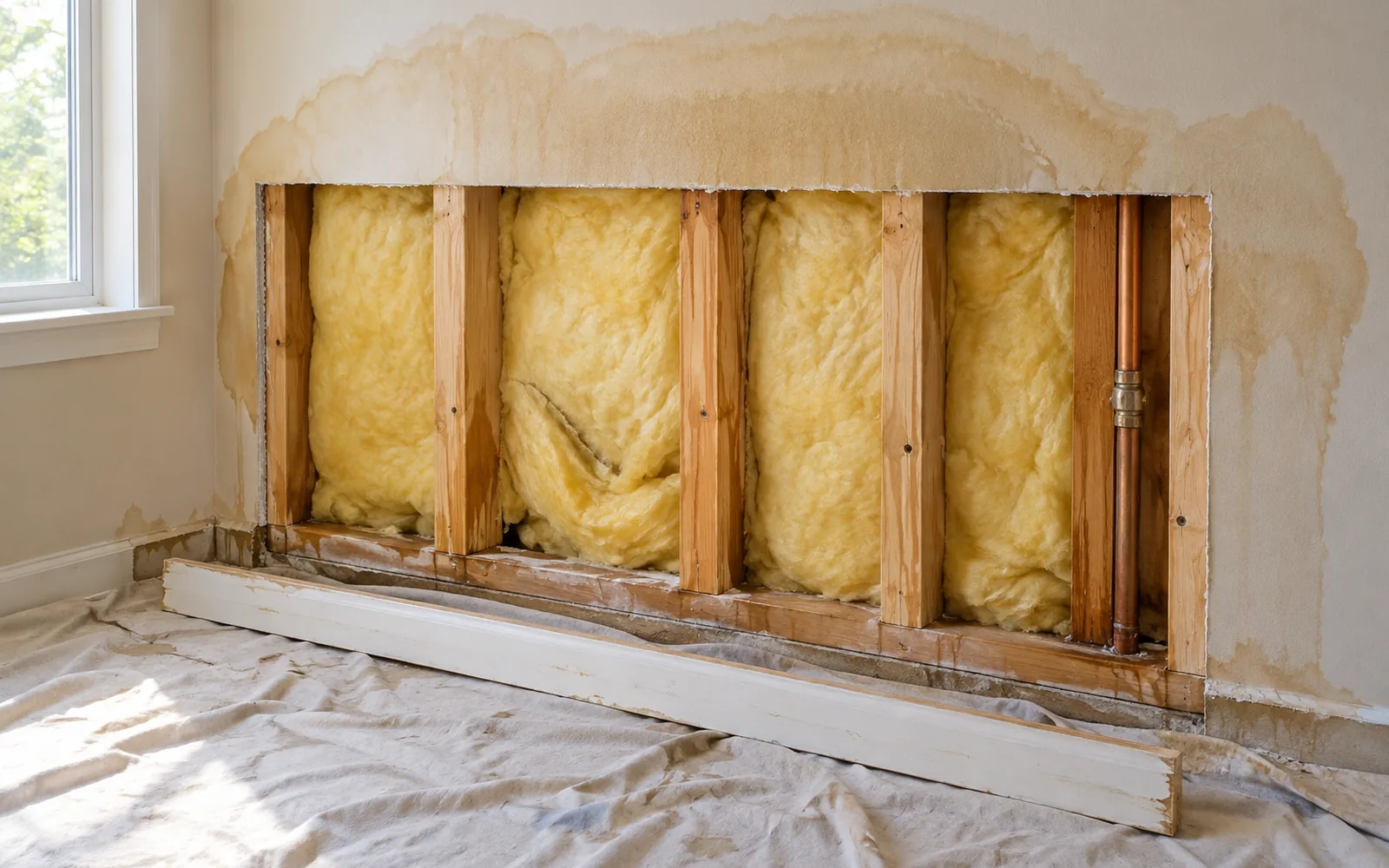
What Water Damage Drywall Repair Covers
We group water damage drywall repair by where the water came from. Each job involves removing wet board, drying the framing and cavity behind it, and closing the wall back up, with the source determining how far each step needs to go. A month of water weeping behind a wall leaves more work than an afternoon of rain, regardless of how the stains look. Choosing board for a damp bathroom, or patching a dry wall with nothing behind it, is separate work.
Condensate From the Air Handler Overhead
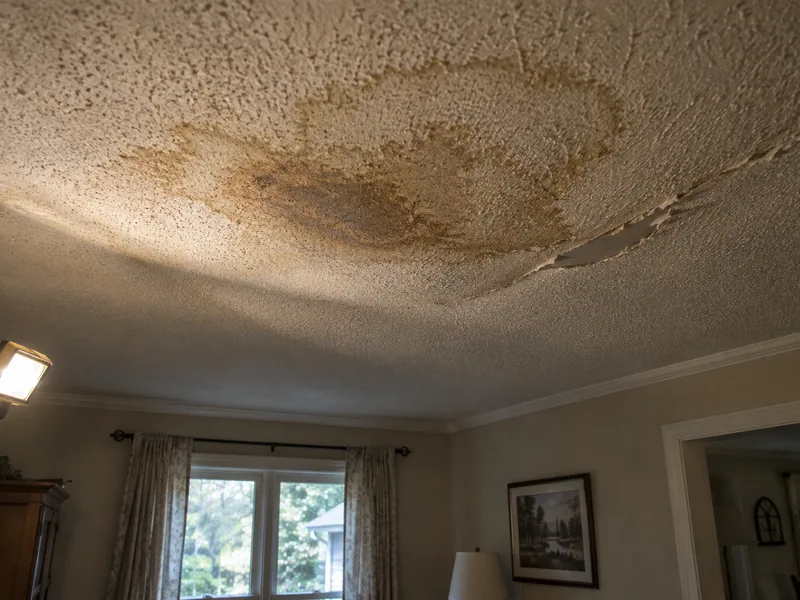
In most Spring houses, the air conditioner's indoor unit, the air handler, sits in the attic, and the water it pulls from the air leaves through a condensate drain line. Algae clogs that line, so AC condensate backs up into a secondary drain pan, where a float switch should shut the system off. When that switch fails, the first sign is a brown ring on the ceiling, away from the pan. An HVAC technician clears the source before we open the water damaged ceiling, which is heavy with soaked insulation.
A Slab Leak Coming Up the Wall
Houses in Spring, Texas mostly sit on a concrete slab with water supply lines run underneath it, so a failed line wets the wall from the bottom up. You would notice a damp baseboard, a warm patch on the floor, or a water bill that has climbed. Gypsum pulls water upward through its core against gravity, so the visible mark sits above the point where the water entered, while the bottom plate behind it is wetter still. A plumber repairs the slab leak first.
Storm Water That Came In From Outside
Two different storm events wet drywall here. Wind-driven rain enters through a roof opening or around a vent, reaches the upper wall or ceiling, and runs down, so the storm damage starts at the top. The other is water rising across the floor, as Hurricane Harvey did in homes across Spring and the Klein area in 2017, leaving flood damaged drywall wet from the baseboard upward. A roofer closes the opening first.
Supply Lines, Water Heaters and Appliances Inside the House
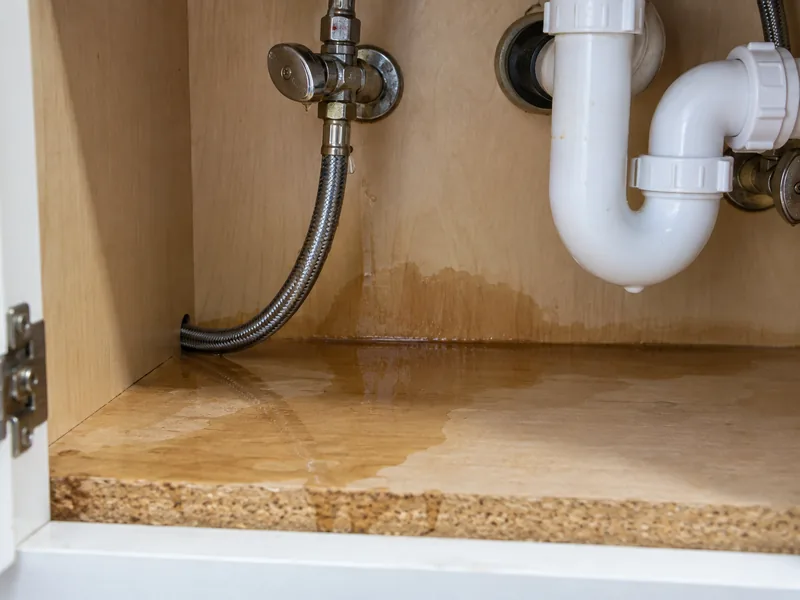
Indoor failures come from the plumbing and appliances that carry water. A burst supply line behind a wall, a water heater split at the tank, a washing machine hose, and a dishwasher or refrigerator line all fall into that group, and you usually find the problem the same day. How long the water ran, rather than how much arrived, sets the size of the repair, while a slow weep behind a cabinet can continue for months before we open the wall and find the mark.
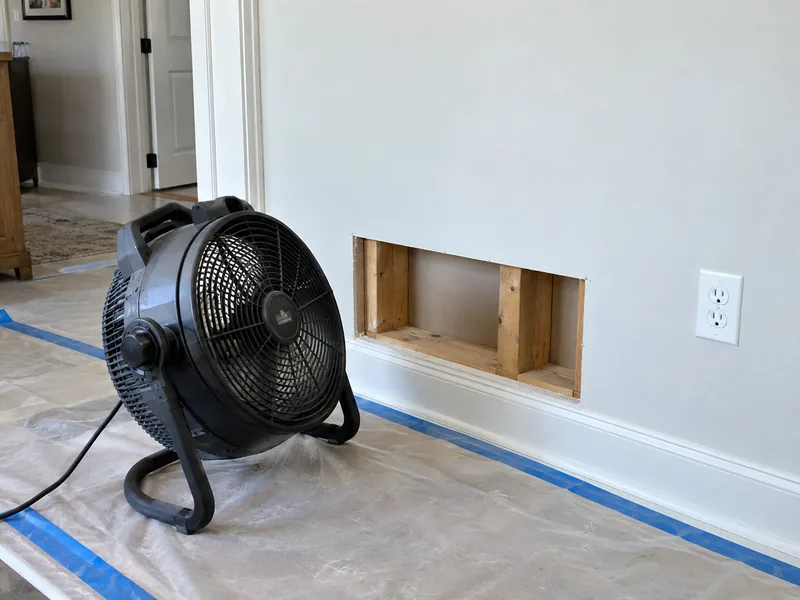
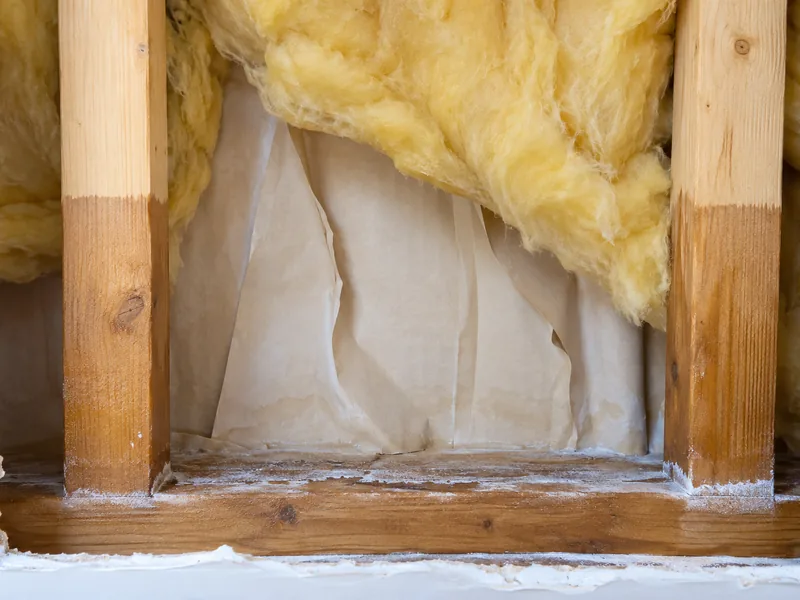
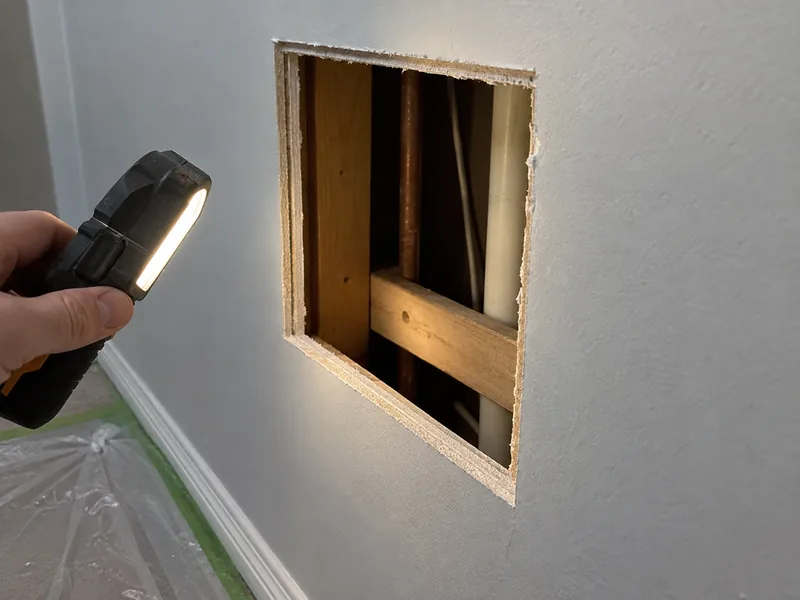
Clean Water, Gray Water and the Category That Decides Whether Board Can Dry
We classify the water before deciding whether your walls can be dried or need to come out. IICRC S500 is the published standard that sets the water damage categories, sorting water by its source and by how long it sat before it was found. We cite that standard but hold no certification in it. Clean water that has stood for days is no longer clean water, and drying board that should have been removed is the costly mistake on a wet job.
Category 1: Clean Water, Caught Early
Category 1 water comes from a sanitary source, which means it carried no contamination when it left the source, not that it was drinkable. Supply lines, water heaters and clean overflows all release it. Board wet by Category 1 water can often be dried in place if it is still sound, with no swelling in the gypsum core, no sag, and the face paper still bonded. The EPA puts the drying window for wet materials at 24 to 48 hours, so how long your water sat matters more than how much arrived. We open the wall either way to dry the cavity, the hollow space between the studs where the insulation and framing sit.
Category 2 and Category 3: When Drying Is Off the Table
Category 2 and Category 3 are defined by what is in the water, not by how much arrived. Water that was significantly contaminated at its source is Category 2. Category 3 is grossly contaminated water and includes sewage backed up past a trap and rising water from a creek or bayou. Gypsum board is porous, so its core absorbs whatever it stands in and holds it. Drying removes the water but leaves the contamination in the board, so both categories call for board replacement. We are not a restoration contractor, so on a Category 3 job we ask one to clean the room before we rebuild.
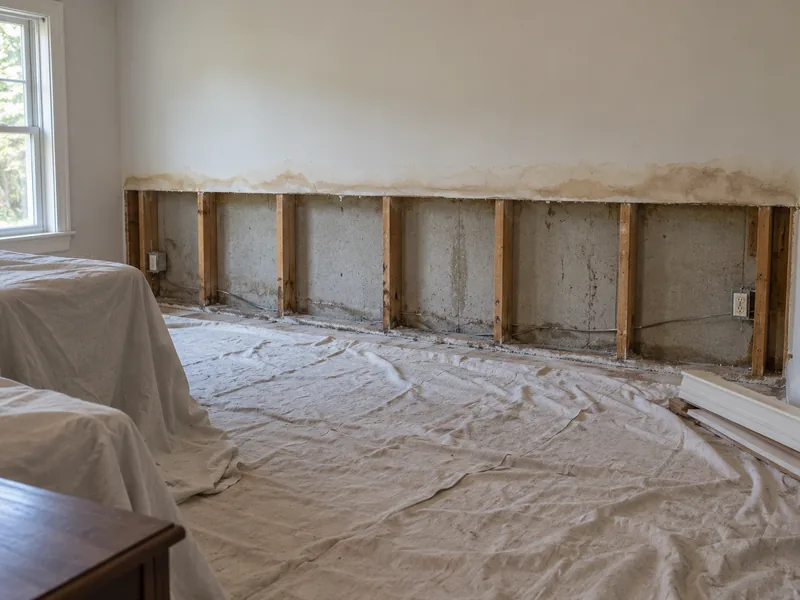
The Flood Cut, and Why It Runs Above the Water Line
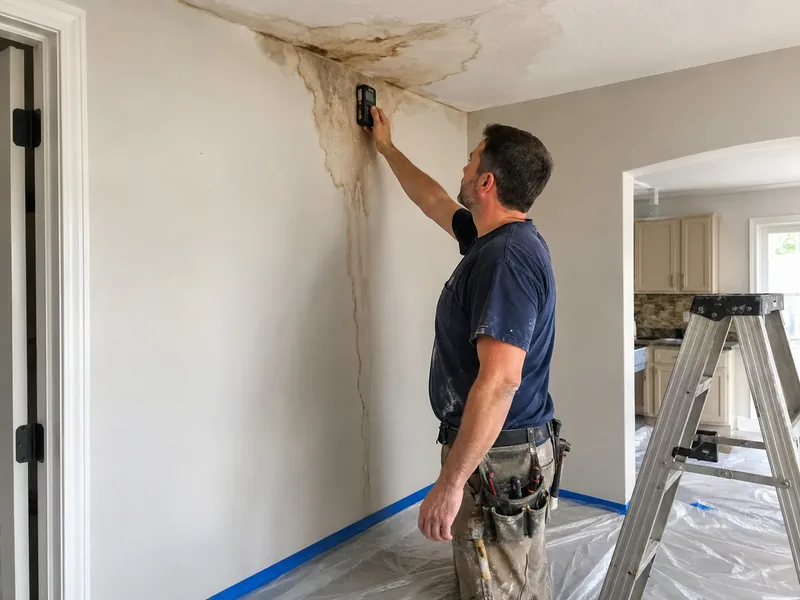
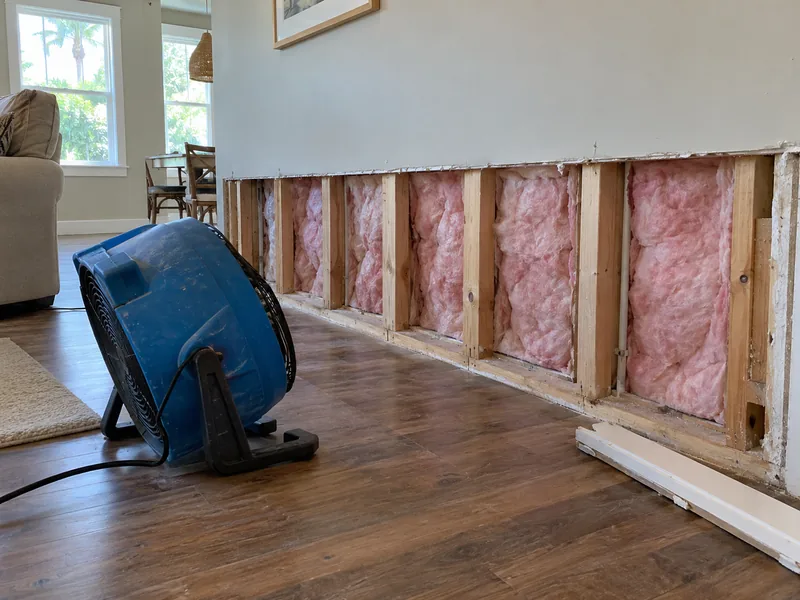
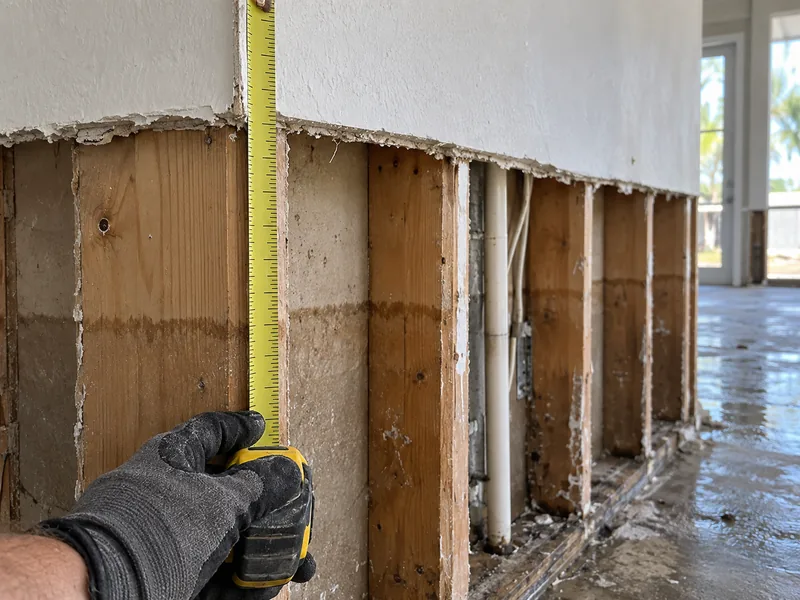
A flood cut removes your board to a straight line above the high-water mark, commonly a foot or two above where the water stood. The cut sits above that mark because water wicks up inside the wall past the level it reached. Board replacement on flood damaged drywall is therefore measured to that line, not to the edge of the stain. We cut along a stud so the rebuild has a square edge and the insulation and bottom plate are left open for drying.
Reading What the Wall Is Telling You
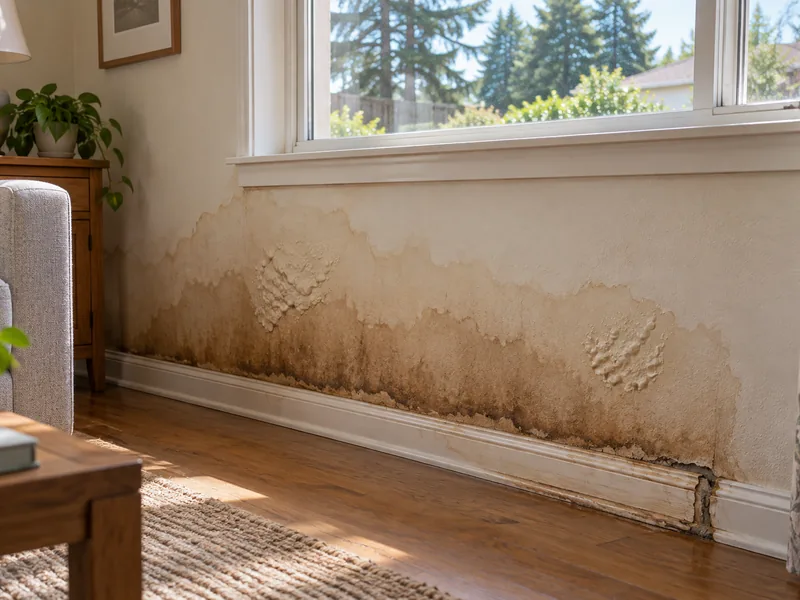
Every water-damage job starts with what we can see from the room, because marks on a finished surface show when the water arrived as well as where it landed. We meter each suspect area instead of judging it by appearance. Intact paint can hide a great deal, and soaked insulation can sit behind board that still looks sound. What you can see gives us the starting point of the damage, not its full boundary.
A Stain, a Bubble and a Sag: What Each One Dates
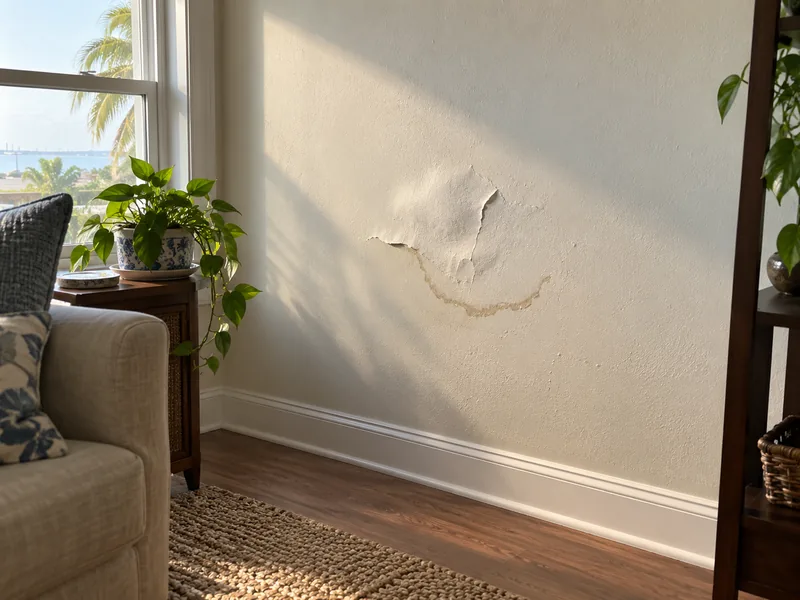
These marks tell us how long the water has been present. The brown or yellow ring of a water stain on ceiling board is a dried mineral edge left where water arrived and then dried, and rings inside rings show more than one wetting. Bubbled or peeling paint points to current moisture because the face paper behind it is holding water against the paint film. A sag is where the signs of water damage stop being cosmetic, because the gypsum core has lost strength and the panel is carrying weight it can no longer support. Fastener heads pushing through the finish also show that the board has moved.
The Musty Smell and What It Means Has Already Happened
A musty smell with nothing visible on the surface is a reason to check behind the finish for trapped moisture, not proof by itself that water is present. Insulation holds water much longer than board, and cavity air reaches the room through electrical outlets and other gaps, so water behind drywall can be smelled before it leaves a mark on the paint. We meter the cavity through an outlet instead of guessing from the odor. Suspected mold changes the scope, since that work belongs to a different specialist.
Tracing a Stain Back Uphill to the Source
The entry point is rarely where the stain appears, so we work backward from the mark. Water runs along ceiling joists, the beams your ceiling board hangs from, then across the top of a wall's framing and down the back of a panel before it reaches the surface. A ceiling stain can sit several feet from where the water entered. The joist direction and ceiling slope show us where it traveled, while the nearest plumbing wall or attic air handler is usually where water behind drywall began. Patching only the end of that path leaves the source of the water running, so the stain returns.
Drying a Wall, and Proving It Is Dry
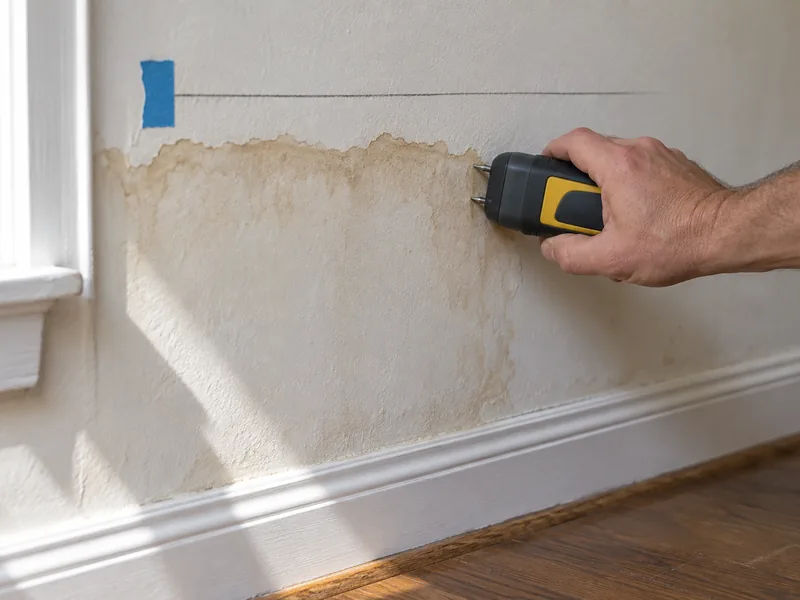
Drying is the stage that determines whether a water-damage repair holds, because a cavity closed up while still damp has to be opened again. Drying drywall is measured work, and how the surface feels under your hand is no guide because the face of the panel dries long before the wall cavity behind it. The time your wall needs is set by the moisture readings in the cavity, not by a date chosen in advance.
The Source Gets Fixed First, and Not by Us
We do not start until the water source has been stopped, and that repair always belongs to another trade. A plumber handles a slab leak or burst supply line, an HVAC technician handles the condensate drain line and the pan under the air handler, and a roofer or siding contractor closes the opening that let rain in. We schedule our work around theirs and do not perform those repairs. Board hung over a leak that is still running will have to come out again, so we wait until the source is fixed before opening the wall.
Drying the Cavity Under Control
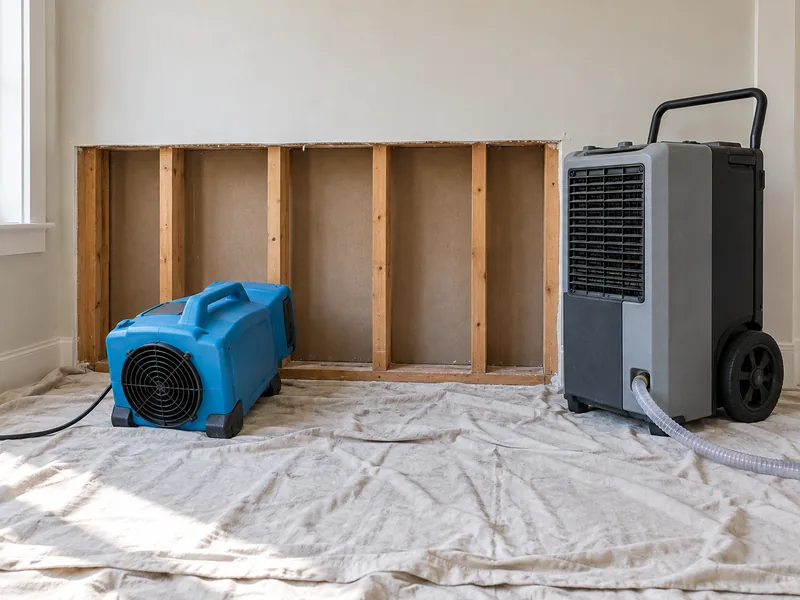
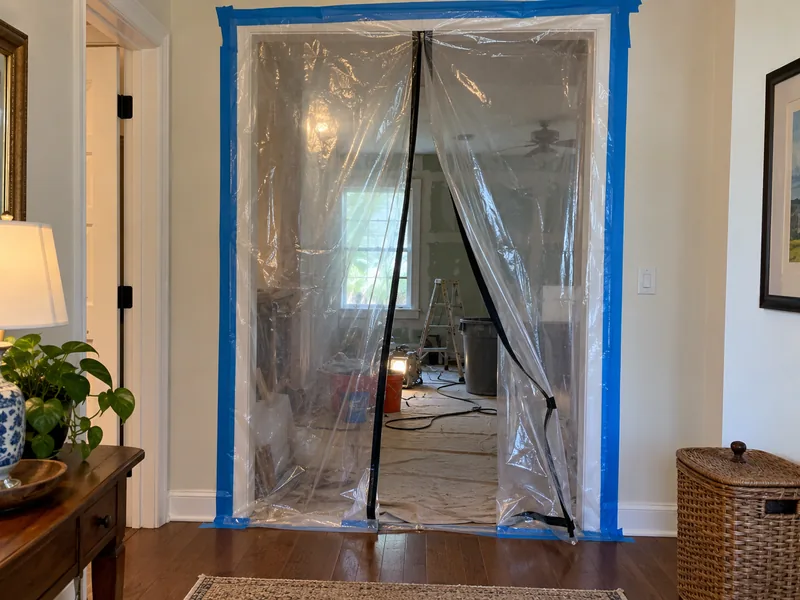
Whether your wall can be dried in place is decided before the equipment comes in, and wet fiberglass batts are removed from the cavity first. With the cavity open, we set air movers and a dehumidifier. The air movers direct air along the wet surfaces, while the dehumidifier removes the released moisture from the room air. The room stays closed while that controlled drying runs. Outdoor air along the Gulf carries more moisture than the air inside your house for much of the year, so opening a window in July adds moisture to the space instead of helping it dry. Drying time is usually three to five days.
The Reading That Releases the Rebuild
A single reading from a moisture meter proves nothing by itself, so we take a matching reading somewhere in the same house that the water never reached and compare the two. With the wall open, we read the cut edge of the board and the exposed framing. We compare the exposed framing and surrounding materials against dry reference readings before closing the wall. Once the same points give a dry reading, the rebuild can begin, and those readings go in the file with the job photographs.
How a Water Damage Drywall Repair Runs, From the First Look to the Last Coat
Repairing a wet wall runs through five stages, and each one has to be completed before the next begins. Nothing is closed up until the cavity reads dry, which is why our water damage drywall repair process usually takes more than one visit rather than a single afternoon. At Spring Drywall Co., controlled drying alone takes three to five days.
-
1
We Look, We Meter, and You Get It in Writing
The first visit costs you nothing, and the moisture readings begin on it. We follow the stain back to where the water came in before we quote any repair, so nothing is priced on guesswork. A written estimate follows that visit, and you have it before we open a wall.
-
2
We Seal the Room Off Before Anything Opens
Your furniture and flooring are covered before we make the first cut. Plastic barriers, sealed doorways, and vacuum-assisted sanding are part of the base scope on every occupied-space job, not an add-on. Wet material leaves the room bagged, not carried out open across your floor, and the bags go straight out to the truck.
-
3
We Open It, Take the Wet Material Out and Set the Drying
Board comes out to the line the readings set, and any wet fiberglass batt in your wall leaves with it. The drying equipment goes in next and stays running, with the room kept closed while it works.
-
4
We Read It Again, and Only Then Is It Cleared
After drying, we read the same points on your wall again. If the number is not there yet, the equipment stays and we come back to it. When it clears, we tell you the reading itself and not only the verdict.
-
5
We Rebuild, Finish and Walk It With You
New gypsum board goes in where the wet board came out, and we tape and coat the joints so the repaired area matches the wall around it. The surface is left paint-ready. Our last step is a walkthrough, where we go over the finished area with you before we leave.
A wet wall today is worth a call to (936) 286-6045, or you can reach the same crew through our quote form. Either way someone comes out and meters it.
What Goes Back In Behind New Drywall
The wall cavity is the half of the repair you never see, and what goes back into it determines whether your new drywall stays sound. A repair that fails almost always starts in that space, with the finished surface showing the problem weeks or months later. Wood needs weeks of sustained moisture before it decays, and a musty smell returning after a finished repair means the cavity was closed while still wet. Choosing the right board for a damp room is a separate question, and moisture-resistant drywall is made for that use.
Wet Insulation Is Replaced, Not Dried
Wet insulation comes out of your wall rather than being dried in place. A fiberglass batt insulates by holding still air within its thickness, and once it is soaked and compressed, it does not regain that thickness. While it stays wet, it also holds moisture against the framing lumber. Replacing the batt costs far less than opening the same wall a second time. Spring sits in climate zone 2A, the hot and humid band, so we do not put a plastic vapor barrier on the inside face of your walls. Walls here are built to dry outward, and putting a dry batt back in keeps that assembly working as intended.
Why a Stain Can Come Back Through New Paint
A dried water stain dissolves again under water-based paint, so the mark can work back through the new coat and show weeks later. A stain-blocking primer stops stain bleed through, so we roll it over the stained area before any finish paint goes on, covering both the new board and the sound surface around it.
The Work We Hand Off, and Who We Hand It To
Two licensed trades sit directly beside drywall work in Texas, and we hold neither license. We are an insured drywall contractor, so if mold or old ceiling texture turns up during a water-damage job, that part goes to the specialist the state licenses for it, while we handle the board, drying and rebuild afterward. We explain where that line falls before we open a wall in your house.
Mold Past a Small, Contained Area
Mold behind drywall develops in a cavity that has stayed damp, so the question comes up when a wall has been wet for days. When mold reaches past a small, contained area, Texas licenses that assessment and remediation work, so a licensed mold professional handles it first. The Texas Department of Licensing and Regulation licenses that work and keeps the party assessing the growth separate from the party removing it. We do not look for mold, test it, treat it or remove it. We handle the board, drying and rebuild, and return to your wall once the area has been cleared and released.
Old Ceiling Texture That Got Wet
A sprayed-on ceiling texture in an older house raises a separate question as soon as it gets wet, because a water damaged ceiling of that age may be an asbestos popcorn ceiling. Popcorn texture or other suspect material is tested by a qualified asbestos professional when its age or condition warrants testing before disturbance, and we scrape only material the results clear as safe. The Texas Department of State Health Services regulates that removal work, and we do not disturb material that has not been cleared by testing. Texture removal on its own belongs to our popcorn ceiling removal page. Once the results clear the texture, we replace your wet ceiling board.
What a Water-Damage Rebuild Costs in Spring
A water-damage rebuild removes the soaked board, dries the cavity behind it and restores the finished surface. What you pay for water damage drywall repair depends on how much material has to come out. The figures below are local market ranges for Spring, Texas, not rates we quote. Our on-site estimates are free, the written estimate is line-itemed before you commit, and financing is available on larger projects. Anything we cannot price on site is listed as a named allowance, which is a figure set aside until the work can be seen clearly.
What Moves the Number
Your water damage drywall repair cost starts with how much board has to come out, and that is set by the removal line rather than by the stain you can see. A ceiling costs more than a wall over the same square footage because removing board overhead takes longer and the room below has to be protected first. Each drying day required by the moisture readings also adds the cost of the equipment left running. Estimates name the GA-214 finish level as its own line item, so a Level 5 skim is a priced choice rather than a vague allowance. We price matching an existing texture separately.
What the Ranges Look Like
In Spring, a water-damage rebuild generally runs $600 to $2,500, while a ceiling repair cost after a condensate leak generally runs $500 to $1,500. The low end covers one small area with sound framing and a texture that is easy to match, while the high end covers a ceiling, several drying days and a full finish. A job that removes wet insulation and rebuilds the cavity falls between those ranges. A contaminated-water job is priced after the restoration crew has finished its work. A free on-site estimate turns that range into a price for your project. Send us the details through our quote form and we will measure what has to come out.
Photographs, Readings and the Water Damage Record
A water-damage claim involves two separate jobs, and only one of them belongs to us. Your insurer and adjuster apply your policy and decide what your water damage insurance covers; we do not adjust claims or interpret policies for you. What we provide is the job record, including dated photographs of the damage, moisture readings with the date each one was taken, and the written scope of the repair we quoted.
What We Photograph Before Anything Is Opened
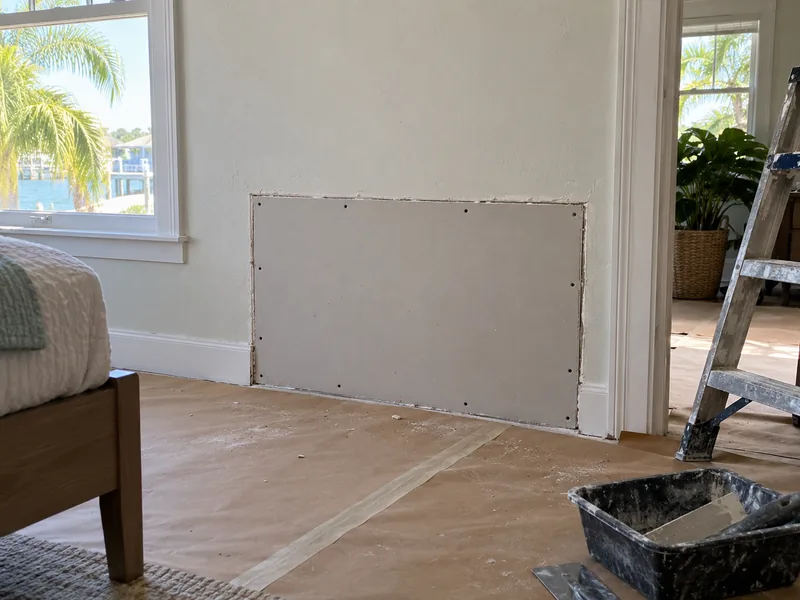
We photograph your wall as we find it before making the first cut, because once the wet board has been removed there is no way to show what it looked like in place. The photos document the stain and how far it extends, the surrounding surface, and the meter readings with the reference reading shown in the same frame. Once the wall is open, we photograph the cavity, the removal line, and the wet material as it comes out. The written scope is kept with those records. We carry general liability insurance and can send our certificate of insurance before work begins.
Sudden Damage, a Slow Leak and Rising Water Are Not the Same Claim
Insurers do not treat every wet wall the same way. A pipe that bursts without warning is a sudden and accidental discharge, and homeowners policies commonly cover that type of loss. A leak that dripped for weeks before it was noticed is often excluded as repeated seepage. Rising surface water from outside the house is normally handled under separate flood insurance through the National Flood Insurance Program. Which of those applies to your loss is for your policy and adjuster to decide, and we make no determination. None of this is advice on your coverage, and we build the same dated record whichever one applies.
Why Choose Us
Why Choose Spring Drywall Co. for Water Damage Drywall Repair
What we tell you about your wall comes from an instrument, because we meter the cavity before closing anything on your water damage drywall repair. What we bring to the rest of a wet job stays the same from one house to the next.
- Standards, not habit. We are an insured drywall contractor, and our crews work to ASTM C840 for how gypsum panels are hung and fastened and to GA-214 for finish levels.
- Local experience. We have worked throughout Spring, north Harris County and out to the Montgomery county line for 15 years.
- One crew from start to finish. The same insured crew removes the wet material, handles the drying and rebuilds the wall, and the person who prices your job is part of that crew.
- The record of the work. Your meter readings and job photographs are kept together as the repair file.
You can call us at (936) 286-6045, or send the details of the damage through our quote form.

Water Damage Drywall Repair Across Spring and the Surrounding Communities
Spring sits in north Harris County near the Montgomery County line, where the humid subtropical Gulf climate brings a long cooling season. Storms and heavy rainfall create one source of water damage by driving water at the roof and exterior walls of your house. The other source is inside, because an attic air handler runs through most of the year and attic condensate is the water it sheds as it cools the house. That leaves two main sources of wet board here, weather getting in from outside and condensate from the equipment cooling the house.
Where Spring Drywall Co. Takes Water Damage Work
You do not have to be inside Spring itself for us to come out. Spring Drywall Co. provides water damage drywall repair across Spring and the surrounding communities of north Harris and Montgomery counties, and west into Waller County:
- Tomball
- Klein
- Shenandoah
- Oak Ridge North
- Porter
- Humble
- Aldine
- Westfield
- Bammel
- Champion Forest
- Willowbrook
- Jersey Village
- Cypress
- Hockley
- Waller
- Magnolia
- Pinehurst
FAQ
Water Damage Drywall Questions
Is drywall ruined if it gets wet once?
No. The difference between a splash you wiped up and a line that ran overnight is how long the wet board soaked and what was in the water.
Can drywall dry out after water damage?
Yes, often. The gypsum core releases water as it dries but can lose strength, and face paper that has separated does not bond back. A dry room does not mean a dry cavity.
Does water damaged drywall need to be replaced?
Not always. Contaminated water decides it, and wet board that is swollen, soft or sagging has to come out regardless. Ceilings are judged more strictly because the board has to carry its own weight.
How long does it take for drywall to dry after water damage?
Three to five days with drying equipment running, and much longer without it. Readings determine when drying is complete, not the calendar, and the rebuild adds time because each coat dries between visits.
How quickly can mold grow on wet drywall?
The EPA's drying deadline is 24 to 48 hours from when the drywall got wet, not from when you noticed it. Mold inspection and treatment belong to another trade.
Can I paint over water damaged drywall?
No. Paint does not repair wet board that has gone soft or swollen, and a dried stain bleeds back through new paint unless a stain-blocking primer goes over it first.
Does a ceiling need to be replaced if it gets wet?
A stained ceiling that is still flat and firm is often saved. A sagged panel does not flatten back out, and wet blown insulation adds weight above it, so the damaged board is replaced.
How do you detect water behind drywall?
A pin-type moisture meter does the job. Its pins measure the wet board, and through an opened outlet they reach the cavity without cutting into the wall. Each reading is compared with one taken in a dry room.
Call us at (936) 286-6045 for water damage drywall repair, or send the details through the quote form.
Get a Written Scope for Your Water Damage
Every wet-wall job starts with a free on-site visit. We come out, take moisture readings on the spot and price the work based on what the meter shows. You receive the scope in writing before anything on your wall is opened. Call Spring Drywall Co. at (936) 286-6045, or describe the wall through our quote form to arrange the same visit.