
Drywall Contractor & Drywall Repair in Tomball, TX | Spring Drywall Co.
Spring Drywall Co. is a drywall contractor serving Tomball, TX, with 15 years of experience. Our service area covers three counties: north Harris and Montgomery counties, and west into Waller County. Drywall is also called Sheetrock, gypsum board, or wallboard - all the same panel. We repair drywall and sheetrock, install new board, and restore rooms after leaks or burst lines have soaked the walls or ceilings. Once the board is in place, we finish and texture the surfaces, and we handle both residential and commercial drywall work.
Ceiling work includes everything from patching damaged areas to removing popcorn texture completely. For damp rooms, fire-rated assemblies, or spaces that need better sound control, we use the specialty board made for that purpose. We frame and board new walls from bare studs, then carry the finishing and surface work through to paint. All work follows two published standards, ASTM C840 and GA-214.
Tomball is an incorporated city with major facilities that include a hospital and a college campus, so drywall work here extends well beyond residential properties. We are insured, provide free on-site pricing, and offer financing for larger projects. Call (936) 286-6045 or use our quote form for a clear, written price on your project.
Why Choose Us
What Tomball Property Owners Get From This Drywall Contractor
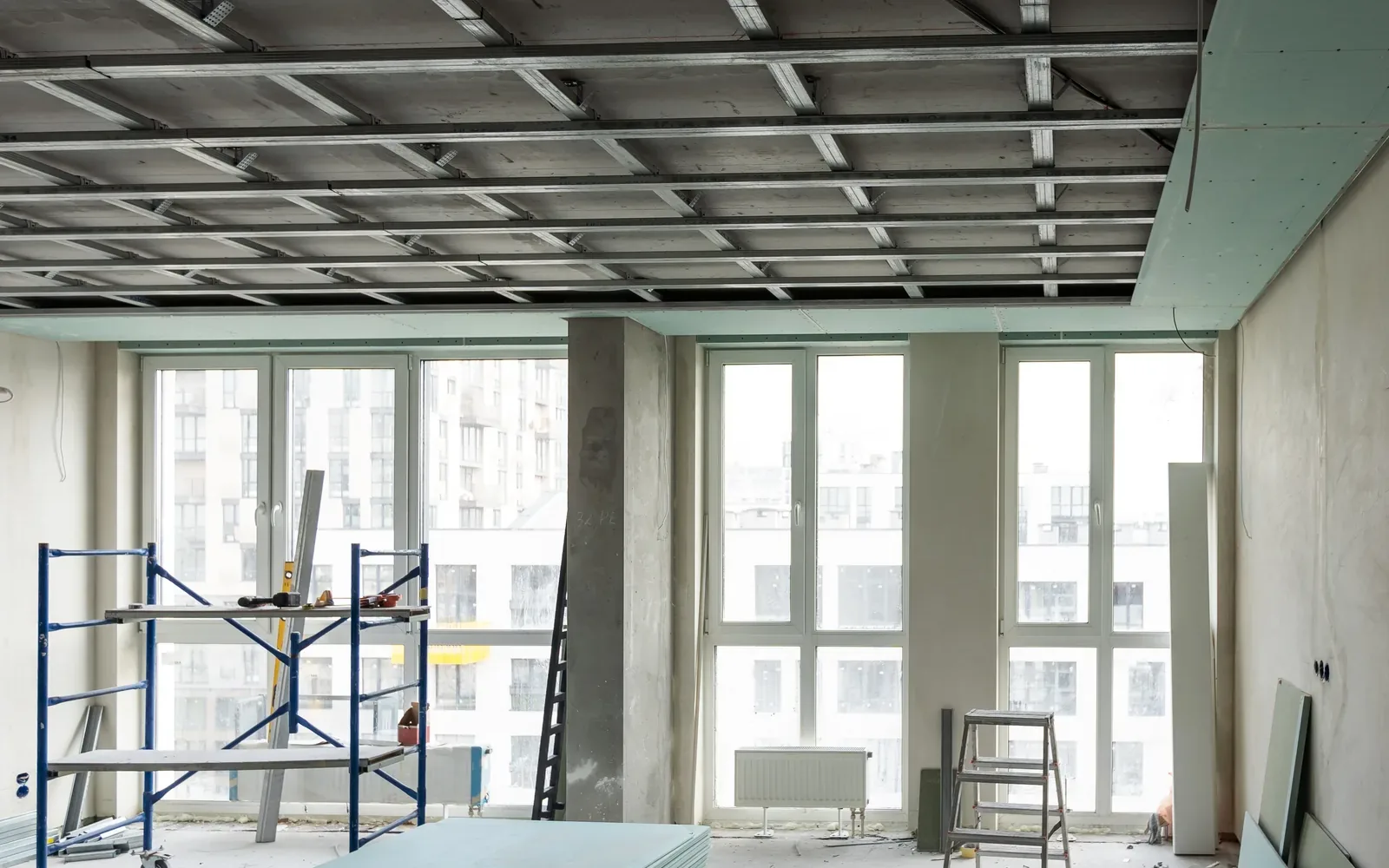
One crew from Spring Drywall Co. takes a Tomball job from the first metal studs through the final painted walls. Metal studs are the steel framing used to build interior walls, while gypsum panels are the paper-faced boards fastened to that framing. The same person who walks the job and sets the price also runs the crew that completes the work, which matters in clinics and classroom buildings where several other trades are already scheduled around the drywall work. The rest of what you get:
- matching the existing texture so the finished patch blends into the wall
- finding the cause of the wall failure before closing it up again
- choosing board for how the room is used and pricing it on its own estimate line
- scheduling the work around a building that stays open
- dust kept out of the rest of the building as base scope
We also serve Klein, the community between Tomball and Spring.
Drywall Contractor Work We Handle in Tomball
Your wall might be in a house, a street-front suite, or a clinic, and all three are included below. We group the list by the type of work rather than the size of the building, so it is just as easy to find a single-hole repair as a full floor of new partitions.
Drywall Repair
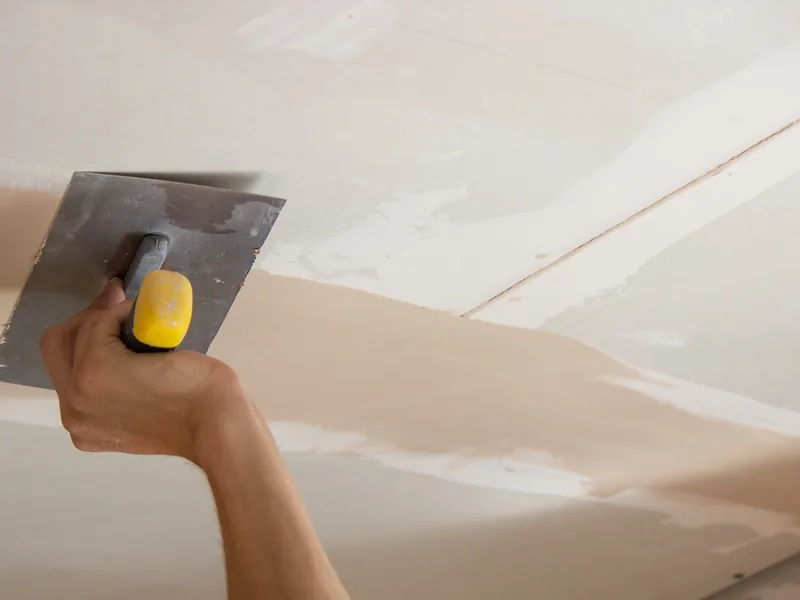
A wall picks up damage through ordinary use, including holes, nail pops, split corners, and hairline cracks. Tomball houses range from the oil-boom years to the newest subdivisions, so we identify what the wall is made of before making a cut. We remove only the damaged area instead of replacing a whole sheet, then rebuild the surface with drywall tape and joint compound, the paste used to fill a seam, and match the surrounding texture.
Drywall Installation
We hang new gypsum board where there was none before, which in a city built out lot by lot usually means an addition or a room rebuilt behind its existing walls. We install the panels, tape the seams, and finish them to the specified GA-214 level while working to ASTM C840. Where the layout gives us a choice, we place the panels so seams fall away from windows and light fixtures, because a seam in the path of raking light remains visible no matter how well it is finished.
Water Damage Drywall Repair
Water-damaged drywall in Tomball commonly follows a roof leak, window leak, plumbing failure, or storm intrusion. When water sits in a wall, it softens the board, so we remove the damaged section back to sound material and rebuild from there. We compare the exposed framing and surrounding materials against dry reference readings before closing the wall. Where Texas law requires licensed mold assessment or remediation, that work is handled by a licensed mold professional first. We install mold-resistant board where the room calls for it.
Drywall Finishing & Texturing
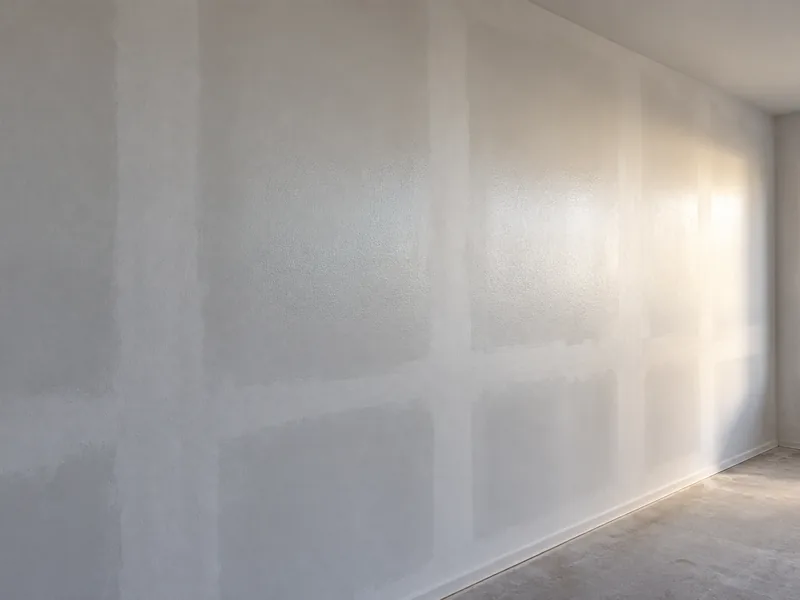
The finishing stage determines how a wall looks once it is painted, while texturing adds the sprayed pattern over the surface. Two common textures we match in Tomball homes are orange peel, a fine spatter that resembles the skin of the fruit, and knockdown, the same spray flattened with a blade. Matching a patch means judging the weight of the existing texture and spraying the repair to blend with it. Where the wall, lighting, or paint specification requires it, we finish to a higher GA-214 level.
Commercial Drywall
We handle interior walls and ceilings in the buildings that keep Tomball running, including tenant suites along the main streets, offices, and retail spaces. Where the plans specify metal studs instead of wood, we build to that requirement, and we invoice by unit or suite, which is the form a facilities manager can file against a particular address. We hand the space back finished to the point where a tenant can move in.
Ceilings & Popcorn Ceiling Removal
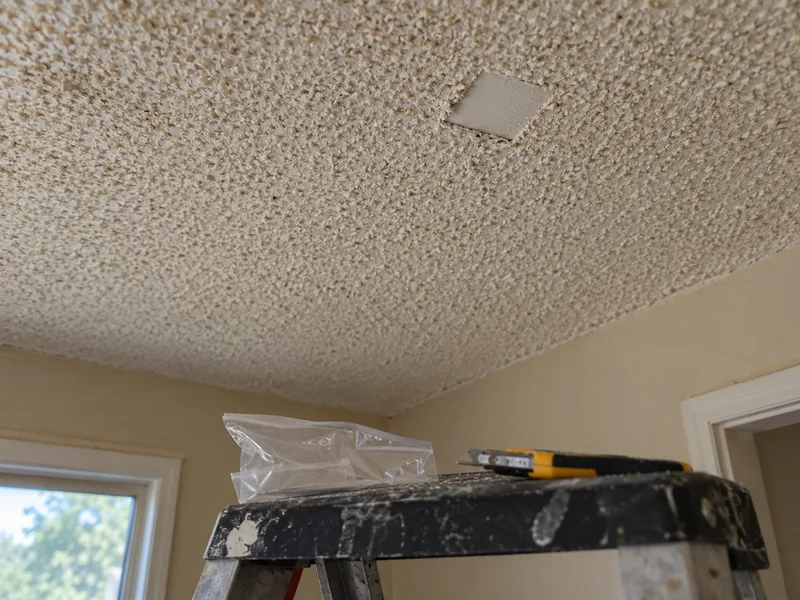
A ceiling needs its own approach because the surface is overhead and every flaw is easy to see. We repair and replace ceiling drywall, remove sagging, stained, or cracked sections and rebuild them, hang new ceiling board when a room is being reworked, remove popcorn texture, and install acoustical ceilings. Popcorn texture or other suspect material is tested by a qualified asbestos professional when its age or condition warrants testing before disturbance, and we scrape only material the results clear as safe. We finish with a skim coat of compound to leave the ceiling flat.
Drywall Types & Specialty Systems
Three board types handle jobs that ordinary gypsum board does not. We install moisture- and mold-resistant drywall in bathrooms outside the shower, as well as in laundries and kitchens. Ordinary gypsum drywall is outside our scope as the tile substrate in direct-wet shower and tub-surround zones. Those areas use an approved tile-backer board instead. Fire-rated drywall systems use Type X board, a thicker panel with glass fiber in the core. The fire rating belongs to the full tested fire-rated assembly, including framing, fasteners, layers, and joints. For sound control, we build the drywall assembly in place for spaces such as bedroom walls and campus offices.
New Walls, From the Studs
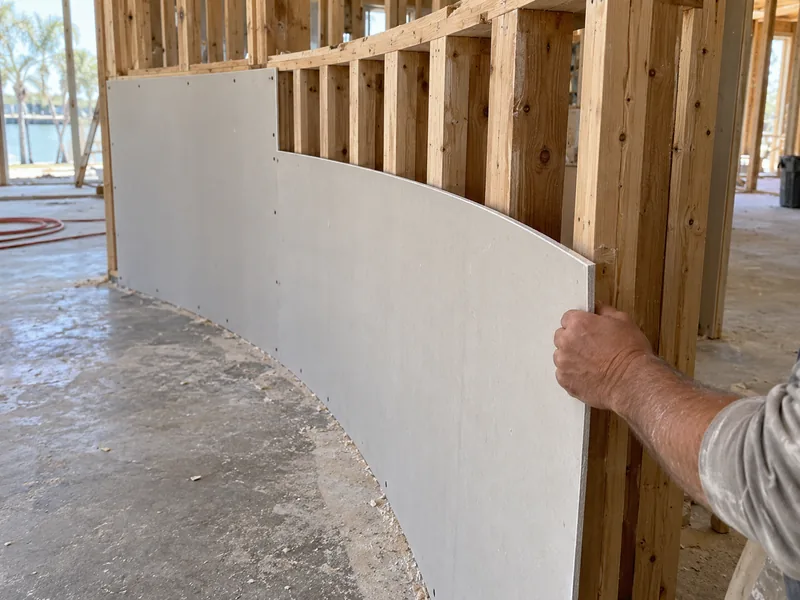
This work begins before any board goes up, and Tomball has demand for both sides of it. New subdivisions continue to rise around the edges of the city, while existing buildings are being reconfigured inside. We lay out the partitions, install the metal stud framing, and coordinate new construction drywall with the builder's sequence so our crew starts when the trades ahead of us are finished. Partition wall installation divides an open span into separate spaces, and the insulation goes in before the board is hung.
Finishing Details: Soffits, Corner Bead, Plaster and Paint
Then there is the detail work. We build custom drywall and architectural features, including arches, niches, soffits, and bulkheads above cabinet runs. We install and repair corner bead, the metal or plastic strip that protects an outside corner, replacing it where it has split. Older buildings also bring plaster repair and wallpaper removal into the scope. We rehang and reattach drywall that has pulled away from its framing, install access panels, and handle drywall priming and painting as well. Primer helps the wall absorb paint evenly so patched areas do not show darker than the surrounding surface.
What Drywall Work Costs in Tomball
These are the typical price ranges for five common jobs in this area. They are not quotes for your wall; an on-site visit determines the actual price.
- We patch a small to medium hole in the $200 to $600 range.
- We repair the drywall in one room in the $150 to $1,500 range.
- We repair a ceiling in the $400 to $1,300 range.
- We rebuild a wall after water damage in the $600 to $2,500 range.
- We hang, tape and finish new board to a Level 4 finish at $2.00 to $3.00 per square foot.
The finish level changes the price of work measured by the square foot, and GA-214 is the standard that defines those levels. Level 4 means the joints are taped and coated ready for paint, which is what the rate above covers, while Level 5 adds a thin skim coat across the entire surface for walls finished in dark paint or exposed to strong light. Access also affects the price: a ceiling run that needs a lift, or a suite reached through a single service door, takes longer than the same area with open access. Ceilings cost more than the same square footage of wall because every panel has to be held overhead while it is fastened.
Drywall and Plaster in Houses Built While Humble Oil Paid the Gas Bill
When the Tomball Oil Field came in, Humble Oil's agreement with the town gave residents free natural gas and water until 1988, and houses were built throughout that long period. Homes from the early part of that run were built differently from those near the end, so the wall behind a switch plate is not necessarily the same from one Tomball address to the next.
What Is Behind the Paint: Plaster, Lath or Gypsum Board
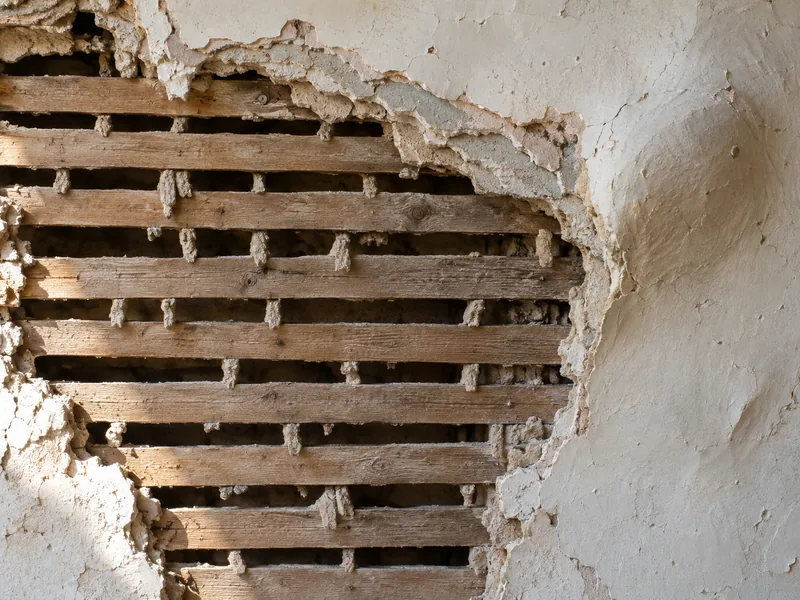
Some of Tomball's older houses have plaster over wood lath instead of gypsum board. Wood lath consists of thin strips of wood nailed across the framing to give the plaster something to grip. Because plaster is thicker, heavier, and cut rather than scored, repairing it requires different tools and materials, along with more drying time between coats than a gypsum board repair, so it is priced differently. We open a small test area first to see what is behind the paint before giving you a price.
Nail Pops and Board That Has Worked Loose From Its Framing
Nail pops, opened seams, a line of fasteners showing along a stud, or split corner bead all point to movement in the panel or its fasteners. Nail pops are screw heads pushing small round bumps through the paint. Before filling anything, we check the framing and fastening to find the cause. Refastening means driving new screws into solid framing beside the fasteners that let go and setting the old heads below the surface first. Where the board itself has pulled away, we rehang it and repair the corner bead.
Opening a Wall: Insulation and Access Panels Going Back In
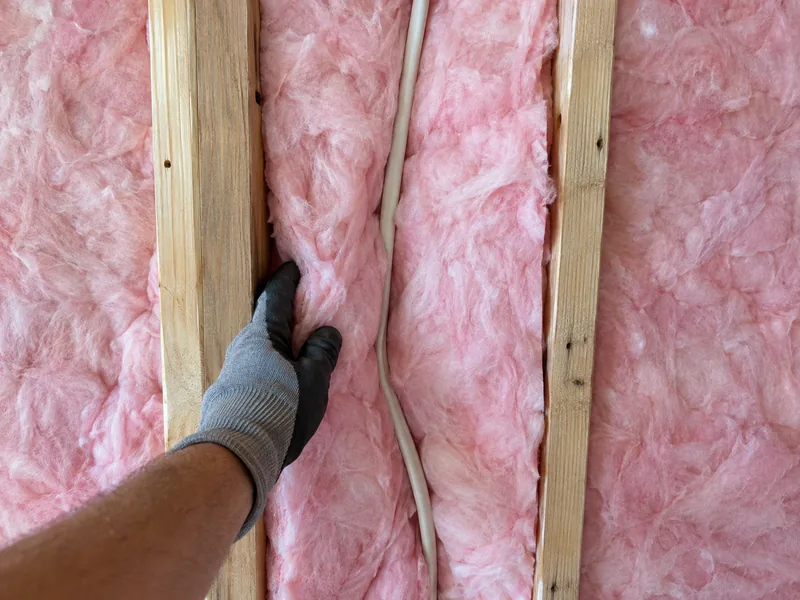
A leak, rewire, or remodel means opening the wall, and what goes back in matters just as much as what comes out. Batt insulation, the soft blanket cut in lengths to fit between studs, goes into the open cavity before any board is hung because it cannot be installed properly after the wall is closed. Where a shutoff valve or electrical junction sits behind the wall, we install an access panel in the finished surface so it can be reached without cutting into the drywall. The patch is then finished to match the level of the surrounding wall.
Drywall Work by Tomball Neighborhood
Tomball changes character within a few miles, and the wall behind the paint changes with it. What your wall needs depends on when and how it was built, so each of the four parts of the city below calls for a different approach.
Old Town Tomball: Stripping Wallpaper in the Oldest Houses in the City
The walkable Main Street district around the depot grew with the railroad that arrived in 1907, so its houses and shopfronts are the oldest in the city. Walls of that age have usually been papered more than once, so we strip the wallpaper, wash away the paste underneath, and repair any face paper that tears from the board during removal. A thin skim coat of joint compound evens out the remaining surface, and we prime the stripped wall before painting it.
The FM 2920 and Main Street Corridor: Soffits, Bulkheads and Corner Bead
FM 2920 runs east and west through Tomball as Main Street, and the suites along its frontage change tenants often enough that the same shell gets fitted out for a new tenant several times over. A new fit-out usually needs lighting and ductwork concealed above the sales floor, so we build soffits and bulkheads around them. Public-facing corners also take years of impact from carts, hand trucks, and foot traffic, and we replace the damaged corner bead behind the finished surface.
The Medical District on Business 249: Rated Assemblies and Access Panels
The city's comprehensive plan identifies a Medical District along Business 249, the old highway alignment through town, and calls for its expansion. Interiors in these buildings include rated corridor and shaft walls built with Type X board to the architect's specified assembly, so we follow that detail rather than relying on a general standard. Valves, dampers, and junction boxes sit behind finished walls in buildings like these, and we install access panels wherever the drawings call for them so the facilities team can reach those components later.
The SH 249 and Tomball Parkway Corridor: Steel Framing Before Any Board
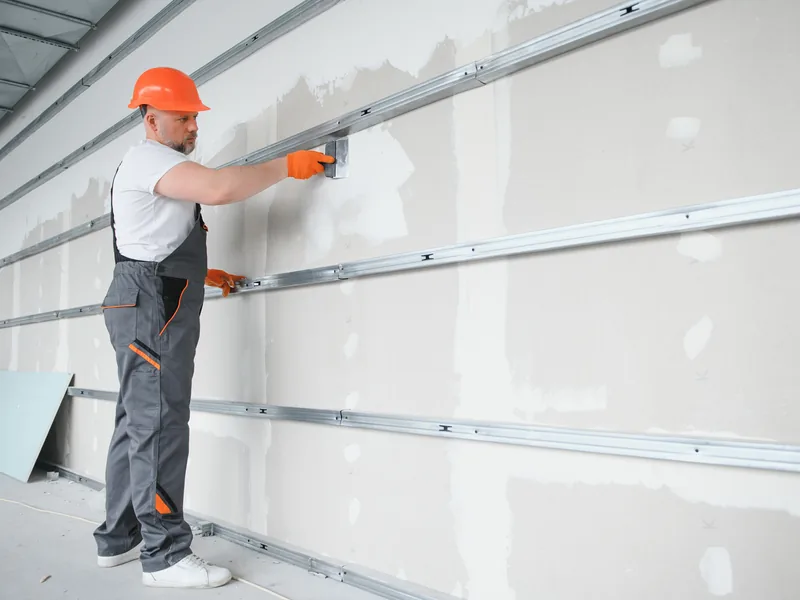
State Highway 249 runs along the newer edge of the city as Tomball Parkway, where many commercial interiors use steel stud framing. Our work there starts before a single panel arrives: we set the floor and ceiling track, stand the metal studs at the spacing shown on the plans, and square the entire layout, because a wall that is out of true at this stage stays out of true once the board goes on. We then hang the gypsum board in the builder's sequence.
Drywall in Tomball's Hospital and College Buildings
A hospital continues admitting patients and a college continues teaching throughout the term, so in Tomball's institutional buildings we work one area at a time rather than taking over an entire floor. HCA Houston Healthcare Tomball and Lone Star College-Tomball are the two buildings in the city where that scheduling is most demanding.
Phasing a Drywall Job So the Rest of the Floor Stays Open
Phasing means closing off one area, finishing it, handing it back, and only then moving into the next. Before any board comes off, we build a temporary partition, a floor-to-ceiling barrier of metal studs and board that separates our work area from the corridor still in use. Board, compound, and waste move in and out along a route kept separate from staff and the public. Each area is signed off as it is returned, so a department gets rooms back into service while we continue working next door.
A Ceiling Grid the Maintenance Team Can Open
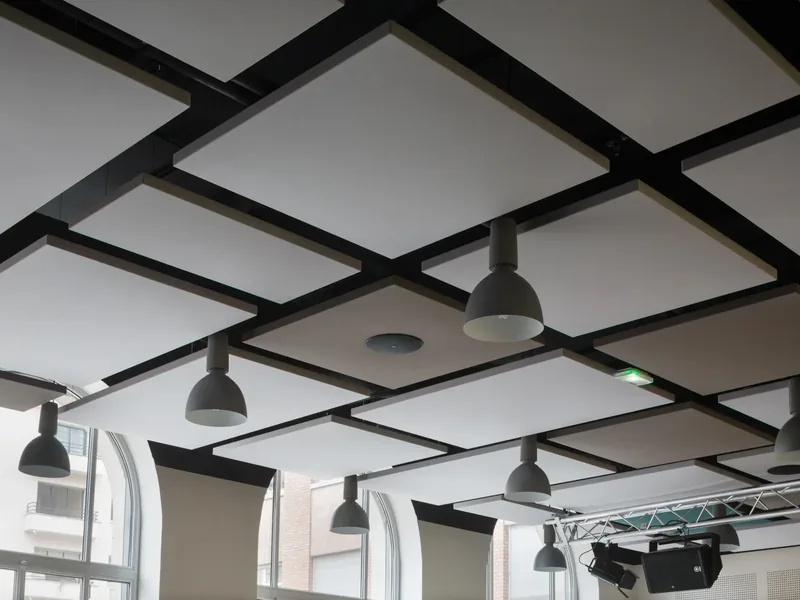
In clinical corridors and campus buildings, the ceiling is usually a suspended ceiling grid, a light metal framework hung on wires that supports square tiles lifted out by hand. Building systems run above those tiles, giving your maintenance team access without cutting into the ceiling. We set the grid level across the full run because any sag shows in every tile line, then cut the tiles neatly around lights, sprinkler heads, and vents. Where the drawings call for a hard ceiling instead, we frame and finish that area in gypsum board.
Partition Walls on a College Campus Calendar
A campus changes how its rooms are used between terms, which gives us a short work window with a fixed deadline: the rooms have to be ready when students return. Most of that work involves dividing existing space rather than building new rooms from scratch. We frame partition walls with metal studs, which come out again cleanly when a lab becomes a classroom, then board and finish them. The new wall is finished to match the corridor it opens onto rather than the adjoining room, so the reconfigured floor still looks like one building.

Permits and Inspections: Tomball Runs Its Own Building Department
There is one authority to check with about what your job requires in Tomball, and it is better to have that answer before the crew is booked than after the work has started.
A City Permit, Not a County One
Tomball is incorporated, so its Community Development department includes a building division that issues permits and performs inspections for work inside the city limits. Outside those limits, the same questions go to Harris County. A patch, a repaired joint or a refinished wall rarely raises the question at all. Work that changes framing or goes behind the wall surface is where it starts. Which of those your job counts as is the city's call, made on the job in front of it.
The Rough-In Inspection That Has to Clear Before Board Goes On
Where a permitted job includes framing, wiring, pipework, or ductwork behind the wall, that work is inspected while it is still exposed in what the trades call a rough-in inspection. The wall covering goes on only after that sign-off, because board installed over uninspected work has to come back off. We schedule hanging and finishing after the inspection clears rather than before it. Closing a wall a few days too early only means opening it again and losing a week nobody planned for.
Who Pulls the Permit, and What the Application Has to Describe
A permit is tied to the property and is applied for by the owner or the contractor performing the permitted work. The application has to describe both the scope and the materials, and our written scope of work provides that description by listing each part of the job and the materials it uses in a form an owner, property manager, or reviewer can follow. Texas does not issue a license for drywall work, so permit authority rests with the city.
FAQ
Tomball Drywall Contractor Questions, Answered
Do we need a permit for drywall work in Tomball?
Usually not, and Tomball makes that decision. When a permit is required, the fee is the city's charge, and we list it separately on your estimate rather than folding it into one of our own line items.
Do you work in the hospital and campus buildings around town?
Yes. An institutional bid from us prices each area on its own line, so a facilities manager can set it beside another bid and compare the two line for line.
Can you work around the Tomball ISD calendar?
Yes, and in practice the Tomball Independent School District calendar sets the deadline rather than our schedule. Breaks between terms and the longer summer window fill months in advance, so calling early matters more than having flexible dates.
How do you keep the dust out of the rest of an occupied building?
We contain the work area before any cutting begins. Plastic barriers, sealed doorways, and vacuum-assisted sanding are part of the base scope on every occupied-space job, not an add-on. We also sweep the area at the end of each day.
Do you cover all of Tomball, or only part of it?
The whole city and the surrounding area are within our service range. A Tomball mailing address can fall outside the city limits in unincorporated Harris County, and we work on both sides of that boundary.
Request Your Free Tomball Drywall Estimate From Spring Drywall Co.
We are insured, and the person Spring Drywall Co. sends to measure your walls is the estimator who works directly with our crew, not a salesperson who passes the job along. They inspect what needs to be hung, patched, or finished and build the scope from what they see. Our on-site estimates are free, the written estimate is line-itemed before you commit, and financing is available on larger projects. Call (936) 286-6045 or send the quote form, and tell us what part of town you are in so we can schedule a time.