Wallpaper Removal in Spring, TX | Spring Drywall Co.
Spring Drywall Co. handles wallpaper removal across Spring and north Harris County, and taking down the covering is only the first part of the job. Behind it is wallpaper adhesive, the paste spread over the wall when the paper was installed, and beneath that is the face paper, the thin paper skin bonded to the front of the gypsum board that gives the wall its smooth surface. A wallpaper removal service that strips off the sheets and stops there leaves you a wall that paint or texture will not sit flat on. We do the work in two passes: first the covering, then the paste that held it in place.
We have been stripping wallpaper for 15 years, and we are insured. What sits under the covering is drywall, which is what we work on the rest of the week, so the second pass is ordinary work here rather than the point where a job stops. On some walls the paper comes away in whole sheets. A vinyl wall covering takes longer, so does a wall that holds more than one layer, and wallpaper that somebody painted over instead of stripping it is harder again.
We strip wallpaper to the point where the next finish can begin, whether that is skim and texture, primer and paint, or board that needs to come out. Call us at (936) 286-6045 or send us the room through our quote form.
What Wallpaper Removal Covers in a Spring Home
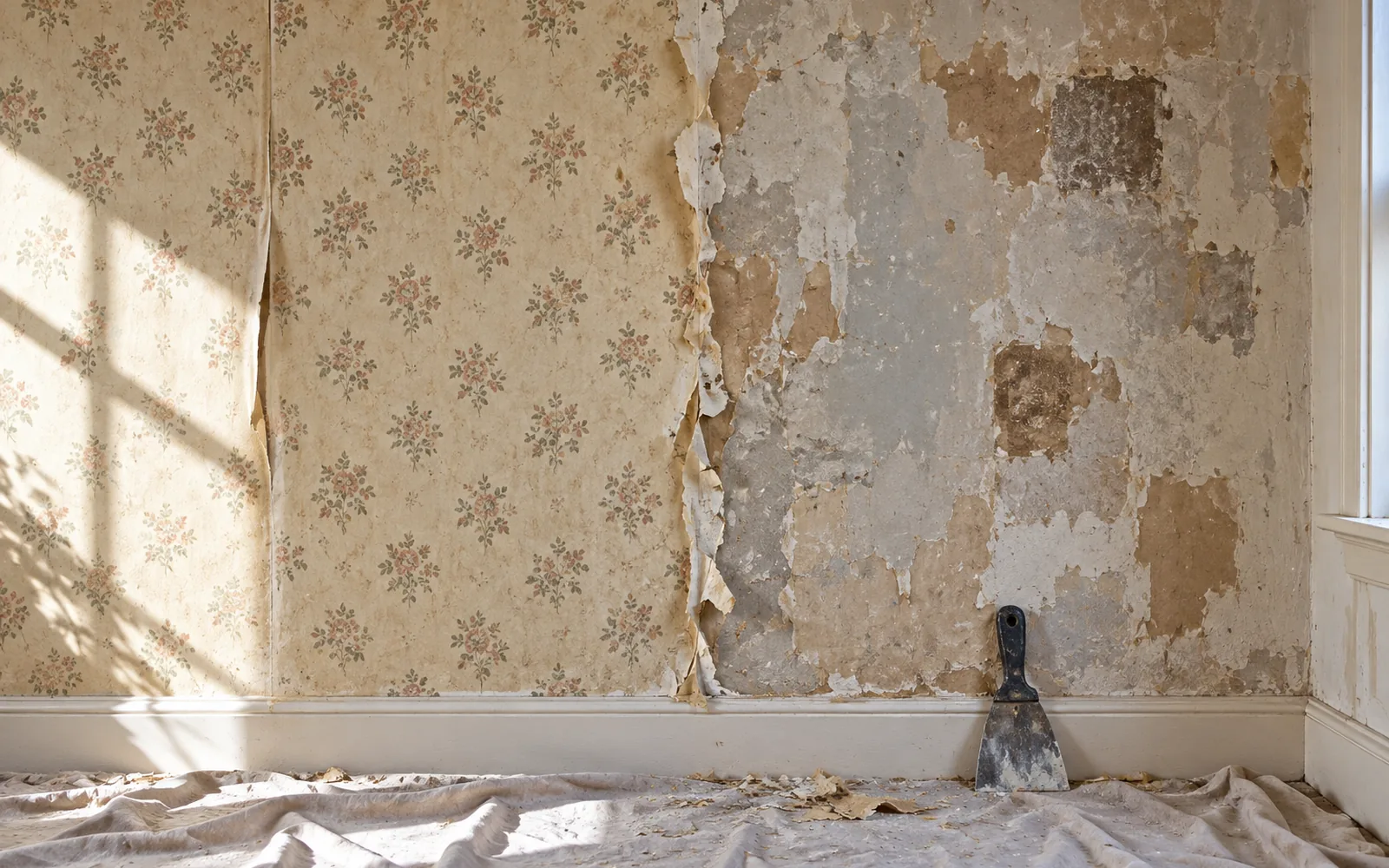
Wallpaper removal means taking the wall covering and the adhesive behind it off without damaging the surface underneath. Nearly every papered room in a Spring house falls into one of four combinations of covering and adhesive, and that combination sets the schedule. The covering itself determines how it releases, while the surface underneath determines how much work the wall will tolerate during removal. For that reason alone, two rooms of the same size can differ by half a day.
Strippable and Peelable Papers
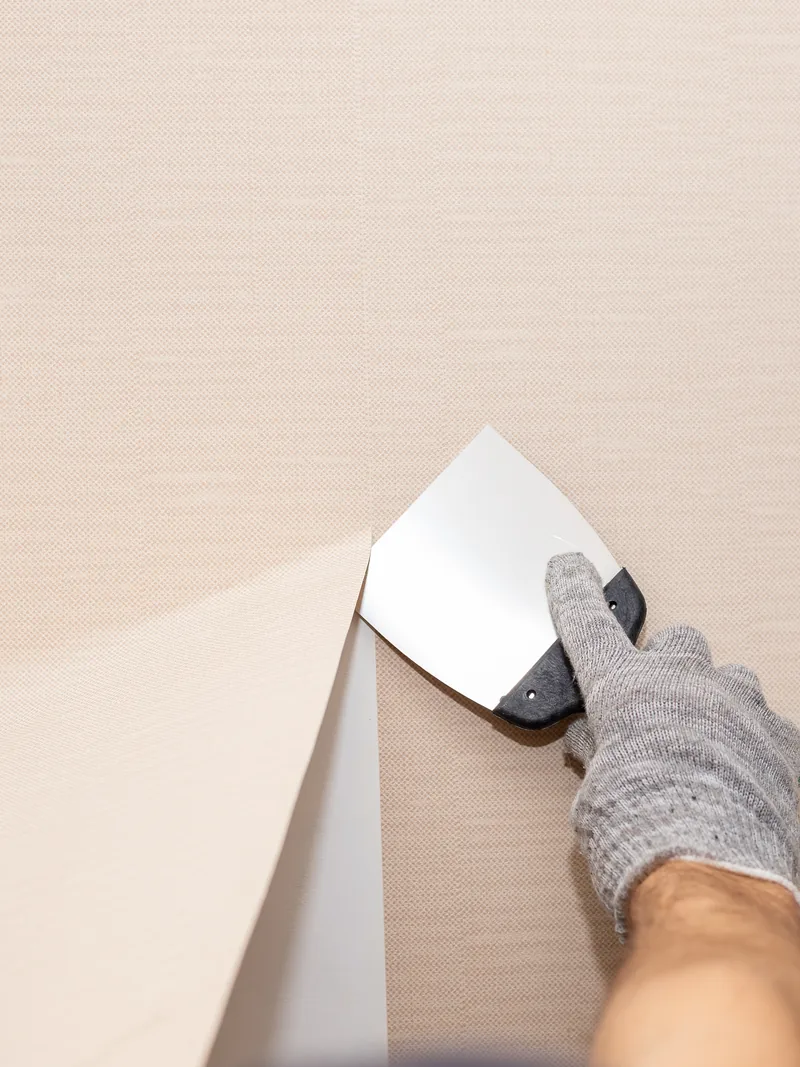
These are the papers that give you something when you pull at a corner. Strippable wallpaper comes off dry in a full sheet, with the face and backing coming away together. Peelable wallpaper starts the same way, but after the first few feet the printed face separates and leaves a thin paper backing bonded flat to the wall, which still has to be wetted and removed. In both cases, the adhesive underneath is still in place, and that is what determines whether the wall is ready for the next finish.
Vinyl Wall Coverings
A vinyl wall covering has a plastic face instead of a paper one, which makes it wipeable in a kitchen or bathroom and also makes it slower to remove. Water does not pass through the plastic, so soaking a vinyl-covered wall leaves the paste behind it dry until the face is opened by scoring. The vinyl-based adhesive under these coverings is a heavy-duty glue made to hold a non-breathing sheet to the wall for decades, and once exposed it still takes time to release. A room covered in vinyl wallpaper takes noticeably longer to strip than the same room covered in paper.
Multi-Layer Walls
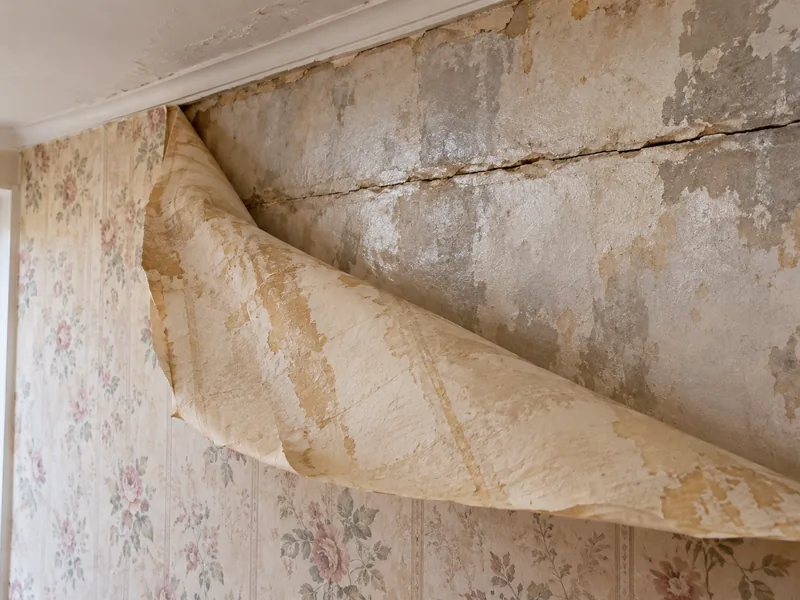
You do not know how many layers are on a wall until the first one comes off. A second layer is often underneath, installed years earlier and papered over instead of being stripped, and older rooms around Spring can have three. Each layer went up with its own paste, so multi-layer wallpaper means repeating the removal process several times, and the layers rarely release at the same rate. Layered wallpaper is the most common reason a one-day job runs into a second day, and we tell you the moment we find it.
Wallpaper That Has Been Painted Over
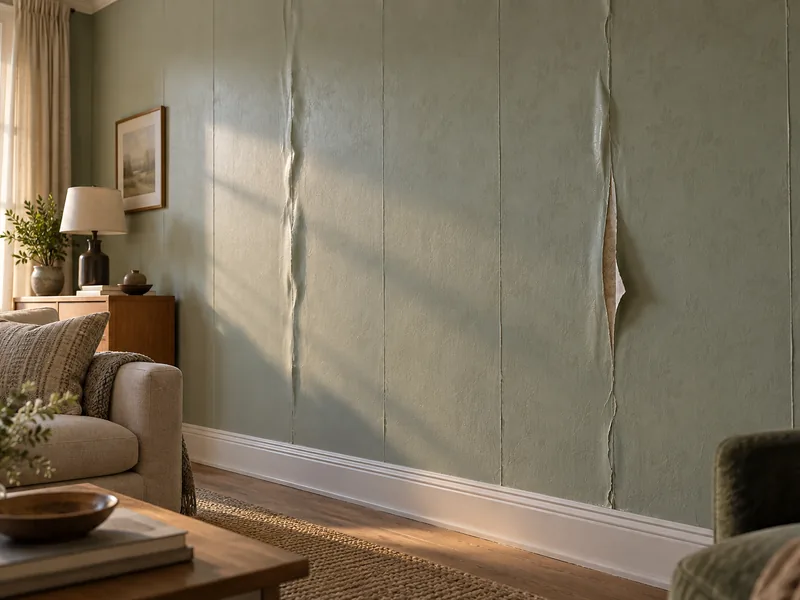
Painted-over wallpaper is usually easy to spot in side light because the wallpaper seams show as faint vertical ridges from floor to ceiling, and the edges still show through the paint. The paint seals the face of the wallpaper much like vinyl does, so moisture stays on the painted surface instead of reaching the paste and the adhesive keeps holding. Opening that painted face and then working through it takes longer than removing bare paper, while the wall underneath is taking the strain throughout the process.
How the Paper and the Glue Come Off
The goal at this stage is a clean wall with nothing left on it: no covering, no paper backing, and no film of wallpaper adhesive on the surface. The difficulty is that the outer face of gypsum board is paper, and it sits directly under everything being removed. Water softens old paste so it will release, but it also softens the drywall face and makes the board behind it spongy. More water speeds up release but also brings damage sooner. Each wall therefore needs enough moisture to loosen the paste and no more, and every method below applies that same balance to a different surface.
Scoring, Soaking and Steam
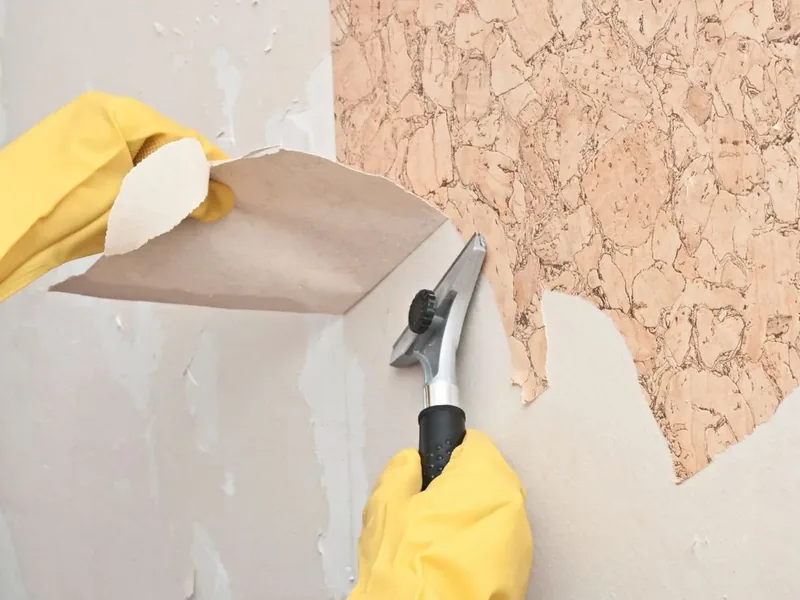
This step has one purpose: getting moisture through the wallpaper to the paste behind it. There is no single best way to remove wallpaper because the method depends on whether the face of that wall covering lets water through. We test a small area first and choose the method from there. On a sealed face, a perforating tool opens small holes that let water reach the paste without cutting into the board behind it. Porous papers do not need scoring and come off with hot water and a sponge, while newer wallpaper often lifts straight from a corner.
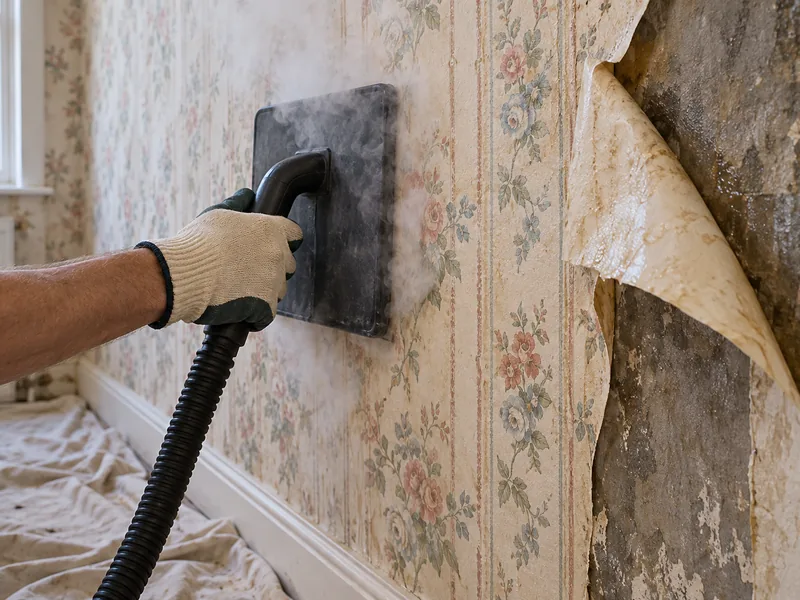
Where paste has hardened with age, hot water will not release it, so we use a steamer instead. The flat plate is held against the wall long enough to push hot vapor through the covering and into the adhesive. Older nonporous wallpaper usually needs steaming and scraping together rather than either method on its own. The plate stays moving because leaving it in one place drives moisture past the paste and into the gypsum board, which is exactly the damage this stage is meant to avoid.
Getting the Adhesive Residue Off
Once the covering is down, a film of wallpaper adhesive residue remains on the wall, and this step removes it completely. Adhesive residue stops primer, texture and paint from bonding evenly, but the problem does not show when the work is finished. Paste left on the wall shows up weeks later as patchy paint or lifting texture, and by then the surface has to be worked again.
The film is usually invisible, so adhesive residue removal is checked by touch and with water rather than by sight. Run your hand over the wall once it has dried: if the surface is still tacky, paste remains. Flick water onto it: if the water beads instead of darkening the surface, paste remains. Stubborn adhesive gets a second wash rather than harder scrubbing, using a broad knife held almost flat to lift the softened film without gouging the paper face, followed by a clean-water rinse before the wall is left to dry.
When the Drywall's Face Paper Tears
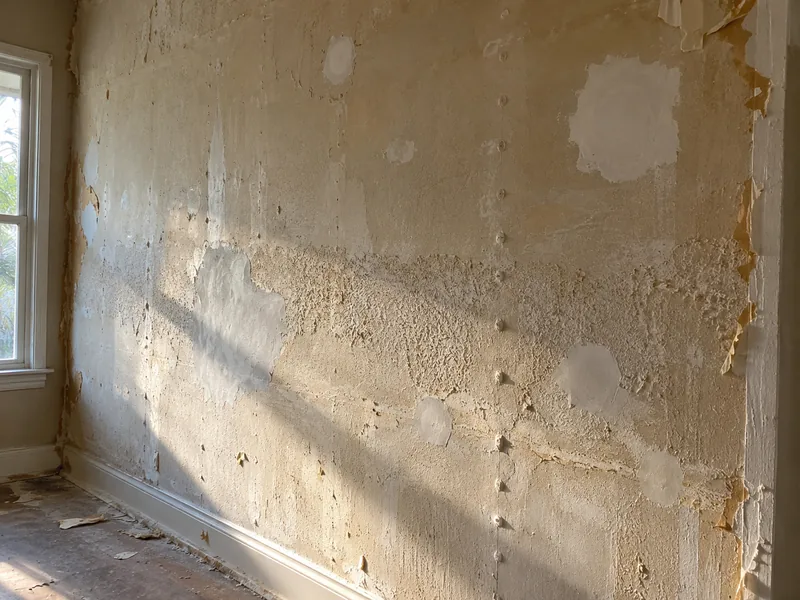
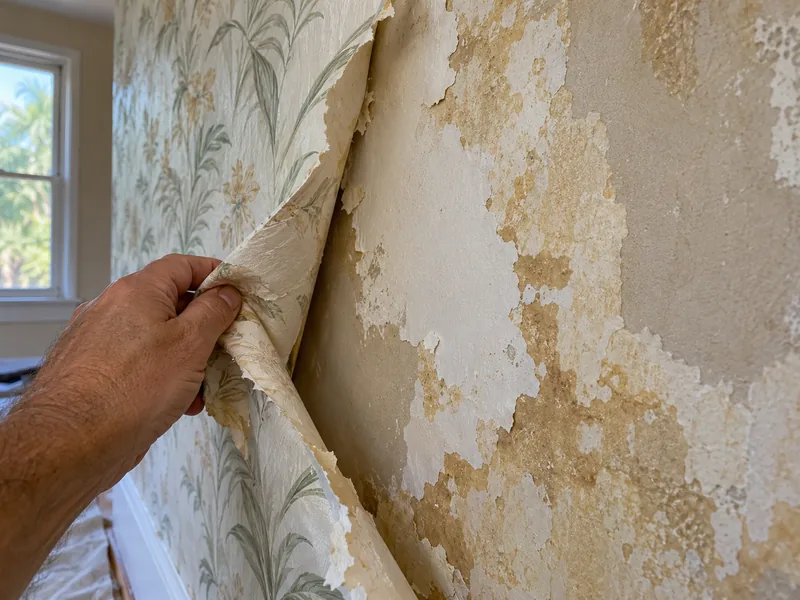
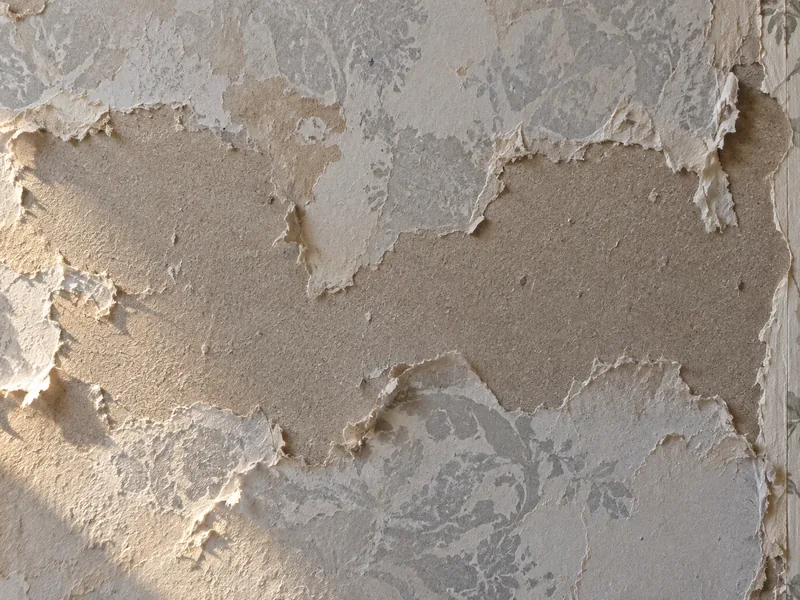
On some walls, stripping pulls away patches of the drywall face paper, and on walls papered decades ago that is normal rather than a sign of rough handling. The face of drywall is paper, old paste grips it tightly, and on the oldest work the bond between the paste and face paper is stronger than the bond holding that paper to the board. Wallpaper that old often pulls pieces of drywall or plaster away with it. What matters is the surface left behind: the exposed gypsum core absorbs water and anything else applied to it, so it has to be sealed before the next finish goes on.
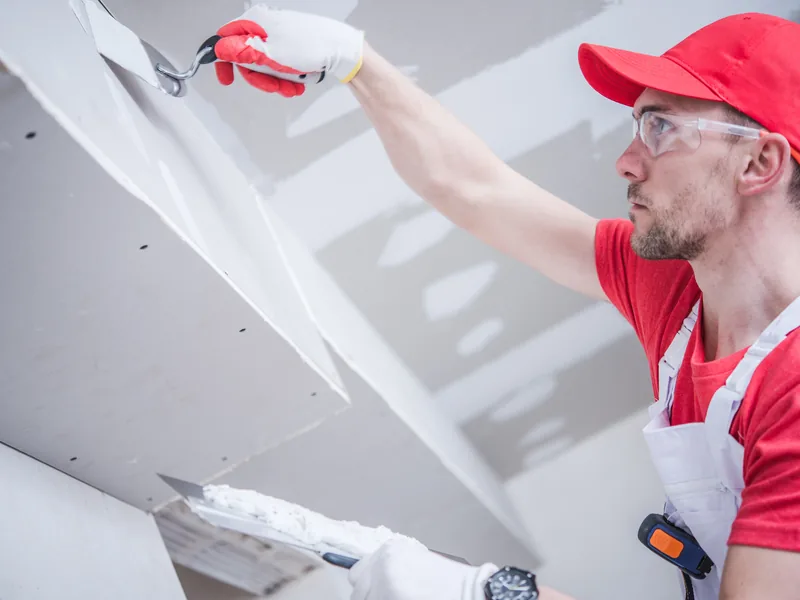
We bring each torn area back level with a thin coat of joint compound so the surface is even again where the paper lifted. The compound levels the damaged spot, while sealing the exposed paper from the next finish belongs to the priming stage. That is a local repair limited to the areas that tore. A full-wall skim coat is drywall finishing, while board that crumbles instead of tearing needs drywall repair; both are separate work.
Keeping the Water and the Mess Contained
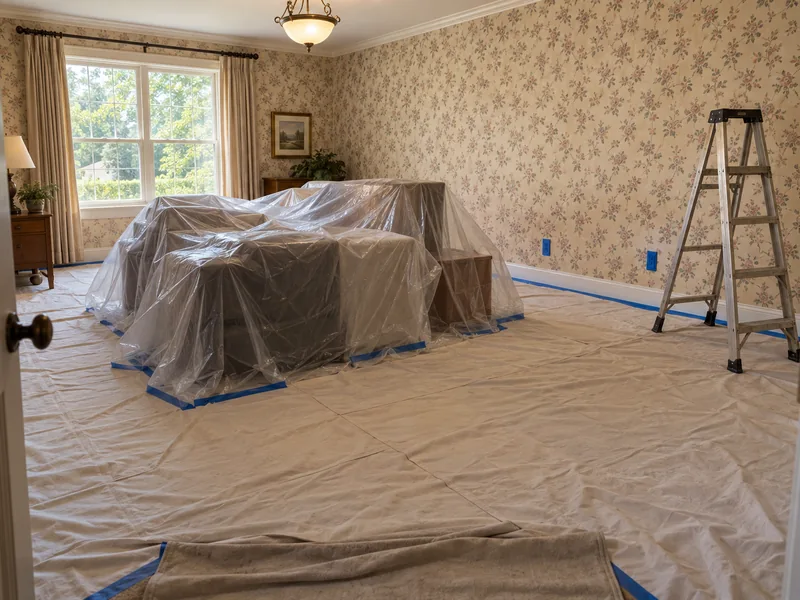
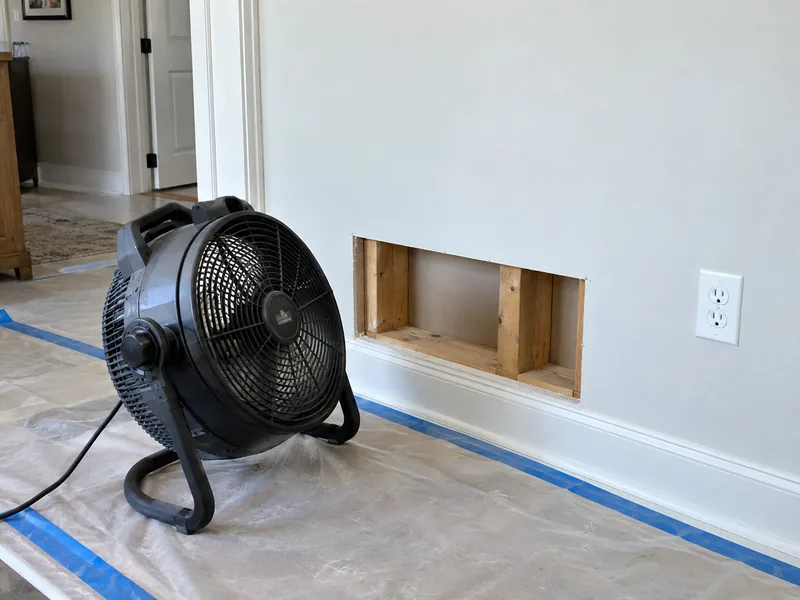
Wallpaper removal is wet work, and the water and softened paste come off the wall with sheets of soaked paper and gray scrapings. Those scrapings stain carpet where they fall and swell baseboard where they sit against it, so we protect the room before any water is used. Floors are covered with plastic, and plastic sheeting goes over anything that stays in the room. Plastic barriers, sealed doorways, and vacuum-assisted sanding are part of the base scope on every occupied-space job, not an add-on. That keeps the wet work contained to the room where it is being done instead of carrying into the rest of your house.
What Turns Up Behind the Paper
Wallpaper hides a wall rather than damaging it, so most hidden wall damage found during wallpaper removal was there long before the paper went up. In an older Spring home, removing the covering can expose patched holes, popped fasteners and rough texture in a single afternoon. Some of that falls within our wall preparation work, while some belongs to another trade. We tell you which is which as soon as we find it, rather than leaving you to discover it on the invoice.
Old Repairs, Nail Pops and Uneven Texture
A stripped wall in a house that has been decorated more than once usually reveals its full repair history at once. Nail pops, where a loose fastener pushes a small round lump of joint compound through the surface, show up beside old patches and whatever texture was applied before the wallpaper. Old repairs, popped fasteners and uneven texture are frequently exposed once the covering comes down. We reset and fill the small fastener pops as we work across the wall, then handle larger patches and skim uneven areas once the surface is fully bare.
Damp Walls and Where We Stop
A wall that has been covered with wallpaper for years can still be damp when the paper comes off because the covering slows drying behind it. Moisture behind wallpaper creates the conditions mold needs to grow, so we check damp walls before doing further work. Staining that points to an active leak goes to water-damage repair before any wall preparation begins.
When mold reaches past a small, contained area, Texas licenses that assessment and remediation work, so a licensed mold professional handles it first. The Texas Department of Licensing and Regulation oversees that work. We do not test for mold, treat it or remove it. We tell you what we found, stop work in that area, and return to the wall once the licensed professional has cleared it.
Plaster Instead of Drywall
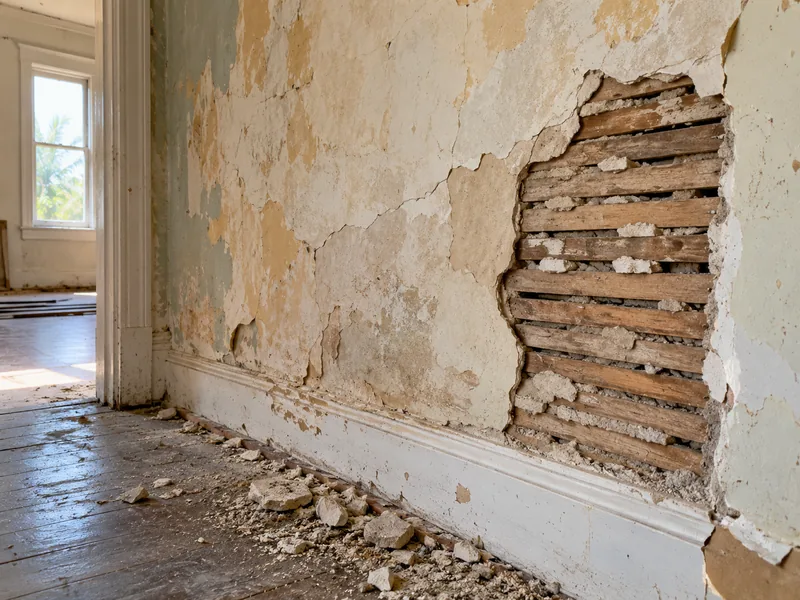
Some older houses in Spring have walls of lath and plaster instead of gypsum board. Thin wooden strips are nailed across the framing, and wet plaster is pressed over them so it squeezes through the gaps and grips as it hardens. Plaster walls have no paper face to tear, so the main risk during wallpaper removal is a larger section breaking loose from the lath behind it. Before any water or steam goes on the wall, we tap the surface and listen for the hollow sound that shows where the plaster has already separated, and we use steam in shorter bursts on plaster. Any section that has already pulled away from the lath needs plaster repair.
Why Choose Us
Why Choose Spring Drywall Co. for Wallpaper Removal
Removing wallpaper leaves the gypsum board exposed, and that is the same surface we work on every day. Any surface damage uncovered during stripping already falls within our trade, so the job does not stop while you look for another contractor. We are an insured drywall contractor, and our crews work to ASTM C840 for how gypsum panels are hung and fastened and to GA-214 for finish levels.
- 15 years working in local homes.
- The same crew that walks the room with you is the crew that strips it.
- A free on-site visit, and a written scope before you commit.
- Financing on larger scopes.
- We tell you what the wall needs next, even when that is not our line of work.
Call us at (936) 286-6045 and let us know which rooms have wallpaper.
What Wallpaper Removal Costs in Spring
The price of wallpaper removal depends on what is on your wall rather than a flat rate, and some of that is only clear once the first strip comes down. Square footage matters less than the condition of the covering itself. Multiple layers and paper somebody painted over has been painted over have the biggest effect on the price, which is why we set the wallpaper removal cost for your rooms after we have inspected them. Our on-site estimates are free, the written estimate is line-itemed before you commit, and financing is available on larger projects. You can book a free estimate through our quote form.
What Moves the Price Up
The main cost factors on this job all come down to time. A wall with several layers has to be stripped one layer at a time, and the lower layers rarely release as easily as the first. A vinyl face or a coat of paint over the paper adds another step before water can reach the paste, while adhesive that has hardened takes longer to remove than softer paste. If the face paper tears during stripping, those areas also have to be repaired before the wall is ready for finishing.
The room itself adds time in ways unrelated to the paper.
- ceiling height, because most of a tall wall cannot be reached from the floor
- stairwells and tight closets, where there is little room to set a ladder
- a room that has to stay usable, which means clearing the work area at the end of each day
How Long Wallpaper Removal Takes
How long wallpaper removal takes gives you the closest guide to price before we see the room. An average bedroom with one layer and no hidden damage is typically a one-day job. If a second or third layer appears, the wallpaper has been painted over, or the wall needs patching afterward, two to three days is more typical. Those are general timeframes rather than a schedule we promise, because we do not know what is behind the wallpaper until removal starts.
Part of that time is drying time rather than active work. Once the wallpaper is stripped, the wall has to dry fully before anything goes over it, so the finishing work does not start the same afternoon the paper comes off.
How a Wallpaper Removal Job Runs
A job with Spring Drywall Co. follows five steps, starting with the first inspection of your wall and ending when the finished wall is handed back to you. You see the wall at each stage, and nothing is covered until you have seen what is underneath.
-
1
We Look at the Wall
A visit to test how the covering comes off.
We lift a corner in an out-of-sight spot to check how easily the wallpaper releases and what is underneath it. We carry general liability insurance and can send our certificate of insurance before work begins.
-
2
You Get the Scope in Writing
A written scope you read before any work starts.
What we find goes into a line-item scope for you to review before you agree to the work. Anything that is still hidden is listed separately instead of being folded into the total price.
-
3
We Protect the Room
The room covered and the power turned off.
Floors are covered with plastic, furniture that is too heavy to move is covered with sheeting, and the baseboards are masked before any water is used. Power to the wall stays off for as long as we are working with water.
-
4
Paper Off, Then Paste Off
The covering off, then the paste off.
The covering comes off first using the method that suits that wall, then we wash the entire surface again to remove the paste. The second pass takes longer, and any surface damage exposed as the covering comes away is sealed as part of the work.
-
5
The Wall Is Checked and Handed Over
A walk around the finished wall with you.
Before we pack up, we walk the wall with you and have you check the surface by hand. You are signing off on a wall that is free of paste, sound where any surface damage was repaired, and dry all the way through.
To start with the first step, call us at (936) 286-6045 or send the room details through our quote form.
Gulf Humidity and the Way Adhesive Behaves Here
Gulf Coast humidity affects wallpaper adhesive for years before you decide to remove the paper, and paste that has gone through long periods of warming, softening and setting again releases in patches instead of evenly. That is why two walls in the same house can behave very differently during removal.
Vinyl on an Outside Wall Is a Different Story
Vinyl wallpaper removed from an outside wall often shows staining on the back, while the same covering on an inside wall comes off clean. A vinyl face does not let water vapor pass through, so moisture inside the wall stops behind the paper.
Spring is in hot-humid climate zone 2A, where damp outdoor air moves inward for most of the year while air conditioning keeps the room side of an outside wall cool. When that damp air reaches a cool surface, moisture condenses there, and behind a vinyl covering it collects against the gypsum board with nowhere to escape. A wall covering that does not let water vapor pass through changes how an outside wall performs here, so that is worth considering before the wall is papered again.
Letting the Wall Dry Before Anything Goes Over It
By the time the paste is gone, your wall has been wetted twice, and both the paper face and the gypsum behind it hold that moisture. During a humid week, a stripped wall stays damp longer, while running the air conditioning shortens wall drying by pulling humidity out of the indoor air. Some repair work can start sooner because setting-type compound hardens through a chemical reaction rather than by drying into the room. Paint and texture still have to wait, because applying a finish over a damp wall traps that moisture inside. We let the wall dry fully and tell you when it is ready.
DIY Wallpaper Removal, and Where It Usually Goes Wrong
DIY wallpaper removal is reasonable when the paper comes away easily. One layer of strippable wallpaper in a small room is a fair weekend project. The other conditions on this page are different. Vinyl, paint applied over the wallpaper, or hidden layers slow the job down for the same two reasons. The difference a professional makes is not speed; it is how much water reaches the wall and how the paste comes off it.
Too Much Water, and Too Sharp a Blade
The first problem is too much water. Gypsum board absorbs moisture through its paper face, and board that gets wet past that surface can stay soft even after it dries, which means filler over it can move. The second problem is the blade. A stiff, sharp edge held too steeply cuts into the face paper instead of sliding under the paste, and those gouges then have to be filled, sanded and matched to the surrounding texture. That is why we use a wide, dull, flexible blade to lift the paste.
Why a Half-Stripped Wall Costs More
A half-finished wallpaper removal job costs more to put right than a room that has not been touched. Paste left in patches is harder to see and remove than a full layer, and backing that has been wetted, dried and wetted again sets harder each time. That means the wall you stopped on is tougher to finish than the wall you started with. We are called in often enough to finish these jobs to say that plainly.
Where Wallpaper Removal Stops and the Next Trade Starts
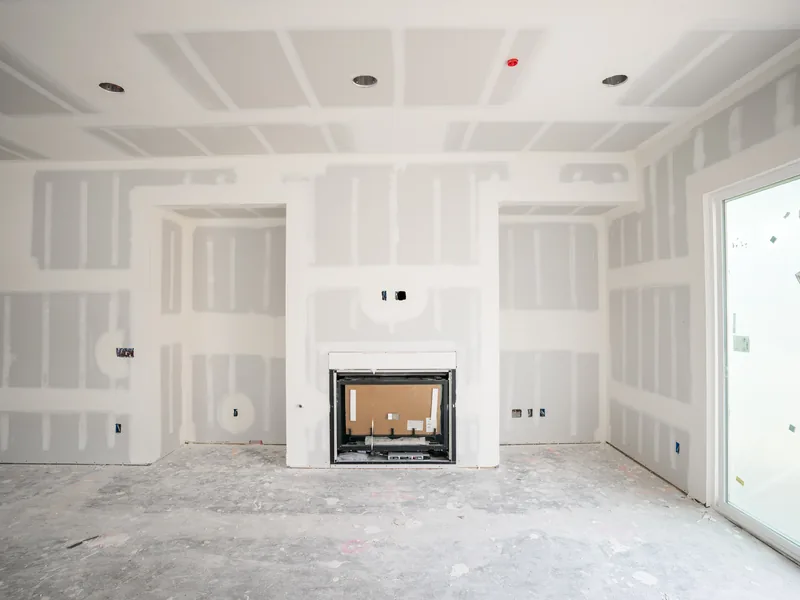
Wallpaper removal is finished when the paper and paste are gone and the wall underneath is sound and dry. From there, three types of work can follow: a full skim coat and texture, priming and painting, or cutting out and replacing board that is too damaged to keep. All three are Spring Drywall Co. services and are added to the scope on their own line, so the same contractor takes the wall from wallpaper removal through the final finish.
We do not hang wallpaper. We remove the old covering and leave the wall ready for the installer you choose to put the new wallpaper up.
How to Tell the Wall Is Ready
Ready means the wall passes a few simple checks that take about a minute. Those checks are on the board itself rather than on what was stuck to it, because the paste has already been checked twice before you see the finished wall.
Torn areas should be flat, with no raised edge for your fingernail to catch, and no part of the board should feel soft or spongy when you press on it. We make those same two checks before we hand the room back to you.
Wallpaper Removal Across Spring and the Surrounding Communities
Houses in and around Spring were built over several decades, so many of them have been wallpapered more than once. Each layer left its own paste behind, and the older the wallpaper is, the longer that adhesive has had to set.
The age of the walls does not change as you move across the area. A wall in Tomball and a wall in Porter were built in the same decades, so our wallpaper removal service finds the same kinds of layers and hardened paste behind both and follows the same process to remove them.
Communities We Serve
Our service area is drawn around the housing rather than around a county line, so it crosses three of them. North Harris County and Montgomery County hold most of the older neighborhoods we work in, and Waller County lies west of both. Spring Drywall Co. provides wallpaper removal across Spring and the surrounding communities of north Harris and Montgomery counties, and west into Waller County:
- Tomball
- Klein
- Shenandoah
- Oak Ridge North
- Porter
- Humble
- Aldine
- Westfield
- Bammel
- Champion Forest
- Willowbrook
- Jersey Village
- Cypress
- Hockley
- Waller
- Magnolia
- Pinehurst
FAQ
Questions We Get About Stripping Wallpaper
How much does it cost to have wallpaper removed professionally?
A room's size affects the price less than what is stuck to its walls. Several layers, a vinyl face or paint over the wallpaper each add hours to the job, and the visit to find out which conditions you have costs you nothing.
What is the fastest way to remove wallpaper from a wall?
There is no single fastest method for every wall. Paper that absorbs water starts to lift within minutes after a hot-water sponging, while a sealed or vinyl face has to be scored first. One test patch in a corner behind a door tells us which type you have, then use the right method for the rest of the wall.
How do you get 20-year-old wallpaper off?
Paste that old has hardened beyond what hot water alone will soften, and wallpaper from that period often has a plastic face that has to be opened first. That makes it a steam-removal job rather than a soak-and-scrape job.
Can you just paint over wallpaper instead?
You can paint over wallpaper, but the seams between the sheets still show because the raised paper edge remains visible under the paint. If moisture gets behind an edge, the wallpaper and paint lift together. When the covering is eventually removed, the paint and paper have to come off together, which takes longer than stripping the wallpaper now.
Will removing wallpaper damage my drywall?
Some surface damage is normal on a wall that was papered decades ago, and we seal and level those patches as we reach them. What matters is whether the board underneath is still firm when pressed. If the board gives under a thumb, it needs repair, and we tell you rather than cover it over.
What happens if there is mold behind the wallpaper?
Work on that wall stops as soon as we find mold behind the wallpaper. Texas licenses mold testing and removal, and we do not hold that license. A licensed mold professional handles the wall before we do any further work on it. Once that work is finished, we return to complete the wall.
Do I need to empty the room first?
Small and breakable items are best removed from the room before we start, while heavy furniture can stay. We move it to the middle of the room, cover it, and remove switch plates, curtain rods and wall fittings so the walls are clear to work on. Tell us what cannot be moved, and we work around it.
How long before I can paint the wall?
A wall can feel dry at the surface while the board behind it still holds moisture from the stripping, and humid weather makes that drying time longer. Instead of giving you a fixed number of hours, we come back to the wall and say when it is dry enough for the next finish. Paint applied too soon can lift, which means the wall has to be finished again.
Get a Price on Taking the Paper Off
Pricing wallpaper removal in Spring starts with seeing the wall in person rather than relying on a description alone. Tell us what is on the wall and about how large the room is, and Spring Drywall Co. will come out to inspect it at no charge. Call (936) 286-6045 or use our quote form for a clear, written price on your project.