
Moisture & Mold Resistant Drywall Installation in Spring, TX | Spring Drywall Co.
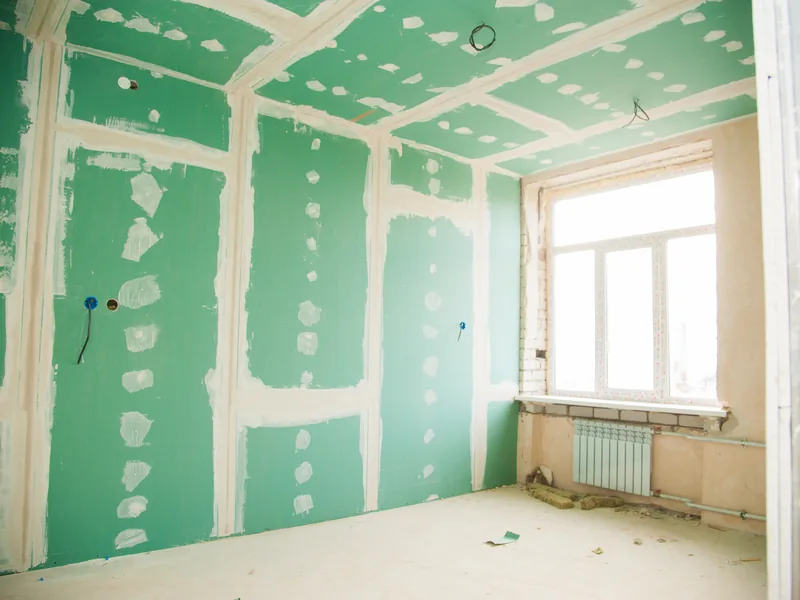
Spring Drywall Co., a drywall contractor in north Harris County, has installed Moisture & Mold Resistant Drywall in Spring, Texas for homeowners and businesses for 15 years. Damp-room board is a specification rather than a single product, so the correct board is selected room by room before anything is hung. It belongs in bathrooms outside the shower, laundries, kitchens, and unconditioned spaces such as garages. Where water lands directly on the wall, that surface gets an approved tile-backer system instead of ordinary moisture-resistant wallboard.
Compared with the ordinary paper-faced gypsum board used in a dry room, damp-room options include greenboard, glass-mat gypsum board, and panels rated for both moisture and mold resistance. The right choice for each wall depends on how much moisture the room puts into the air and what will be fastened to the face of the board. We choose between moisture resistant drywall and mold resistant drywall according to how the room is used. Mold resistance is rated under ASTM D3273, the finish level follows GA-214, and we carry both 1/2 inch and 5/8 inch board.
We are insured, and your on-site estimate is free throughout Spring and the surrounding communities. The board specified for your project is matched to the level of damp it will actually face. Call (936) 286-6045 or use our quote form for a clear, written price on your project.
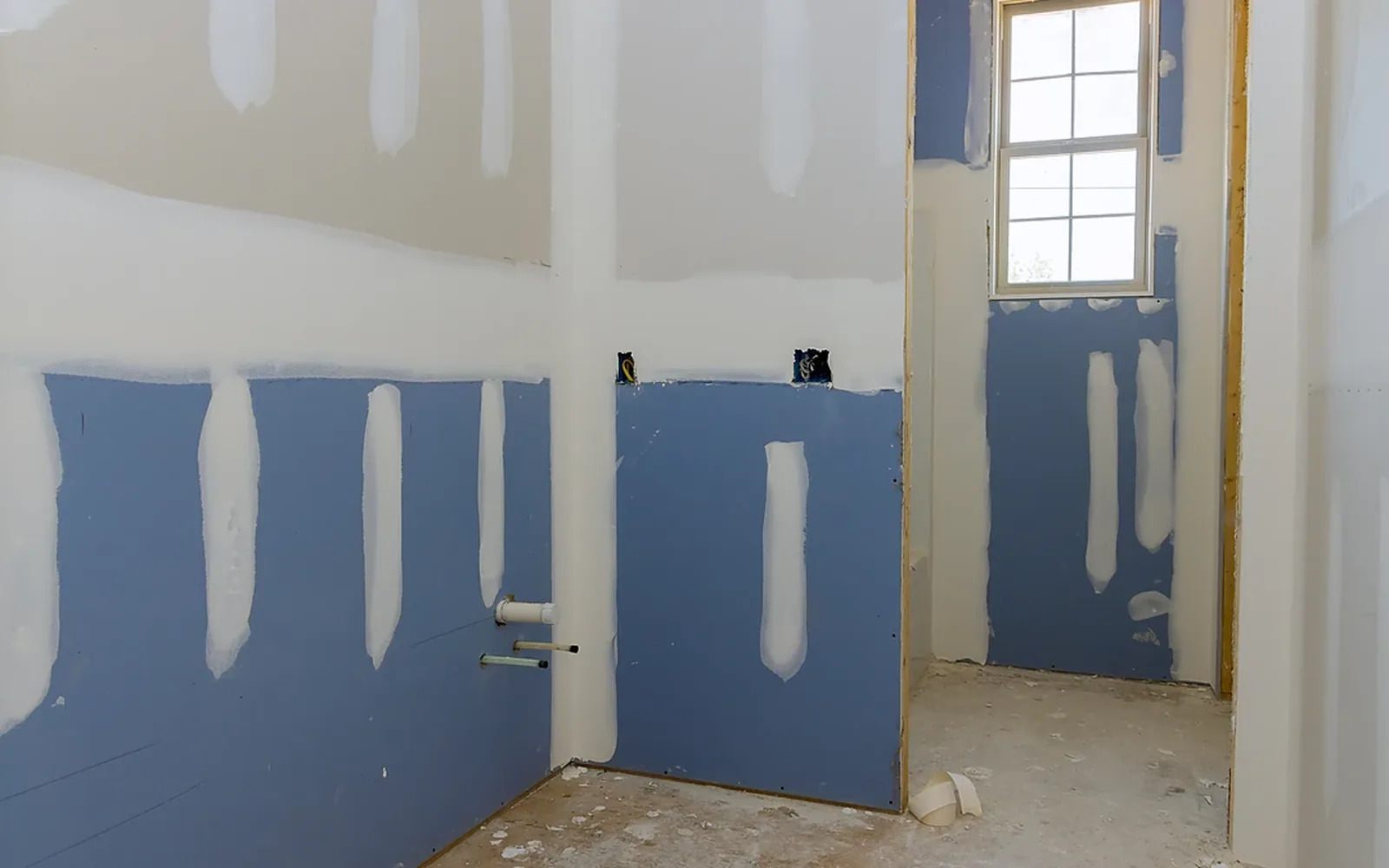
Choosing the Right Board for a Damp Room
Every panel in this group starts with the same mineral. Gypsum is a soft rock that is ground and pressed into a flat sheet, and because it is not organic, the board core provides nothing for mold to feed on. What changes from one board to another is the gypsum board facing wrapped around that core. Specifying moisture and mold resistant drywall is therefore a decision about the facing. The entries below move from the ordinary sheet used as the baseline, to panels made for damp conditions, and then to the thickness choice that applies across the group.
Standard Paper-Faced Drywall and Why Water Is Its Problem
Standard drywall uses the same gypsum core, wrapped on both sides in heavy paper, and is usually 1/2 inch thick. It is the board installed on most walls and ceilings in your house. Because paper comes from plants, mold grows when moisture, air, and organic material are present together. When water reaches paper faced drywall, it soaks into the facing and remains there for days because the paper cannot shed it. That does not make standard board the wrong choice. We hang it in every dry room we work in, and in those rooms it is the panel the job should get.
Greenboard: Moisture Resistant, Not Mold Resistant
The paper face on green board drywall is treated to shed water instead of soaking it up, and that treatment is the only difference from an ordinary sheet. Greenboard is moisture resistant drywall, not mildew resistant drywall, even though the two phrases are often used as if they mean the same thing. Shedding water and resisting mold growth are separate properties, and the treated face provides the first. Beneath that treatment, the facing is still paper, and paper is still organic, so the food source remains. In a powder room that only gets damp, greenboard is a sound specification, and we install it where that is what the room needs.
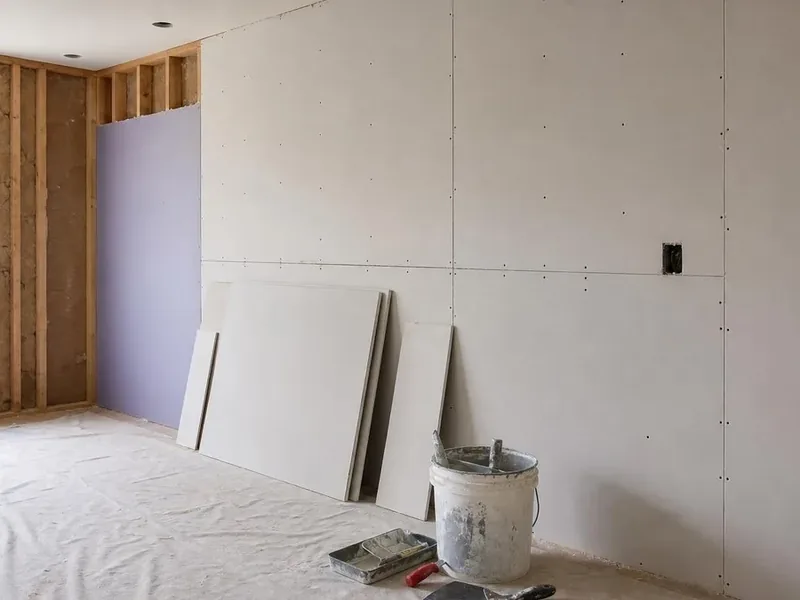
Glass-Mat Mold-Resistant Drywall and the Fiberglass Face
Glass mat drywall replaces the paper on both faces with a thin mat of spun fiberglass. Because fiberglass is glass, it does not provide food for anything living. That is the step greenboard does not take. With no organic layer on either side, this type of mold resistant drywall leaves mold nothing on the surface to feed on, while the gypsum core beneath it remains unchanged. These panels are specified under ASTM C1658, the standard that defines what a glass-mat gypsum panel has to be. Fiberglass faced drywall, also sold as paperless drywall, cuts and takes joint compound differently from a paper face, so our crews handle it differently on site.
Combined Moisture- and Mold-Resistant Panels
Most manufacturers now combine both properties in a single sheet, so the scope typically calls for one combined panel rather than a choice between greenboard and glass-mat. Knowing which facing sits beneath that name still tells you what you are buying, because the facing is the part exposed to damp conditions. We specify by board type rather than product name because a type identifies a property the panel either has or does not have, while a product name belongs to the manufacturer that made the sheet.
1/2-Inch or 5/8-Inch Moisture-Resistant Board
Damp-room board comes in both the standard 1/2-inch sheet and a stiffer 5/8-inch sheet, with thickness specified separately from the facing. Asking for 5/8 moisture resistant drywall or 5/8 mold resistant drywall sets the thickness but still leaves the facing to be chosen. One point worth separating is that a 5/8-inch measurement describes thickness, not a fire rating, even though the two are routinely treated as the same thing.
Which Rooms Need Moisture & Mold Resistant Drywall
Moisture resistant drywall belongs in rooms where damp air lingers or water repeatedly reaches the wall. Deciding where to use moisture resistant drywall is not about where the pipes run; your bedroom and hallway have plumbing in the wall and still take standard gypsum board without trouble. In your Spring house, the mold resistant drywall rooms fall into four room types, each for a different reason.
Bathroom Drywall Outside the Shower
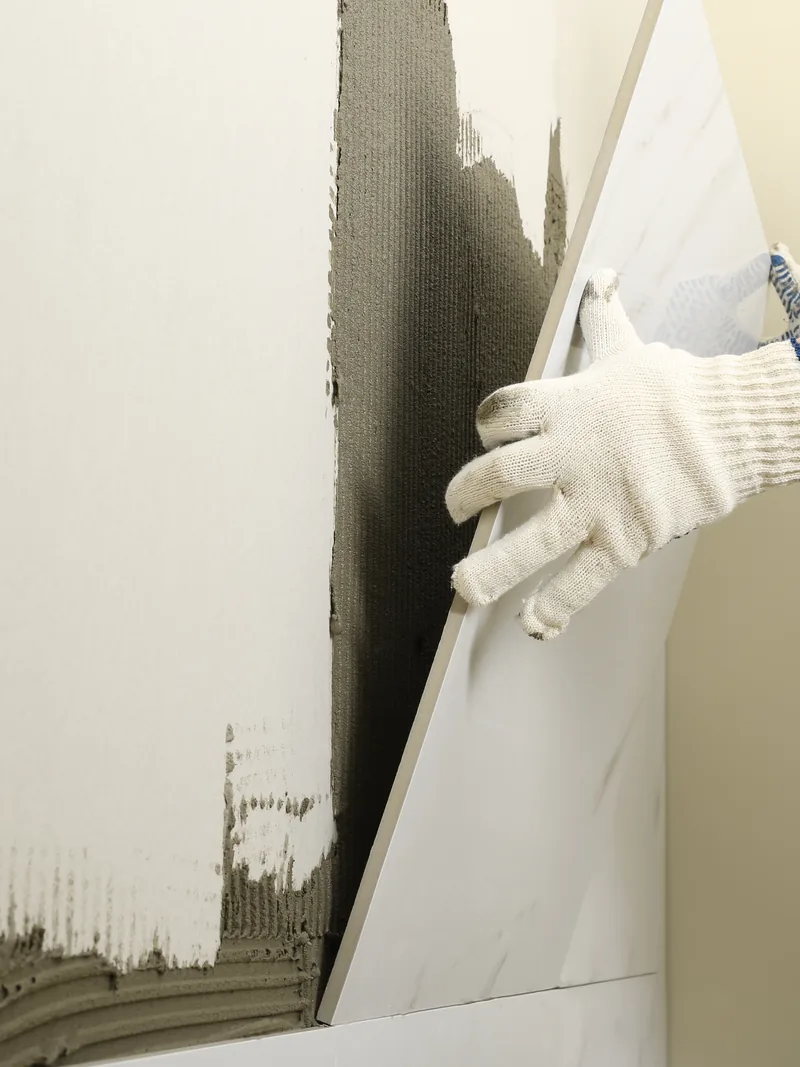
The bathroom drywall we hang covers the general walls and ceiling, where steam settles after every shower and clears slowly from a closed room. A moisture resistant drywall bathroom wall ends where the tile begins. Ordinary gypsum drywall is outside our scope as the tile substrate in direct-wet shower and tub-surround zones. A shower backer board is either cement board or a glass-mat backer panel. The backer panel gives the tile a surface to bond to, while the waterproofing installed over it is separate work handled by the tile trade.
Laundry Room Drywall and Utility Closets
A laundry room gets damp for a different reason than a bathroom. A washer and dryer release warm, wet air into a small enclosed space, and many laundry rooms have no window and a door that stays closed. Without a fan to pull that air out, moisture settles on the wall behind and beside the machines, where laundry room drywall breaks down first. A moisture resistant drywall laundry closet stands up to that daily exposure. A failed supply line or drain behind the washer is a flood rather than humidity, and it requires different work.
Kitchen Drywall and the Wall Behind a Sink
Most of a kitchen is an ordinary dry room, so the kitchen drywall on those walls can be standard gypsum board. Damp collects around the fixtures rather than throughout the room. It shows up behind the sink and along the run behind the dishwasher, and because base cabinets hide most of that wall, you often do not see it until the cabinets come out. We specify upgraded board only where repeated dampness justifies it.
Garage Drywall, Attics and Other Unconditioned Space
A garage, attic, or any room the air conditioning never reaches follows the outdoor air week after week. Garage drywall deserves a closer look for that reason, because these rooms track outside conditions far more closely than conditioned spaces, and nothing has to leak or spill for a wall to sit damp. Whether unconditioned space drywall should be an upgraded panel still depends on the room, how well it is vented, which walls adjoin conditioned space, and how you use it.
What “Mold Resistant” Means on a Test Report
The phrase mold resistant drywall on a board wrapper refers to the result of a laboratory test rather than simply describing the panel itself. Once you know what that test measures, choosing a board becomes a specification decision, because you are matching a measured performance limit to the room you are finishing.
That mold resistant drywall rating comes from a mold resistance test called ASTM D3273. Panels are hung inside a sealed chamber kept warm and wet above a bed of soil deliberately seeded with mold, where they remain for four weeks. Each week, the surface is scored from 0 to 10 against ASTM D3274, using published photographs that define what each grade looks like. A score of 10 means no detectable growth, while 0 means the face is covered. The panel that maintained a 10 through all four weeks is the one that tested best.
What the Mold-Resistance Score Does Not Cover
The score applies to the panel as it left the factory, tested at the time of manufacture under controlled conditions held steady for four weeks. Your house does not stay that constant. A room takes in damp air and releases it throughout the day, plumbing runs inside the walls, and any product becomes susceptible to mold growth when conditions get bad enough. No manufacturer sells mold proof drywall, so the chamber score indicates how the material performs rather than guaranteeing how a finished wall will behave in your house. Whether mold resistant drywall is worth using in a particular room depends on how much water reaches the wall and how quickly it dries.
No Moisture-Resistant Board Is Waterproof
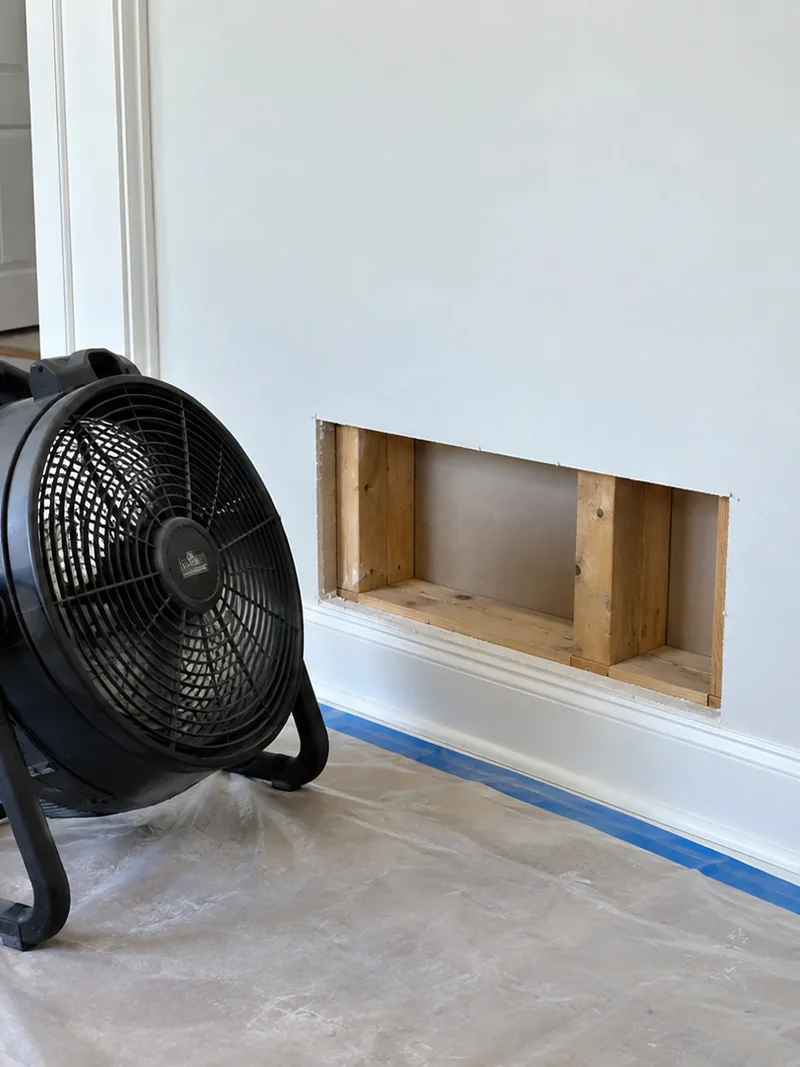
There is no waterproof drywall at any price. A panel left standing in water swells and loses its strength whether or not it earned a high chamber score, so a supply line that bursts behind the wall ruins the board either way. The upgrade is meant for years of service in a room that stays damp rather than one that floods, and those are the moisture resistant drywall limits worth understanding before you decide how much of the house needs it.
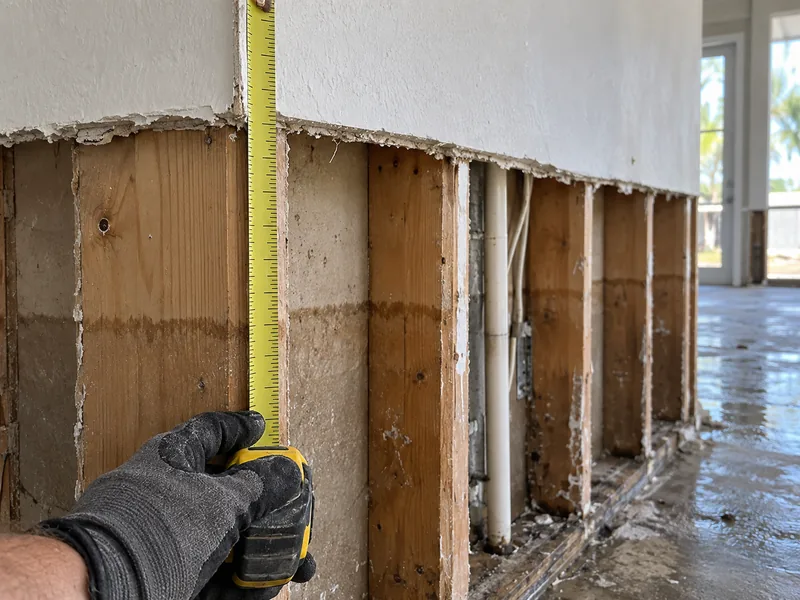
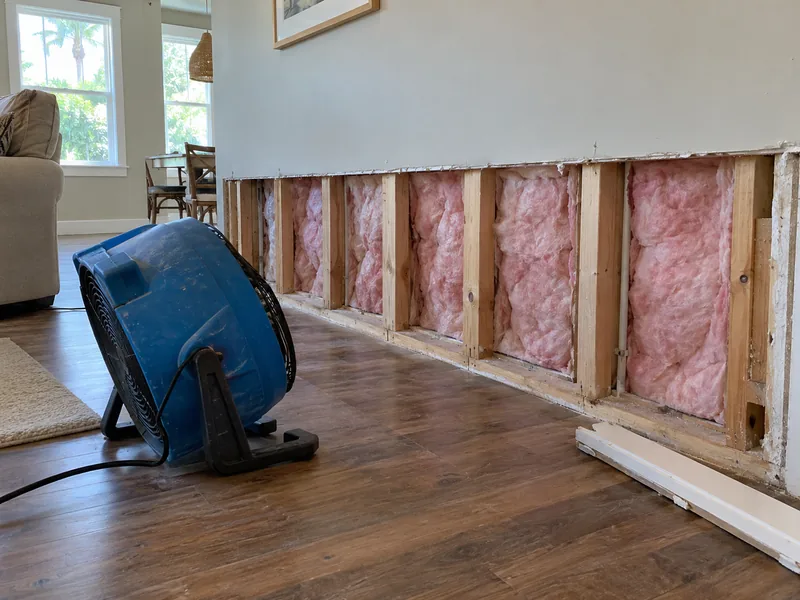
Where water has already come through, finding the source and stopping it is separate work that comes first. The wall cavity, the hollow space between the studs, must be completely dry before we close it with new board. Repairing water damage is a separate job with its own scope.
Where Board Work Stops and Mold Remediation Starts
What we provide is the material and the work of hanging it. We do not inspect for mold, test for it, treat it, or perform mold remediation in Texas or anywhere else. Where Texas law requires licensed mold assessment or remediation, that work is handled by a licensed mold professional first. After that work is complete and the area is released, our mold resistant drywall installation begins with new board on the framing and the room finished back out. Knowing where our scope ends makes it clear who to call first and what to ask us for once they are done.
Hanging and Finishing Moisture & Mold Resistant Drywall
Water rarely gets into a wall through the middle of a sheet. It gets in at the joints, along cut edges, and around the pipes and boxes that pass through the board. A moisture resistant drywall installation that leaves those three points unprotected gives back much of the margin you paid for. We hang and fasten the board to ASTM C840, the trade standard for installing gypsum panels on framing, and focus the rest of a mold resistant drywall installation on the seams, edges, and openings.
Fiberglass Mesh Tape at the Seams
Tape covers every joint between two sheets before filler goes over it. Paper tape is exactly what its name says, so running it across every seam puts a strip of paper back onto a wall you upgraded to keep paper out of. Where the panel system calls for fiberglass mesh tape, an open woven glass fabric with adhesive on one side, we bed it in the compound specified by that board’s manufacturer. Mesh does not hold until it is bedded, while a setting compound hardens by chemical reaction rather than by drying. At an inside corner where two walls meet, paper folds more cleanly than mesh, so we use it there.
Cut Edges, Fasteners and the Gaps Nobody Sees
A sheet arrives with two finished long edges, and every cut around a window or pipe exposes the gypsum core along that line. We seal those cut edges to keep the room out of the core, rather than leaving raw gypsum open to the cavity. Drywall fasteners are set just below the surface, deep enough to cover with compound but shallow enough to keep the facing intact. The screws are corrosion resistant, and their spacing changes with the assembly, so we follow the hanging standard rather than a single fixed measurement. Sealant closes the gap at the floor and around openings where pipes pass through your wall.
Moisture Metering Before the Wall Closes
Once drywall goes back on the framing, everything behind it is hidden until a problem shows through the paint again. So we check the cavity with a moisture meter, a handheld instrument with two pins that reads how wet the material they touch is. We compare the exposed framing and surrounding materials against dry reference readings before closing the wall. A number on its own settles nothing: the scale depends on the instrument and on the material under the pins. What proves the cavity dry is a reading that matches material we know to be dry. That reading goes into the written record for your job, so the condition of the cavity we covered carries a date.
Finishing a Glass-Mat Face
Finishing glass mat drywall is different from finishing a paper-faced sheet. Its woven face is coarser and pulls water from the compound faster than paper does, so a coat that dries flat on paper can turn patchy across the field. We usually skim the entire surface rather than treating only the joints, bringing the face and seams to one consistent texture.
Estimates name the GA-214 finish level as its own line item, so a Level 5 skim is a priced choice rather than a vague allowance. Level 4 is the standard smooth finish used in most rooms, while Level 5 adds a skim coat across the entire face and is worth the extra work where gloss paint or light from a window running down the wall would expose every seam. Primer follows so your paint goes onto one even surface.
Why Choose Us
Why Choose Spring Drywall Co. for Moisture-Resistant Board
We specify moisture- and mold-resistant board where it earns its place, and part of the job of a moisture resistant drywall contractor is telling you where it does not. A bedroom wall or hallway stays dry year-round, so upgrading the board there adds cost without giving you any practical benefit.
The same four things hold on every job we hang, whatever its size.
- We carry general liability insurance and can send our certificate of insurance before work begins.
- Our crews hang and fasten panels to ASTM C840, which sets the standard for how they meet the framing, and every scope lists the GA-214 finish level by name.
- Our on-site estimates are free, the written estimate is line-itemed before you commit, and financing is available on larger projects.
- Plastic barriers, sealed doorways, and vacuum-assisted sanding are part of the base scope on every occupied-space job, not an add-on.
Damp rooms in north Harris County make up much of the work a drywall contractor Spring TX homeowners call gets asked to handle, and those walls have to perform through changing seasons rather than just look good the day the paint dries. Call us at (936) 286-6045 or send your room details through the quote form, and we will walk through the damp rooms with you before putting a price on the work.
What Moisture-Resistant Drywall Costs
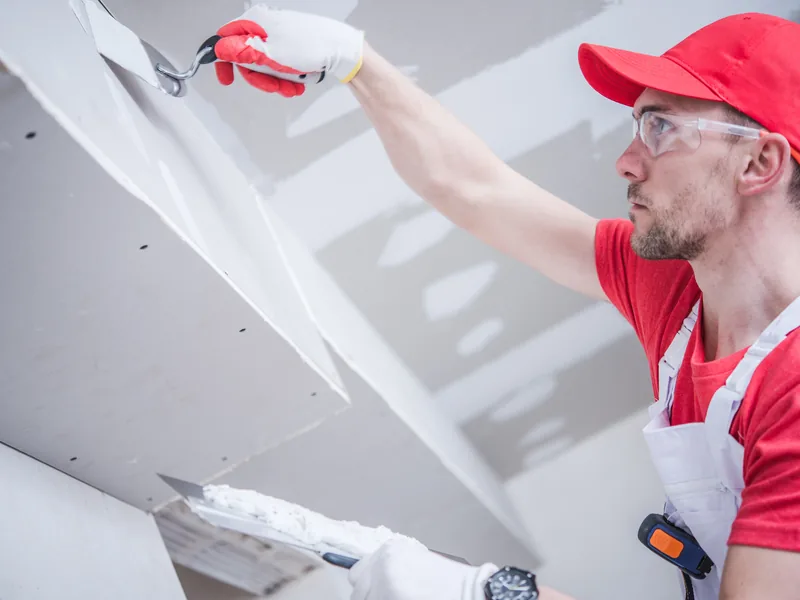
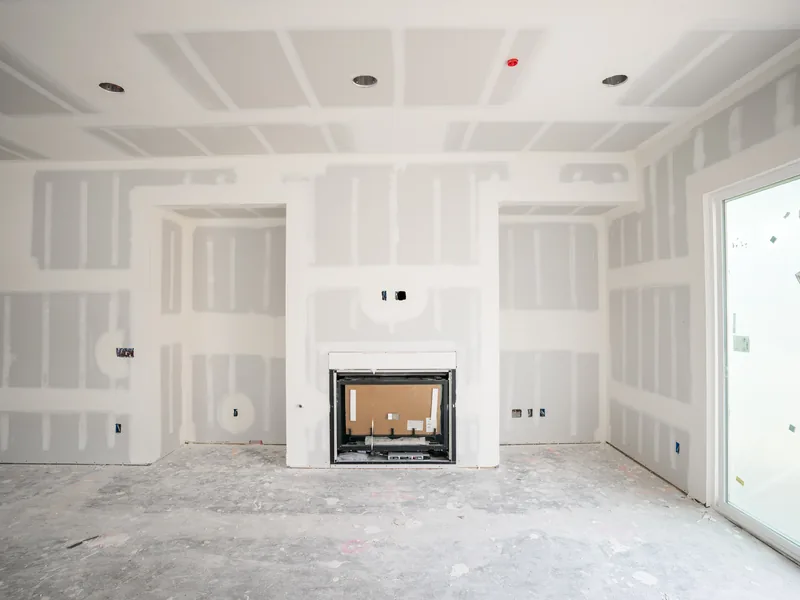
The upgrade to moisture- and mold-resistant board is added to the cost of ordinary installation work rather than priced as a separate job. New drywall installation runs about $2.00 to $3.00 per square foot for hang, tape and a Level 4 finish. The moisture resistant drywall cost for one house and the mold resistant drywall price for another depend on the rooms involved, not on the panel alone. We measure your rooms and put the price difference in writing.
What Changes the Price of the Upgrade
Moisture- and mold-resistant panels cost more per sheet than standard gypsum board, but that difference is rarely the largest part of the job. The drywall cost factors that affect the total most are the square footage being hung, whether the old wall must come out before new board goes up, and the finish level specified for the room. Removing damaged board, bagging it, and hauling it away adds labor before a single new sheet is installed. A smoother finish also requires more coats and more sanding, so that added cost is labor rather than material. Fiberglass mesh tape and setting compound add a smaller amount, and both are listed on the paperwork.
How We Show the Upgrade on Your Estimate
Your drywall estimate is written room by room, so the upgrade appears as a line you can read instead of a number buried in the total. Because it is a line item estimate, you can keep a bedroom on standard board and see exactly what that saves, then compare our price with another contractor's line by line instead of looking at two totals and guessing where the difference comes from.
How a Moisture-Resistant Board Job Runs
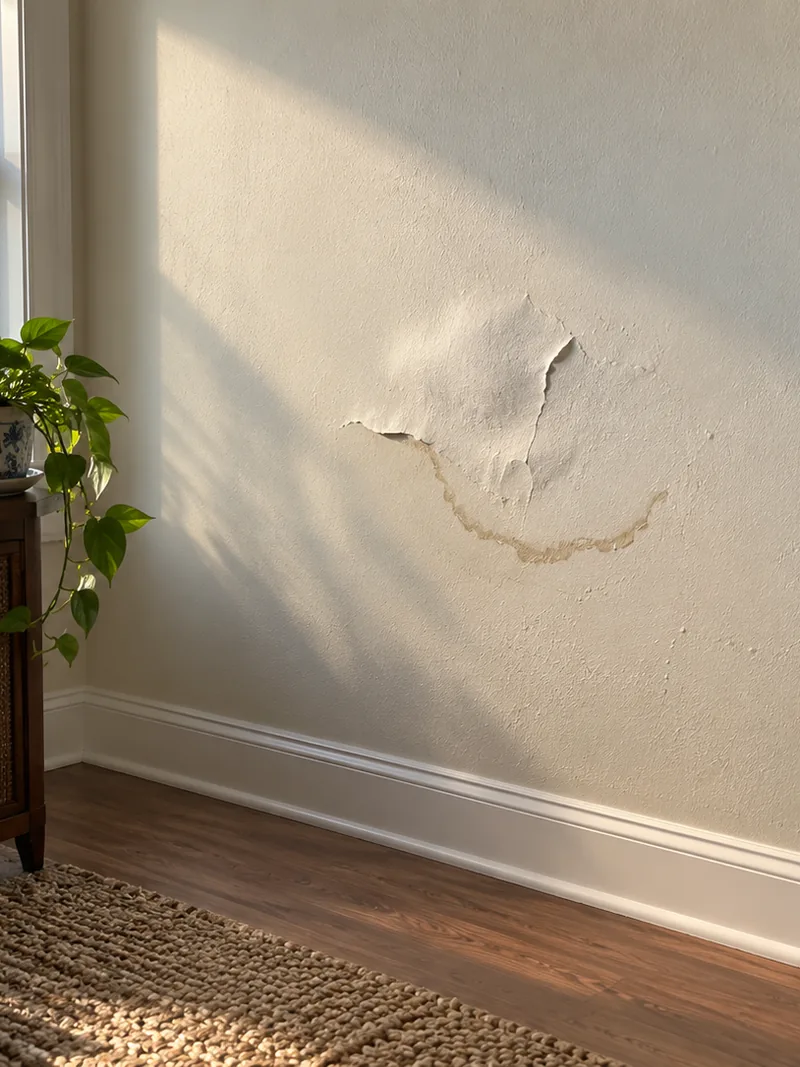
Every moisture resistant drywall installation we handle follows the same four steps, whether the job is one bathroom wall or an entire house. We do not order or cut anything until you have agreed in writing to the proposed scope. The drywall installation process at Spring Drywall Co. follows the order below.
-
1
We Walk the Rooms With You
We walk through the house with you.
We settle the specification during a free on-site visit, looking at how you use each room and how well it is ventilated rather than focusing only on visible damage. Where a wall or ceiling reads damp, we check it on the spot. You show us the rooms that concern you, and the on-site estimate is built around them.
-
2
You Get a Written Scope Naming Each Board
You receive the full scope in writing before work begins.
After the walk-through, you receive the scope in writing. It shows exactly which rooms are getting the upgraded board, so you can remove any of them before a sheet is purchased. Nothing is booked until you approve the scope.
-
3
We Contain, Hang and Detail
We seal the work area, hang the board, and finish the joints.
We seal the work area with plastic barriers before the first cut so dust from cutting and sanding stays inside the work zone. That dust containment is part of the base scope in an occupied house, not an extra charge. The board then goes up, with the detailing required for a damp room completed as each wall is closed.
-
4
We Meter, Finish and Clean Up
We take readings, finish the surface, and leave the room clean.
We confirm that the exposed framing and surrounding materials are dry before new board closes the wall. Drywall finishing then proceeds to the level named in your scope, which determines the smoothness you see under the paint. The barriers come down last, and we vacuum and wipe down the room before we leave.
Humidity, Air Conditioning and Board Choice in Spring
Spring sits in climate zone 2A, the hot and humid band, and the humidity Spring, TX homeowners deal with lasts through most of the year. That makes ventilation, wall drying, and board choice especially important in bathrooms and laundry rooms, so moisture resistant drywall in a humid climate is part of ordinary planning rather than something reserved for a house that has already had a problem.
A Cooling Season That Runs Most of the Year
Your air conditioning runs seven to eight months a year, keeping the room side of the wall cool and dry while the outside air stays warm and wet. Those conditions press against each other for months, with moisture moving inward. In a hot, humid climate, walls are built to dry rather than sealed shut. We do not install plastic sheeting on the room side of a wall here because sealing that face traps water in the wall instead of keeping it out. We specify board that stands up to damp air while allowing the wall to dry.
The Board Is Not a Substitute for Moving Air
No panel dries out a room. Bathroom ventilation does more for a damp bathroom than any board we hang. An extractor fan, the small fan set into a bathroom ceiling, pulls wet air outside while the shower runs so the room dries between uses instead of staying damp. That fan works only when its duct terminates outside the house, because a duct that stops in the attic dumps damp air into the roof space. We do not install fans or ductwork, so humidity control is separate from our scope. We specify the board for the room as you use it.
Moisture-Resistant Drywall Across Spring and Nearby Communities
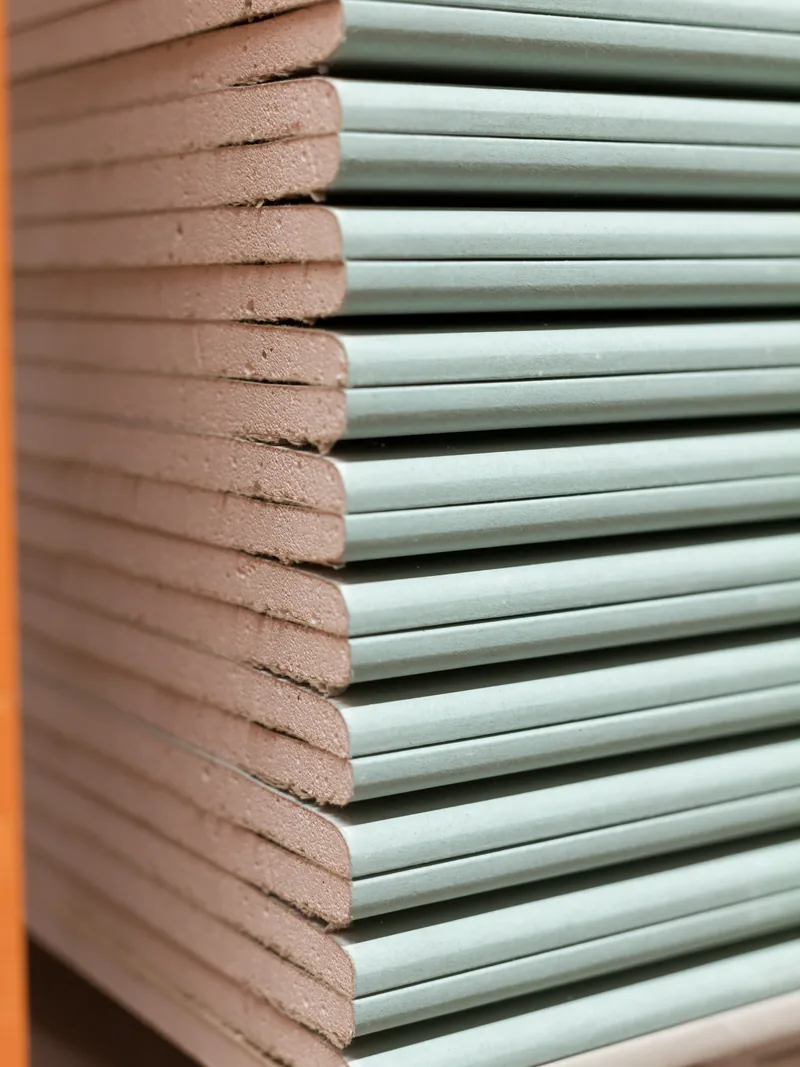
Damp rooms behave the same way across north Harris and Montgomery counties, so moisture resistant drywall in Spring, TX answers the same question whether your house is in Spring itself or one of the 17 communities below. We work as a drywall contractor in north Harris County and west of it, and the specification stays the same from one address to the next.
Communities We Serve Around Spring
Our drywall service area in Spring, TX covers three counties and the towns between them. Spring Drywall Co. provides moisture- and mold-resistant drywall installation across Spring and the surrounding communities of north Harris and Montgomery counties, and west into Waller County:
- Tomball
- Klein
- Shenandoah
- Oak Ridge North
- Porter
- Humble
- Aldine
- Westfield
- Bammel
- Champion Forest
- Willowbrook
- Jersey Village
- Cypress
- Hockley
- Waller
- Magnolia
- Pinehurst
FAQ
Common Questions About Moisture-Resistant Drywall
Is mold and moisture-resistant drywall worth it?
It depends on the room. In a bathroom, laundry room, or unconditioned space, moisture resistant drywall is worth the added cost; on a dry bedroom wall, mold resistant drywall adds no practical benefit.
What is the most mold resistant drywall?
A glass-mat panel faced with fiberglass leaves no paper for growth to feed on. Panels like these earn the top score in the chamber test used to rate mold resistant drywall.
What is moisture-resistant drywall called?
Most people still call it greenboard, but what is sold today as moisture resistant drywall is usually a combined panel with both properties rather than the same sheet as plain greenboard.
Can moisture-resistant drywall go behind shower tile?
No. A shower or tub surround requires backer board rather than drywall. The rest of your bathroom wall, outside the tiled area, still takes mold resistant drywall.
Does mold-resistant drywall mean mold can never grow?
No. Moisture resistant drywall removes one food source, not every condition mold needs, and mold resistant drywall will still develop mold in a room that stays wet.
Do I need moisture-resistant board in every room?
No. We specify moisture resistant drywall where humidity stays high or repeated splashing reaches the wall, which usually means bathrooms, the laundry room, and an unconditioned garage. Installing mold resistant drywall in a dry bedroom adds cost without adding any practical benefit.
What is mildew-resistant drywall?
Mildew is a surface mold, so the phrase refers to the same treated boards sold as mold resistant drywall. Greenboard is often described that way, although its paper face is treated to resist water rather than mold growth.
Get the Right Board Specified
The upgraded board belongs in some rooms and not in others, and a free on-site visit is where we determine which rooms need it. Call (936) 286-6045 or fill in the quote form for a drywall quote Spring TX owners receive in writing. We walk through each damp room with you first, then Spring Drywall Co. provides a written estimate that names the board specified for each room and leaves the final decision with you.