
Drywall Contractor & Drywall Repair in Champion Forest, TX | Spring Drywall Co.
Spring Drywall Co. is a drywall contractor serving Champion Forest in Harris County, Texas. We repair damaged walls and ceilings, replace water-damaged board, hang new drywall, match existing textures, and handle finishing and painting.
Champion Forest was built out beginning in 1976 across ten numbered sections under one association, with wooded lots that have carried a bird sanctuary designation since 1980. Nearly every wall and ceiling here is paper-faced gypsum board. Each house was finished according to the standard practices of the year it was built, so drywall repair starts with matching what is already there. Before any board is cut, we measure its thickness and inspect the texture on your wall, then blend the new surface into the surrounding finish.
We also serve the rest of unincorporated northwestern Harris County around FM 1960 and SH 249. Call (936) 286-6045 or use our quote form to arrange a free estimate.
Why Choose Us
What Champion Forest Property Owners Get From This Drywall Contractor
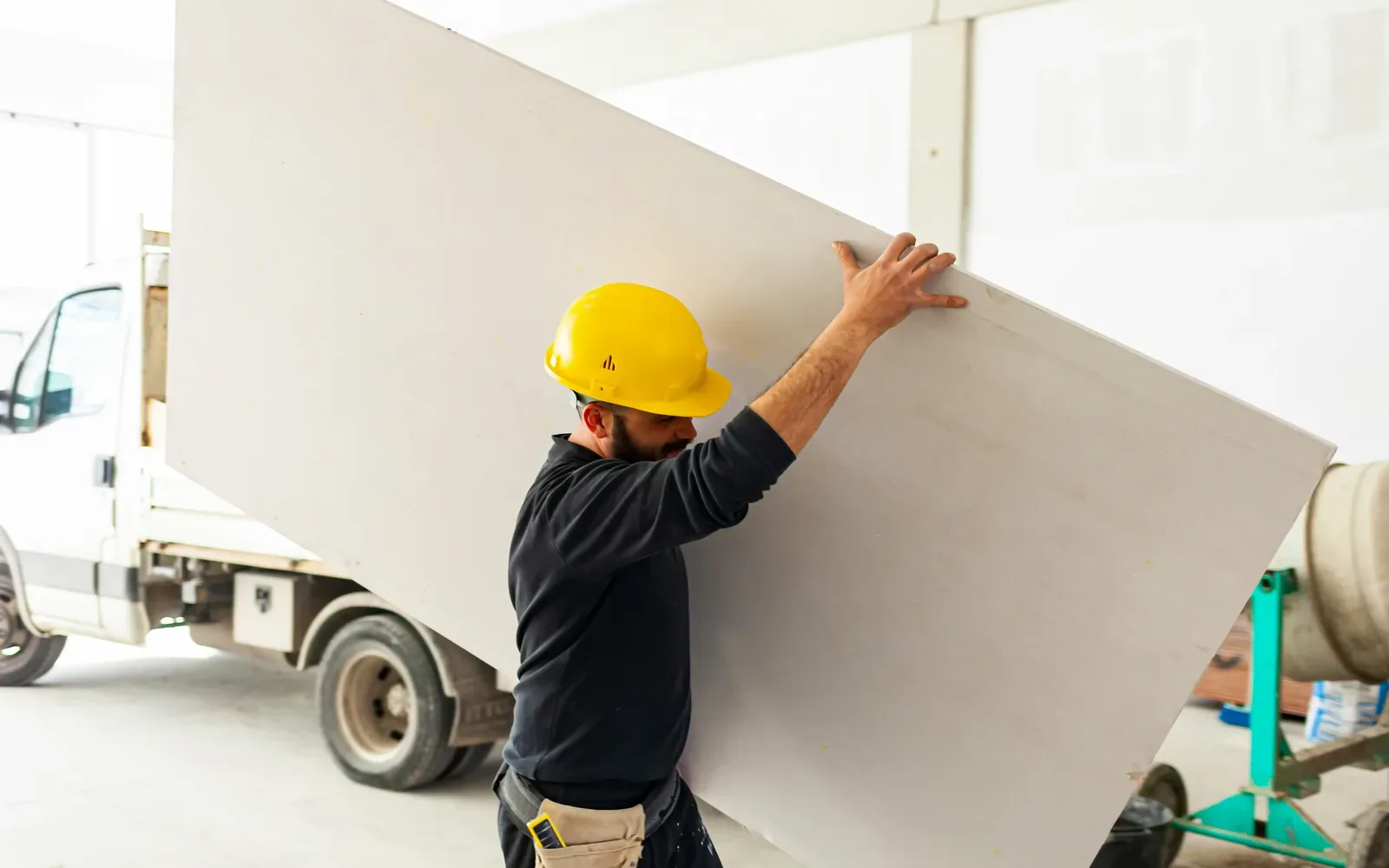
Spring Drywall Co. has 15 years in business on north Harris County houses, with two commitments included on every job in Champion Forest.
- We are an insured drywall contractor, and our crews work to ASTM C840 for how gypsum panels are hung and fastened and to GA-214 for finish levels.
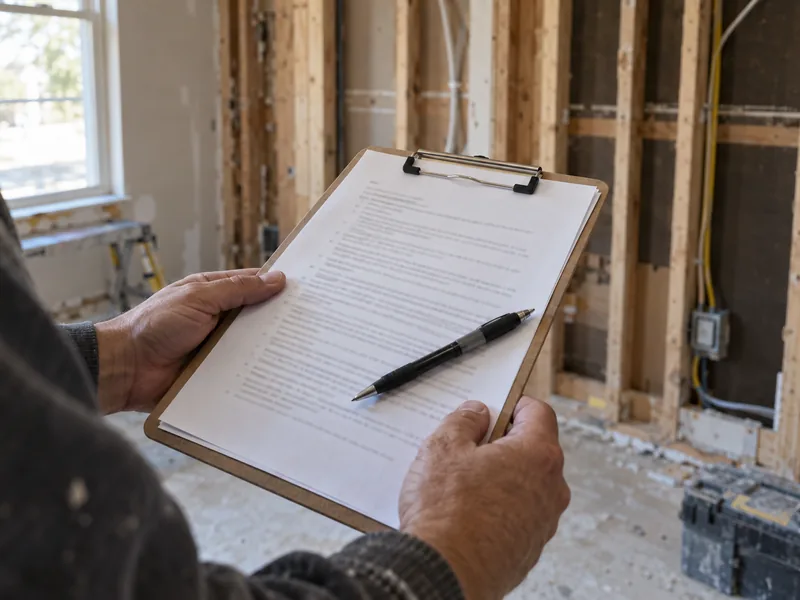
- Our on-site estimates are free, the written estimate is line-itemed before you commit, and financing is available on larger projects.
ASTM C840 sets the requirements for hanging and fastening panels, while GA-214 defines the finish levels, with Level 4 used for an ordinary painted wall and a Level 5 skim used where strong light crosses the surface. We also work as a drywall contractor in Willowbrook.
Drywall Contractor Work in Champion Forest
We handle repairs, new drywall, ceilings, finishing, specialty board, framing, and related wall work throughout Champion Forest, along with commercial drywall for offices and suites elsewhere in north Harris County.
Drywall Repair
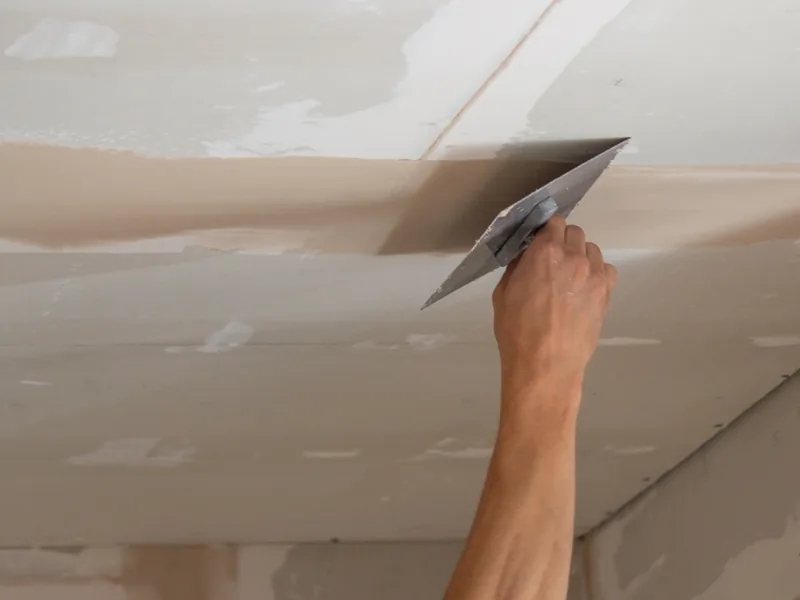
On an everyday repair, we fill holes with joint compound, the plaster-like filler used over tape and screw heads, replace paper joint tape where a seam has opened, and reset screws and nails that have pushed bumps through the surface. Simply filling the surface leaves the cause in place, so a pop or seam crack returns. If a crack comes back after a sound repair, the problem can be movement in the ground under the house rather than a finish defect, and we will tell you that.
Drywall Installation
We hang full sheets of gypsum board on the wood framing behind your walls, then tape, float, and sand the joints until they disappear beneath the paint. That is the right approach when damage extends beyond a patch or a remodel opens up part of the room. Sheetrock installation in a subdivision like Champion Forest takes place inside a finished house rather than an empty shell, so each new sheet has to be cut and fitted around walls, ceilings, and door openings that were built decades ago.
Water Damage Drywall Repair
Water-damaged board loses its strength and does not recover after it dries, so following a storm or roof leak we remove the wet material and cut back to board that is still sound. We dry the framing and cavity behind it before installing anything new, because board hung over damp framing will fail again. In a Champion Forest bathroom, laundry room, or similar space, we install board designed to resist moisture and mold. Where Texas law requires licensed mold assessment or remediation, that work is handled by a licensed mold professional first.
Drywall Finishing & Texturing
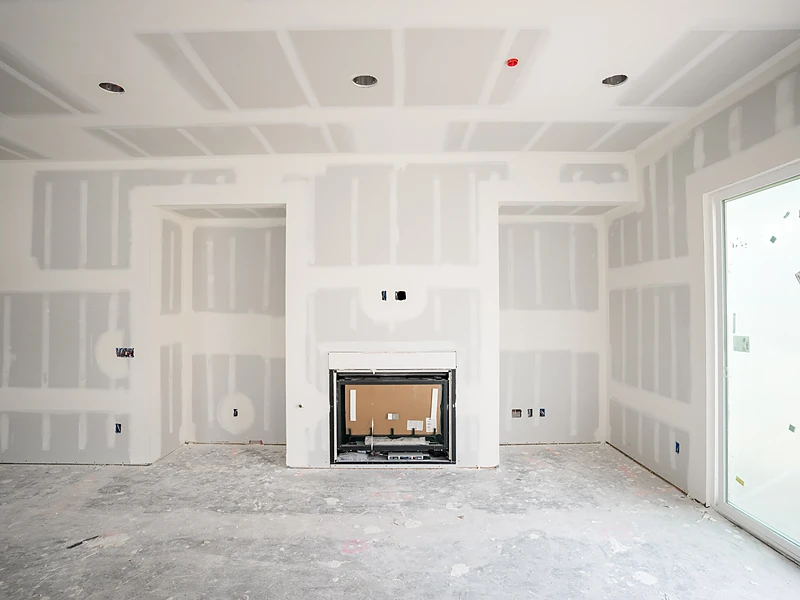
Texturing is the sprayed or troweled pattern applied to a finished wall, and in Champion Forest that pattern is usually orange peel or knockdown. We copy the pattern already on your wall, spraying a test board and comparing it against the existing surface before finishing the room. Smooth walls are finished to Level 4 as standard, with a Level 5 skim where strong light crosses a wall. Estimates name the GA-214 finish level as its own line item, so a Level 5 skim is a priced choice rather than a vague allowance.
Ceilings & Popcorn Ceiling Removal
Ceilings use the same board as walls, but because they carry it overhead, a leaking or sagging panel is repaired or replaced rather than simply filled. We also hang new ceilings, install acoustical ceilings to reduce sound in a room, and remove popcorn texture before applying a new finish. Popcorn is the rough sprayed coating found on many older Champion Forest ceilings. Popcorn texture or other suspect material is tested by a qualified asbestos professional when its age or condition warrants testing before disturbance, and we scrape only material the results clear as safe.
Drywall Types & Specialty Systems
Different rooms call for different grades of board, and in Champion Forest the way a space is used determines which one belongs on the wall. In bathrooms outside the shower area, laundries, and kitchens, we install board treated to resist moisture and mold. Ordinary gypsum drywall is outside our scope as the tile substrate in direct-wet shower and tub-surround zones. Tile-backer board is used there instead. For fire-rated construction, we install Type X gypsum board as part of a tested system, and the rating is earned by the tested assembly rather than by the board. Soundproof drywall is installed the same way by our own crew rather than supplied as a kit.
New Walls, From the Studs
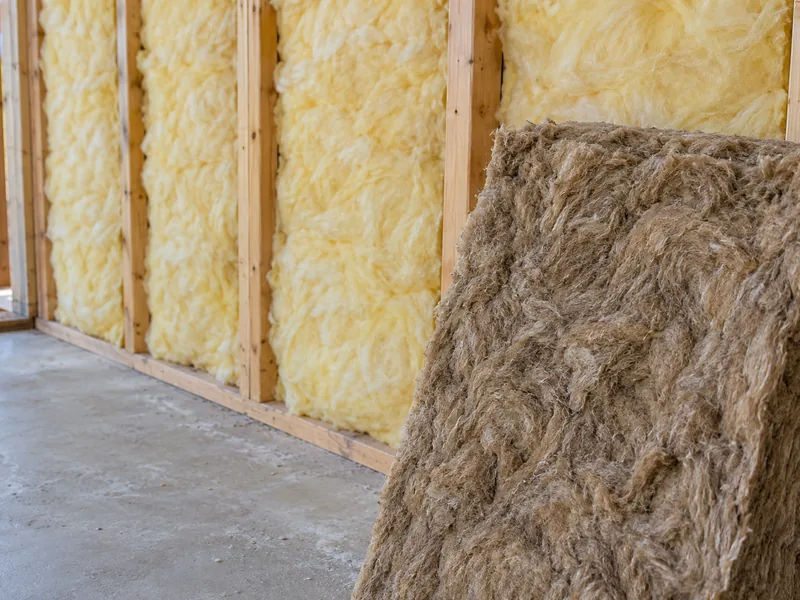
A new wall starts before any board arrives. We build it with metal studs or wood, install insulation in the open cavities, then board both sides and finish the surfaces. Because insulation has to be installed before the wall is closed, it goes in while the frame is still exposed. The same sequence applies to a partition that divides one room into two and to new-construction drywall in an addition. We frame the new wall to the opening you want, so a doorway can move with it instead of staying where it was before.
Detail and Surface Work
These jobs are done on walls that are already in place. We build custom features and arches, box in soffits and bulkheads above cabinets and around ductwork, repair or install corner bead, patch plaster on the oldest Champion Forest walls, and strip wallpaper back to a surface ready for paint. Corner bead is the metal or plastic strip that forms a straight edge on an outside corner. We also rehang loose board, install access panels where valves need to remain reachable, then prime and paint the finished work so the wall takes paint evenly.
What Drywall Work Costs in Champion Forest
Drywall repair cost in Champion Forest depends on the work involved. The single-room range is the broadest, covering everything from a few popped fasteners to a full room reboard, while the other prices apply to specific jobs within that range. None is a price for a single wall; the on-site visit determines the actual scope and price.
- We patch a small to medium hole in the $200 to $600 range.
- We repair the drywall in one room in the $150 to $1,500 range.
- We repair a ceiling in the $400 to $1,300 range.
- We rebuild a wall after water damage in the $600 to $2,500 range.
- We hang, tape and finish new board to a Level 4 finish at $2.00 to $3.00 per square foot.
Matching the texture already on your wall is a separate part of the job, and texture matching on its own runs $150 to $350. Overhead work requires staging and a second pair of hands, so the same repair costs more on a ceiling than it does at shoulder height. We prime and paint the repair ourselves, so when comparing quotes, check whether the price includes restoring the paint or stops at bare compound.
Why the Drywall Differs Across Sections 1 Through 10
Champion Forest is made up of ten numbered sections, each platted and built separately rather than all at once, and the walls inside the houses still reflect those differences. Drywall repair here starts with two questions: why one subdivision has more than one wall finish, and what a patch has to match before it disappears into the surrounding surface. Sheetrock repair that answers both starts with the wall in front of us rather than a single standard applied across the neighborhood.
Why One Subdivision Has More Than One Drywall Finish
Sections 1 through 10 were each recorded separately, with their own deed restrictions. Deed restrictions are rules written into a property's ownership record that set what may be built there and how it has to look. Those ten separate filings also meant ten separate periods of construction, so houses finished in different years received the board, fasteners, and sprayed textures that were standard at the time. No public record establishes the order in which the sections were built, so we do not guess. What is on your wall tells us more than your address does.
Matching a Texture to the House, Not the Street
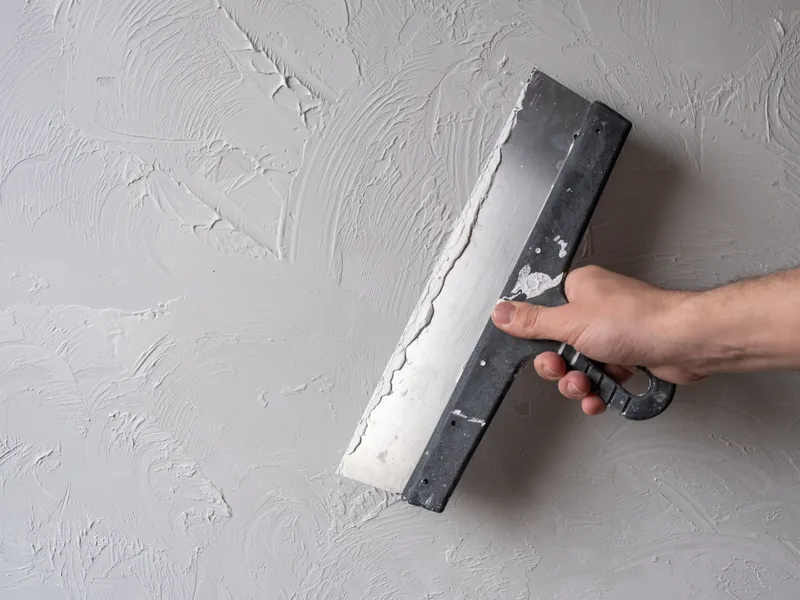
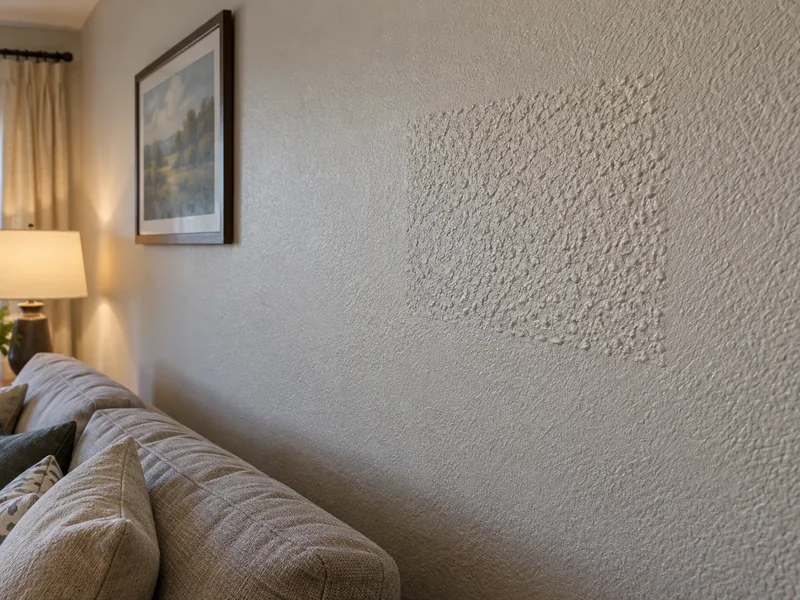
Orange peel texture and knockdown texture both start with joint compound sprayed onto a finished wall, the orange peel left as a fine spatter and the knockdown flattened while the compound is still wet. The spray weight and spacing of the flattened areas differ from house to house, so a patch matched to the house next door can still stand out in yours. Older board also moves over time, opening seams where joint tape bridges two sheets, pushing fasteners into small circles at the surface, and chipping outside corners.
Drywall Jobs by Part of Champion Forest
For drywall work, Champion Forest breaks into three distinct parts: the ten numbered sections it was originally laid out in, the through-street that shares its name, and the frontage along Raveneaux Country Club. Each area brings a different type of drywall work, based on the buildings and conditions there rather than the address alone.
Champion Forest Drive: Taking a Ceiling Down and Putting It Back
Champion Forest Drive is the road the subdivision is named for, and the oldest houses in Champion Forest line it and the streets branching from it. Ceilings are the work we are called about most in these homes. A ceiling repair means cutting out the damaged board overhead, fitting new board into the opening, and blending the texture until the seam disappears. A full replacement means taking the entire ceiling down and hanging fresh board across the framing. If the damage stops at one joint, we patch it; if it has spread across several, we replace the ceiling.
Sections One Through Ten: New Partitions and Custom Features
Each of the ten sections has its own recorded deed restrictions. Inside the houses, we add partitions, the non-load-bearing walls that divide one room into two, along with custom features such as niches, arches, and bulkheads built from board and compound. A partition is framed, boarded on both sides, and finished to match the room you are dividing, so the new wall does not announce itself. Where a feature needs to support a light or shelf, we build the backing in before any board goes on.
The Raveneaux Country Club Frontage: Popcorn Texture, and What Replaces It
Along one edge of the subdivision, houses face the Raveneaux Country Club golf course rather than another row of homes, and the future of that open ground has been debated rather than settled. Popcorn ceilings are common in these houses. Once the texture has been cleared for removal, we scrape it from the board overhead and repair any paper surface torn in the process, because board that has lost its face will not take a new texture evenly. Retexturing comes after the board underneath is sound and dry again.
Mature Trees, Tight Driveways and Getting Board Inside
Mature oaks and pines hang low over many Champion Forest driveways, so a loaded board truck cannot always pull close to the door. That creates two separate problems, which we handle in order. First, we work out how close the truck can get based on the overhead branches and driveway width. Then we carry the gypsum board from that stopping point into the rooms where it will be hung.
Where a Full Sheet Can and Cannot Go
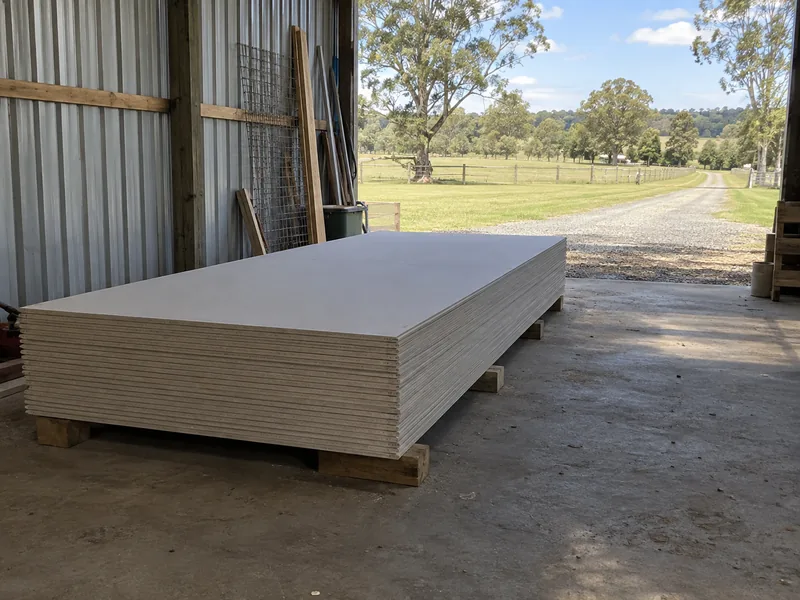
Drywall panels come in set lengths, and the longest we use is a twelve-foot sheet. A single twelve-foot board covers more of a wall in one piece and leaves fewer joints to tape and smooth. Moving one into place requires a clear path from the truck to the room, with enough space at each turn to swing it through. If a low branch keeps the truck at the curb or a stair landing is too tight for a long sheet, we use shorter boards and finish the additional joints they create.
Moving Board Through a House You Live In
In a finished, occupied house, every sheet has to pass through rooms you use, so we decide where the board will be cut and stacked before delivery. That sets the route the sheets travel, and we cover what the route runs over, from the driveway they are carried across to the floors and the corners they have to be turned around. Gypsum board is heavy and its edges crush easily, so planning the route ahead of time protects both your house and the material.
Drywall Approvals in Champion Forest: the HOA, Then Harris County
Two bodies have authority over work on a house here, and we are not either of them. Champion Forest Fund, Inc. is the non-profit corporation that administers the deed restrictions for all ten sections and is registered in Texas as a 501(c)(4), the tax category used for civic associations rather than charities. Its Architectural Control Committee reviews what owners propose to build, while the county provides the other layer of oversight.
What the Committee Reviews, and What It Does Not
Everything on the committee's published approval list is either visible from outside the house or placed temporarily on the lot. That list includes new construction, exterior painting, re-roofing, new windows, masonry, siding, and additions. Interior drywall is not on it, so patching a ceiling inside your house requires no application or waiting period. The committee does review room additions because they change the shape of the house, along with dumpsters or pods placed in the driveway during the work. Once an application is complete, the committee has up to thirty days to respond, and starting work before that approval can result in a cease-and-desist letter and fines.
Where Harris County Comes In
Champion Forest sits outside city limits, so no municipal building department reviews work here. Permits for unincorporated parts of the county come from the Harris County Engineering Department, Permits Office, which has required residential building permits in those areas since 1 September 2009. Routine drywall repair, replacement, and refinishing generally do not require a permit because patching an existing surface is maintenance rather than new construction. If a project goes further and adds a new room, the permit is applied for in your name and the county makes the decision. We hold no separate permission of our own in Champion Forest; we work within what you and the county approve.

FAQ
Champion Forest Drywall Questions, Answered
Do I need HOA approval before you work on my walls?
The Architectural Control Committee reviews the outside of your house, so a ceiling repaired or a wall rebuilt inside it does not go before the committee at all. A room addition does, and so does a construction dumpster or storage pod placed in your driveway. When approval is required it is yours to file rather than ours, and we work to the date it comes back.
Can you match the texture in my house to the one next door?
We judge a texture match in the room's own light because the same orange peel texture looks different beside a window than it does farther down a hallway. We match your wall, not the one next door. A patch copied from a neighbor's ceiling can sit noticeably higher than yours once it is painted. Where the repair needs to disappear, we feather the new texture well beyond the patch so the transition falls outside the area your eye naturally follows.
How do you keep the dust out of the rest of my house?
Plastic barriers, sealed doorways, and vacuum-assisted sanding are part of the base scope on every occupied-space job, not an add-on. A barrier is sheeting taped across an opening to keep the fine dust from sanding contained in the room where it is created. We also work room by room so the rest of your house stays usable while the job is underway. Because sanding is the stage that creates the dust, the barriers and vacuum are in place before any compound is touched.
Besides the HOA, who permits work here?
There is no city hall in Champion Forest, so permits come from the Harris County Engineering Department, Permits Office. Most of the work we do inside a house is repair rather than new construction, so it generally does not require a permit.
Do you cover all of Champion Forest?
We cover all ten numbered sections, the houses along Champion Forest Drive, and the club frontage. Those sections differ in their recorded restrictions and in the finishes on their walls. They do not differ in coverage. Which section your lot sits in changes what a repair has to match, never whether we come out to it. We work across north Harris County as well.
Request Your Free Champion Forest Drywall Estimate From Spring Drywall Co.
A free estimate starts with an on-site visit, a close look at the wall, and a written price before you decide whether to move forward. Tell Spring Drywall Co. which room needs work and what you are seeing now, and we will come out to inspect it. Cracks, stains, and other wall or ceiling problems are familiar repair work for us. Call (936) 286-6045 or use our quote form for a clear, written price on your project.