Spring Drywall Co.: Drywall Repair & Installation Contractor in Spring, Texas - Residential & Commercial

Spring Drywall Co. is a drywall repair & installation contractor that has served Spring, Texas, and the surrounding communities in Harris and Montgomery counties for 15 years. Drywall, Sheetrock, gypsum board and wallboard are all names for the same panel that we work with. We handle drywall repair and drywall installation for commercial and residential jobs, including new construction, additions, and remodels. The same crews take on ceiling repair and replacement, popcorn ceiling removal, water-damage drywall repair, metal stud framing, and drywall finishing and texture matching. We are insured and provide free on-site estimates.

When we repair drywall, we consider what caused the damage, not just what shows. Much of Spring sits on Beaumont Clay, an expansive soil that swells in wet weather and shrinks in dry, reopening the same cracks season after season. Before closing the wall, we use a pin-type moisture meter, a probe pushed into the board or a stud to read the moisture in it, so no wall gets closed up damp. We match each repair’s texture to the surrounding surface so the patch disappears into your wall.

When the project is drywall installation, our crews follow ASTM C840, the standard for how gypsum panels are hung and fastened. We finish to GA-214, the industry standard for drywall finish levels, up to Level 5, the smoothest grade for walls under harsh light or gloss paint. The room determines which board we use, including standard panels in dry areas and moisture-resistant and mold-resistant board in bathrooms outside the shower, laundry rooms, and kitchens. Over garages and shared walls, we use 5/8-inch Type X, the thicker fire-rated board, where building codes require it.

Our work covers homes, offices, and tenant spaces across Spring, Klein, Tomball, and the nearby towns in Harris and Montgomery counties. Gulf humidity and a long cooling season are hard on drywall here, so Spring Drywall Co. uses its local knowledge to deliver informed, lasting work for homeowners, businesses, and property managers. Give us a call or fill out our quote form today to get started with a free estimate.

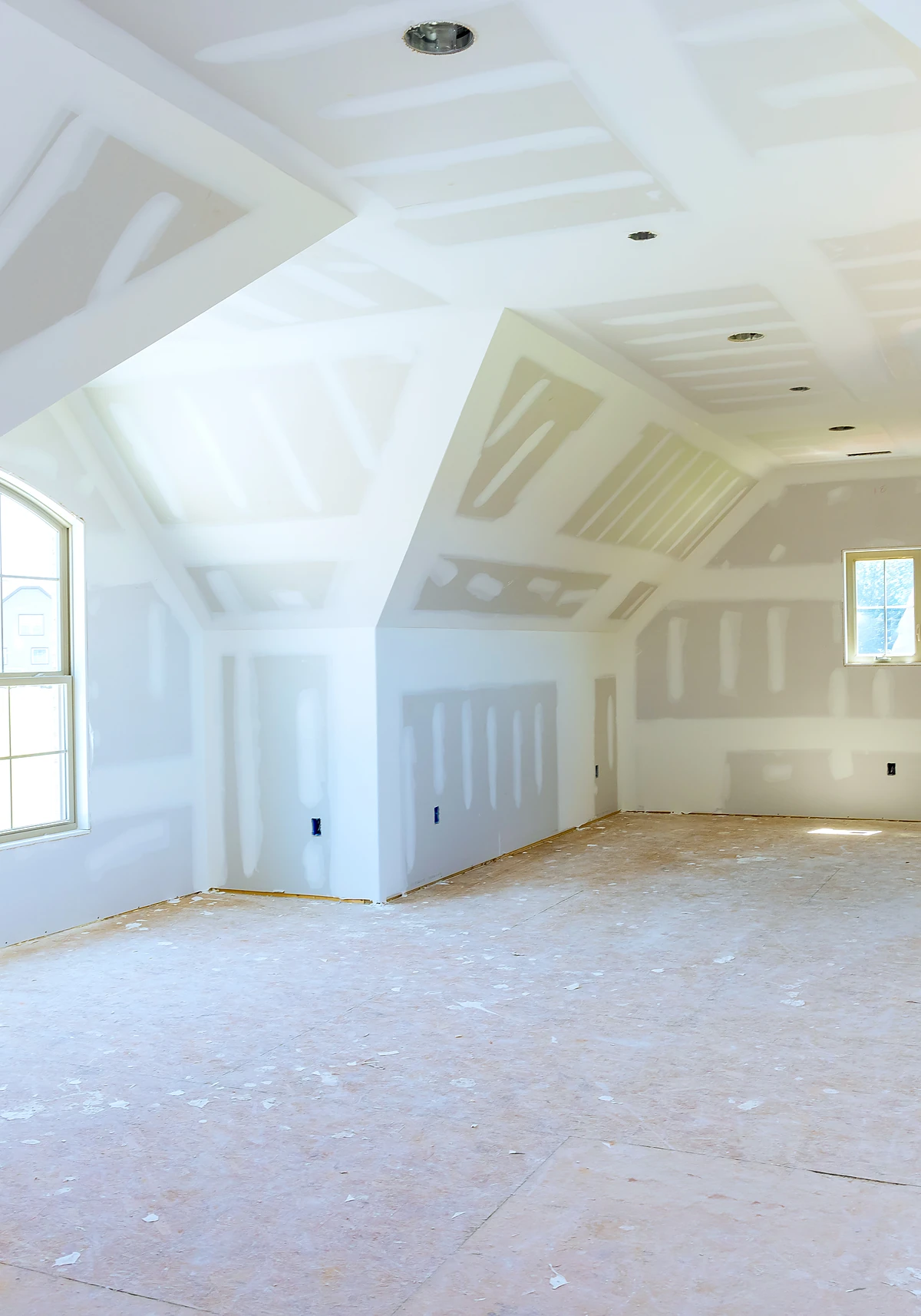
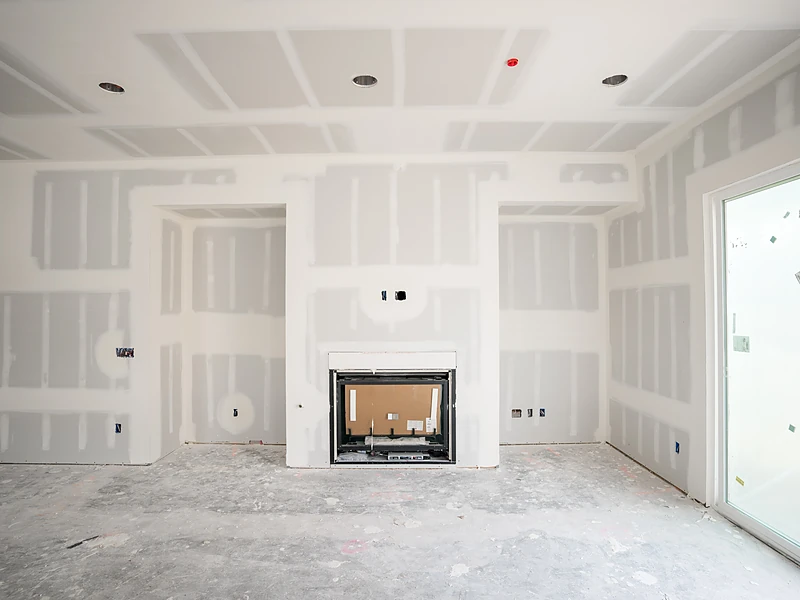
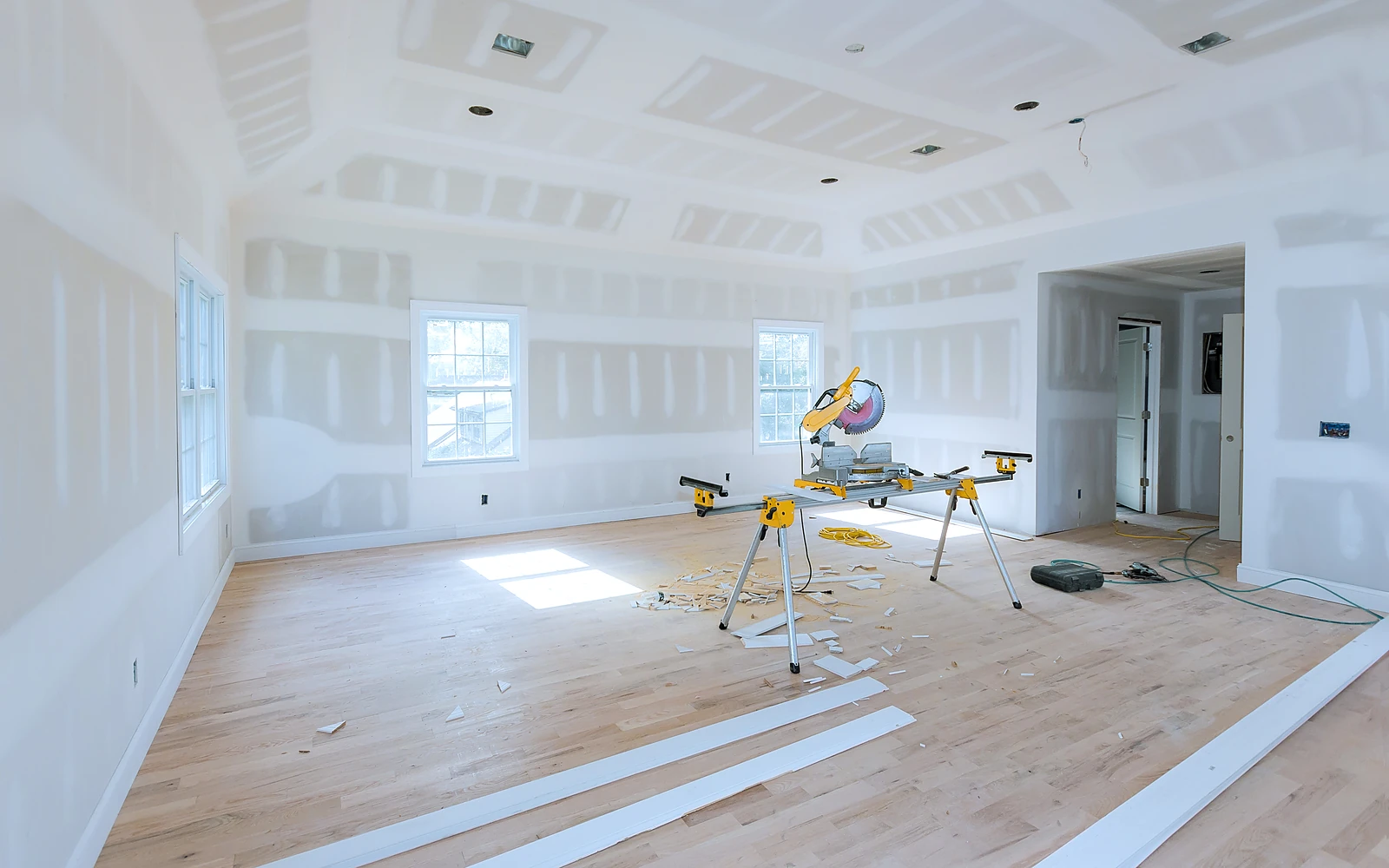
Freshly drywalled room in a Spring, TX home with taped dormer ceilings and new windows

Get A Free Quote

Why Choose Spring Drywall Co. for Drywall Repair & Installation

  • What you get: Our team has 15 years of field experience, provides a written line-item estimate after a free site visit, and completes most routine repairs in one day.
  • Texture matching: We match orange peel, the fine, lightly dimpled texture on most Houston-area walls, along with knockdown and skip trowel finishes so repairs and new work blend into the surrounding surface.
  • Root-cause diagnosis: We trace recurring damage back to what caused it, so a leak gets fixed, or active soil movement assessed, before the patch goes on.
  • Moisture checks: We meter the board before starting and again before closing the wall, keeping the reading under 17 on the meter's scale, which reads against a wood reference rather than as a percentage of your wall, so nothing damp gets sealed inside.
  • Room-specific panels: We choose standard panels, mold- & moisture-resistant board, or Type X board according to the room’s use and show the selection as a separate item on your estimate.
  • Named standards: Our crews follow the ASTM C840 hanging standard, and each estimate identifies the GA-214 Level 4 / Level 5 finish suited to the surface and lighting.
  • Occupied-space protection: We provide full dust containment on occupied jobs by sealing off the work zone and keeping sanding vacuum-assisted, so gypsum dust stays off furniture, floors, and adjoining rooms.
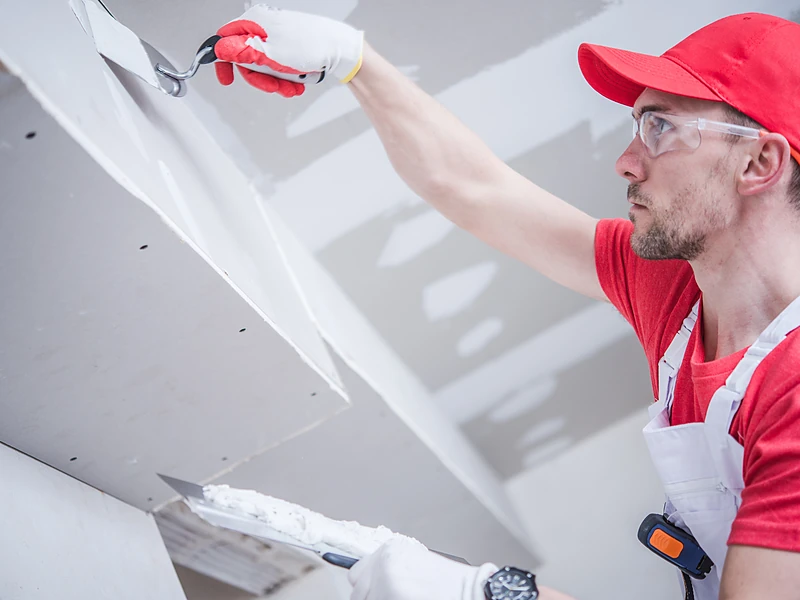
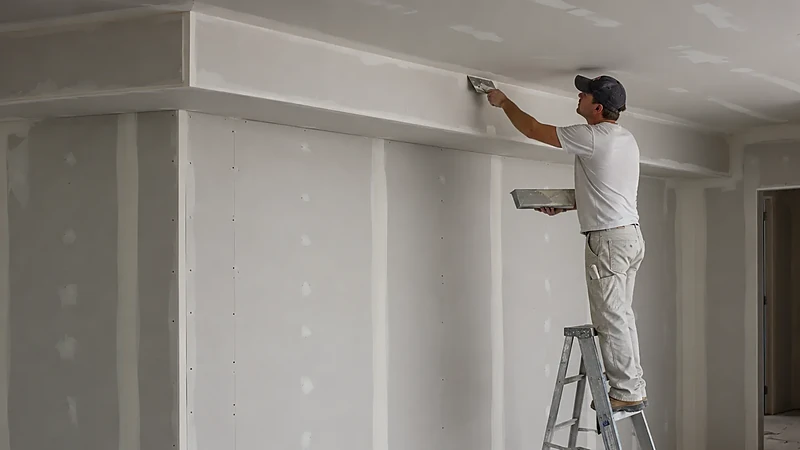
Drywall finisher smoothing a taped ceiling joint before texture matching Freshly drywalled living room in a Spring, TX home, taped and ready for texture and paint

Drywall Repair in Spring: Common Damage & What Causes It

Nail pops, stress cracks, water damage, everyday impacts, and aging finishes each point to a different cause and require a different fix. Drywall repair starts with identifying why the surface failed. For drywall repair or Sheetrock repair, our written estimate identifies the cause, the joint compound work needed, and any texture matching required to blend the repair. Joint compound is the filler spread over seams and patches, often called mud.

Water & Moisture Damage

Water is the biggest single driver of drywall damage in Spring, and patching before the area is dry can leave the underlying problem unresolved. When it comes to drywall repairs, the rule is simple: fix the source, dry it out, then patch.

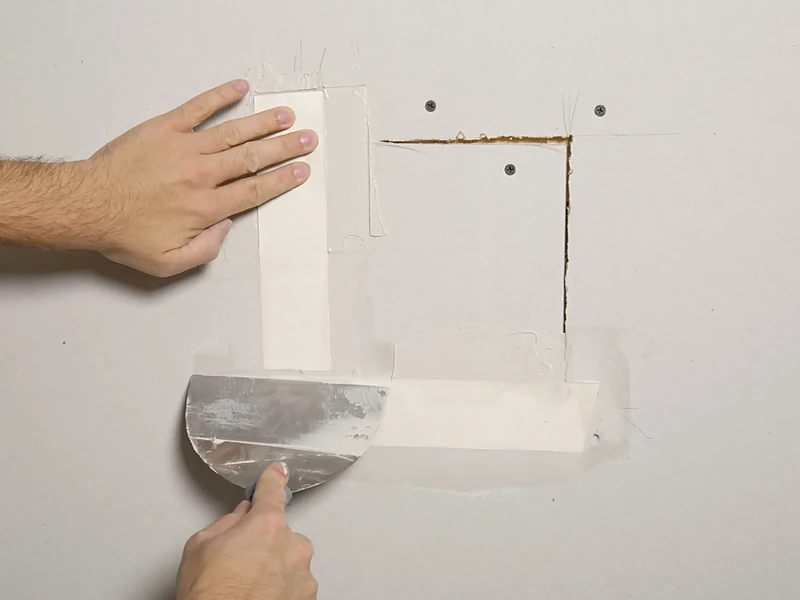
Feathering joint compound over a rebuilt drywall patch after water-damaged board was cut out

Foundation Movement & Settling

A shifting slab announces itself in the same places: door frames, window corners, seams, and ceiling-wall joints. The Beaumont Clay formation beneath Spring is a highly expansive clay with a high shrink-swell potential, and seasonal soil swell places stress on framed walls as the slab shifts. Nail pops usually trace to something else. Framing lumber that went up holding moisture dries and shrinks along the nail shank, leaving the head sticking out just past the wood, and slab movement can work a fastener out in the same way.

We flag any crack over 1/4 inch for further assessment. A crack that returns within 12 months can also indicate active clay soil movement that should be evaluated before cosmetic repairs are approved.

Impact & Everyday Wear

Paint alone will not hide a hole, a dent, or a crushed edge. Doorknobs, moving furniture, children, and routine traffic leave all three, and the surface profile and texture have to be restored before the wall looks right again. Outside-corner repair often involves damaged metal corner bead, the rigid strip that keeps a corner straight, especially along hallways and busy room openings. We also correct failed patches that remain visible through paint because their profile or texture does not match the wall.

When an earlier patch is still visible or no longer firm, our failed-patch remediation can include setting-type compound, a fast-hardening joint compound suited to firm repairs, followed by a finish compatible with the surrounding surface. We schedule small patches as well as multi-room repair lists.

Age & Material Fatigue

An older finish fails in stages, starting with bubbles, hairline cracks, and loose seams. Paper joint tape may loosen, joint compound can become brittle, and seams can develop bubbles or hairline cracks. Repeated painting may also soften an aging texture pattern until repaired spots become difficult to blend.

Loose seams call for seam re-bedding, which means re-setting the tape in fresh compound, before the surface receives a skim coat, a thin overall leveling layer of compound. When the existing finish is too worn or inconsistent for a localized match, retexturing creates one continuous appearance across the wall or ceiling.

Drywall Installation for New Builds, Additions & Remodels

When you are building a new room or changing an existing one, the framed space needs flat surfaces ready for primer and paint. Our drywall / Sheetrock installation covers new construction, additions, remodels, conversions, and partition walls. We hang and fasten the panels the accepted way, using a mechanical drywall lift, a rolling jack that holds heavy sheets tight to the ceiling while we secure them overhead. We also stagger the seams so the joints between panels do not line up in one continuous, crack-prone line. We select either 1/2-inch board or 5/8-inch board according to the room and wall assembly, meaning the whole build-up of framing, fasteners, board layers and joints.

New Construction, Additions & Garage Conversions

Before new construction drywall can go up, the framing, plumbing, electrical, and HVAC rough-ins must pass inspection. Rough-ins are the wiring and pipe runs inside the wall. We time the board work to follow the plumbing, wiring, and ductwork while staying ahead of the paint crew so fixtures, vents, and openings remain properly placed. During hanging, the lift supports the full ceiling panels.

In additions, attic rooms, and garage conversions, the order of installation helps keep the ceiling edges supported. We hang the ceilings first so the wall panels below can tuck under them, then stagger the seams across the framing. We leave each surface ready for the specified finish and coating.

Remodels & Partition Walls

A remodeled room should not have a visible step or bulge where new construction meets the existing room. Remodel drywall must join the two surfaces cleanly. When a layout changes, we install partition wall framing for reworked kitchens, baths, closets, offices, and divided living spaces. Wood studs suit many residential layouts, while metal stud framing provides straight, consistent walls for selected interior partitions.

Installer lifting a full drywall panel into place against a new wall

Opened walls, relocated doors, and new utility runs can change the framing that will support the finished surface. Before hanging board around those areas, our crews check the framing alignment. We select the finish level to suit the adjoining surface and expected lighting, then our finishers match the texture to the existing walls so the transition remains consistent under paint.

Commercial Drywall Repair & Installation for Harris & Montgomery Counties

If you manage a property or run a business, commercial projects answer to opening dates, tenant access, and property-turn deadlines, meaning the window between one tenant moving out and the next moving in. Spring Drywall Co. handles commercial drywall repair & installation for area businesses as one accountable contractor responsible for the whole job from start to finish. As a Sheetrock contractor, we coordinate with owners, construction managers, and other trades, then schedule our crews around your tenants and deadlines. Where the project drawings call for tougher wall surfaces, we install abuse-resistant and impact-resistant board.

Property Types We Serve

Our project mix includes offices, retail stores, restaurants, schools, multifamily properties, property management portfolios, and medical suites, where the fit-out, or interior build-out for a specific tenant, needs clinical coordination. Specified assemblies can include Type X board at fire-rated party walls, which are the shared walls between two units, along with impact-resistant board on corridors, common areas, and other high-contact surfaces.

Built Around Your Schedule

Tenants, staff, and customers may need to keep using the building while drywall work is underway. We offer after-hours scheduling and weekend property turns to limit disruption, along with dust-control containment and occupied-space protection around merchandise, equipment, and occupied rooms. Property managers receive per-unit invoicing, with each unit billed separately by one insured crew.

Commercial floor under construction with scaffolding and drywall staged for a build-out Crew fitting a drywall panel into a suspended ceiling grid on a commercial job

More Drywall Services in the Spring Area

Metal Stud Framing

Light-gauge steel track fastened plumb for a new partition wall

Commercial partitions, utility rooms, and moisture-prone spaces need straight walls that will not introduce combustible framing into the room. Metal stud framing provides that base. We anchor the steel channel along the floor and ceiling, called the track, then slot the light-gauge steel studs into it. Each stud is set plumb, or perfectly vertical, and spaced for the panel, wall height, and load it carries.

Partition Wall Installation

Installer hanging drywall on a newly framed partition wall

One new wall turns an existing floor plan into a bedroom, office, closet, storage area, or separate tenant space. Partition wall installation begins when we lay out the partition framing and coordinate the electrical and plumbing rough-in before the wall cavity closes. Once those systems are set, we complete a double-face board hang by boarding both sides of the frame.

Insulation Before Drywall

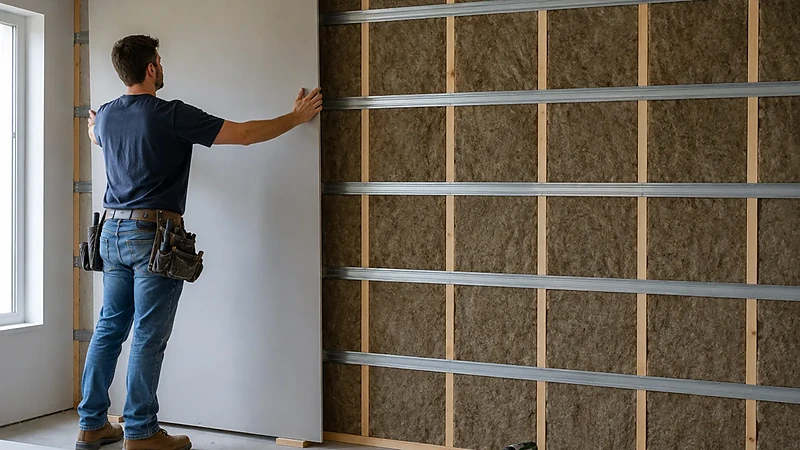
Mineral wool insulation between studs as drywall is fastened over it

Rooms can lose temperature control and carry noise through the walls when the cavities lack the right insulation. Before the walls or ceilings are closed, drywall insulation helps limit both problems. We fit the pre-cut blanket type, called batt insulation, between the framing and fill the full stud cavity around wiring, pipes, and blocking, the short framing pieces between studs. Where sound control matters, we also add acoustic insulation around bedrooms, offices, and shared partitions without leaving gaps.

Plaster Repair

Reinforcing mesh embedded into a plaster coat on an older wall

Some older Spring homes have gypsum plaster over wood or gypsum lath rather than modern wallboard, so cracks and loose areas need a repair suited to the original surface. Plaster repair begins by stabilizing that surface. We re-secure the keys where the plaster has separated from its backing, address loose crack edges, and apply a skim coat where the face needs leveling.

Rehanging & Reattaching Drywall

Driving screws to re-fasten drywall to the studs at a repair

Loose drywall can sag, shift at the seams, or show repeated fastener pops after framing movement or a poor original install. To secure the board again, we re-fasten it to the studs or joists and seat each screw just below the surface without breaking the paper face. We then re-tape the disturbed seams so they can be finished smoothly.

Drywall Priming & Painting

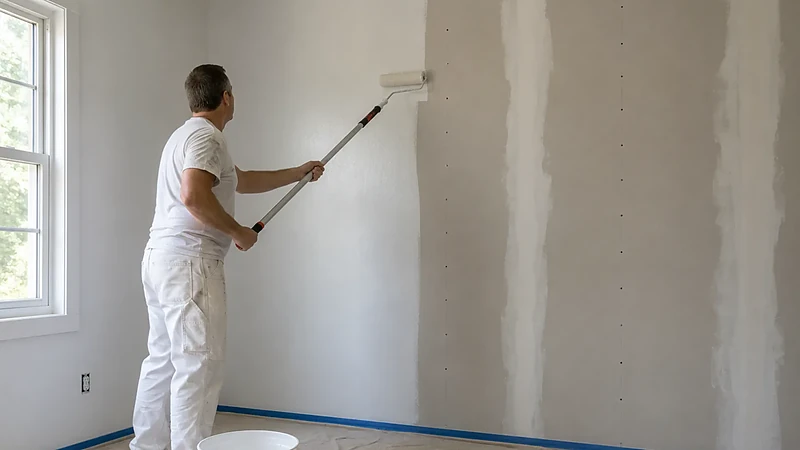
Rolling PVA primer over newly finished drywall before the finish paint coat

New panels and repaired areas can leave dull spots or patchy sheen showing through the finish paint because they absorb paint differently than an existing coated wall. We apply a drywall-specific sealer called a PVA primer so the bare paper, joint compound, and sanded patches all absorb paint at the same rate. The primer creates a consistent base for the finish paint.

Corner Bead Installation & Repair

Metal corner bead set on a board edge for a crisp outside corner

Outside corners take everyday bumps, and a bent, rusted, or poorly supported edge can leave the corner looking uneven. A rigid edge keeps the corner straight. We install metal corner bead for crisp, durable lines or vinyl corner bead where corrosion resistance suits the location. When replacing damaged bead, we taper the compound outward so the repair fades flush into both wall faces.

Wallpaper Removal

Old wallpaper scraped off a wall before skim-coating it smooth

Once wallpaper comes down, adhesive residue or torn drywall paper can keep primer, texture, or paint from bonding evenly. Wallpaper removal prepares the exposed wall for its next finish. We separate the covering, complete the adhesive removal, and clean away the remaining residue. Where older paper pulls away the drywall face, we apply a thin coat of joint compound over the torn paper to seal and level those areas.

Drywall Soffits & Bulkheads

Finishing a boxed drywall soffit along the ceiling of a Spring, TX home

Some things have to be hidden without looking hidden: ductwork, pipes, structural members, cabinet tops, and recessed lighting. Drywall soffits and bulkheads conceal those elements while shaping the space. We plan the soffit framing around required clearances, then build a boxed enclosure with straight faces and square sides. We cover the structure with a finish matched to nearby surfaces.

Access Panel Installation

Flush access panel set into finished drywall beside a tub

Valves, plumbing cleanouts, dampers, and wiring still need to be reachable after the drywall is finished. Access panel installation gives you a removable opening for later service without damaging the nearby board. We size the serviceable opening for the equipment behind it, support the cutout with an access door frame, and set the frame flush so the panel can be removed when needed.

Ceiling Drywall & Popcorn Ceiling Removal

Repairing or refinishing a ceiling requires a different setup than wall repair, and hanging board overhead carries a labor premium. We handle ceiling repair, ceiling retexture, and drywall installation, including finishes ranging from popcorn ceiling texture to a smooth or orange peel ceiling retexture.

Popcorn Ceiling Removal & Retexture

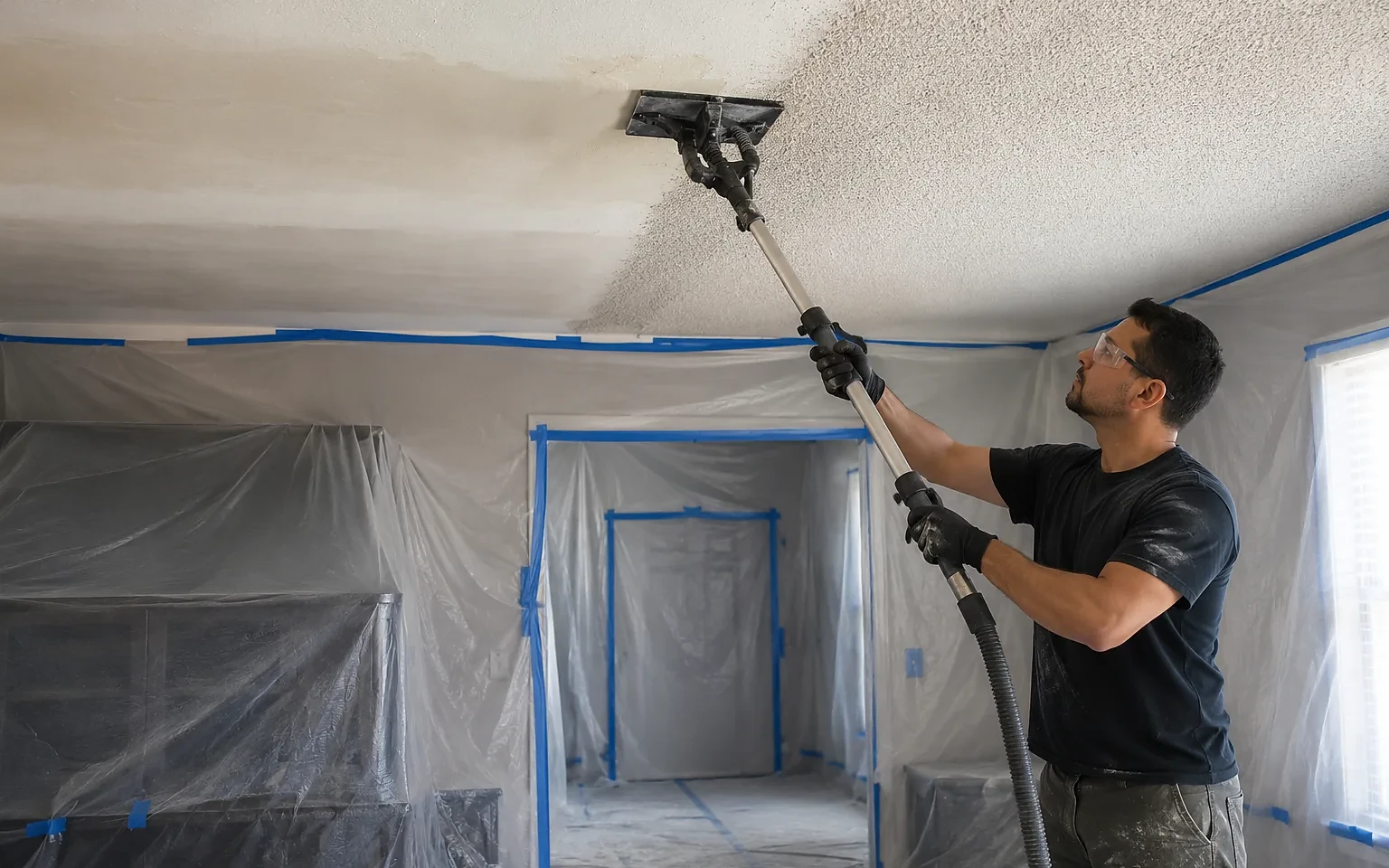
Popcorn scraping can update one room or remove an aging finish throughout the house. Before work begins, our crews set plastic barriers, seal doorways, and contain the floors and furniture, while vacuum sanding controls fine residue. Popcorn texture or other suspect material is tested by a qualified asbestos professional when its age or condition warrants testing before disturbance, and we scrape only material the results clear as safe. Once the popcorn finish is removed, we can create a Level 5 smooth finish or apply a light knockdown retexture.

Ceiling Repair, Replacement & Installation

A ceiling tells you it needs work in four ways: loose panels, visible sags, failed seams, and stains left by roof or AC-condensate leaks. Before approving ceiling board replacement or sag re-fastening, we moisture-check stained areas so damp material is not covered, and stain-blocking primer keeps old discoloration from bleeding through the new coating. For additions and rebuilt rooms, we hang the ceiling panels aligned with the framing and retexture them to blend with the surrounding finish.

Storm & Water-Damage Drywall Repair in Spring, TX

In Spring, Gulf storms, high humidity, and AC condensation can leave homeowners dealing with failed drywall. Water can also wick upward from slab leaks, supply lines leaking under the foundation. Our water damage drywall repair covers storm response and flood repair, including major flood events such as Hurricane Harvey. We first locate the damp material to determine whether the area needs controlled drying or full replacement.

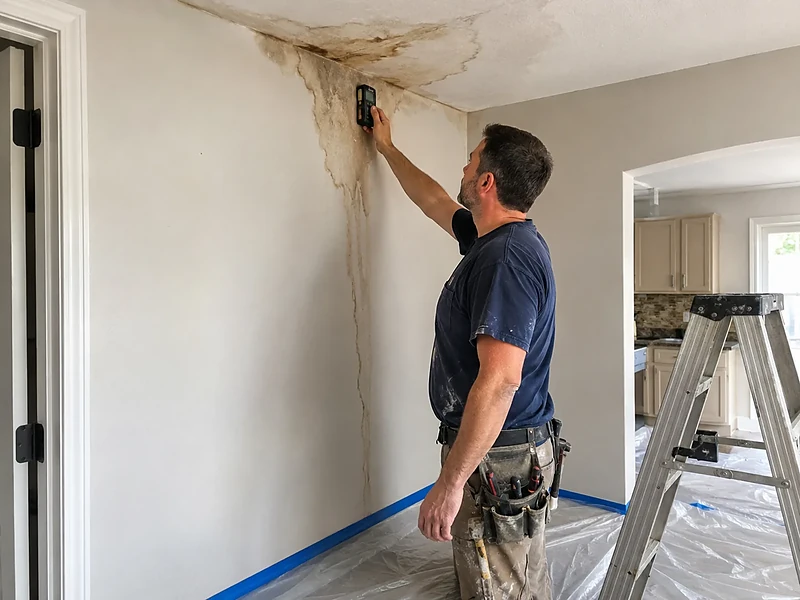
Moisture meter reading a water-stained drywall ceiling and the crack running down the wall below it in a Spring, TX home

What Water Does to Drywall

Brown or yellow water stains and bubbling paint can warn you that the gypsum beneath the surface is damp. Soft panels, sagging drywall, and a musty odor point to longer exposure. Because an attic AC unit can overflow, ceiling stain diagnosis also accounts for AC condensate. Intact paint may conceal mold behind the board or hide wet insulation, so we check every suspect stain rather than trusting how it looks.

Source First, Then Dry, Then Rebuild

The water source must be corrected before drywall repair begins, whether the problem is a roof opening, supply leak, AC drain, or slab problem. A roofer, plumber, or HVAC technician handles that work first. Controlled drying then removes retained moisture, and we verify that the cavity reads dry before closing the wall. If drywall has softened, swollen, or sagged beyond repair, our crews remove it and rebuild with mold- and moisture-resistant board where conditions call for it. When mold reaches past a small, contained area, Texas licenses that assessment and remediation work, so a licensed mold professional handles it first. Same-week scheduling supports urgent water-damage work, occupied homes, and property turns.

Drywall Finishing, Texture & Seamless Matching

Repaired seams, patches, and transitions can show across a wall or ceiling under daylight, lamps, and fresh paint when the finished surface does not match. Our drywall finishing follows GA-214 and accounts for the surrounding orange peel texture or knockdown texture. To check the match, we run light across the surface at a low angle, a raking-light check that reveals differences before the work is finished.

Textures Common on Spring Homes

The texture already on your walls and ceilings determines which finish needs to be matched. Orange peel texture has a dimpled surface that can range from fine to heavy. Knockdown texture has broader, flatter shapes and often appears on ceilings. Older and custom homes may feature skip trowel texture or other hand-applied patterns with more variation.

Some rooms hide nothing. Where light rakes across a wall, or where deep-color paint or gloss coatings are used, small imperfections in the drywall show. Level 5 smooth provides an even surface under those conditions, while the room’s light and coating help determine where that smooth surface makes sense.

Matching, Blending & Retexturing

Small differences in a texture’s scale, spacing, direction, or depth can keep a repair from blending into the surrounding surface. We begin by reading the texture, sizing up each of those characteristics before comparing the existing spray and hand texture characteristics and choosing a compatible finish. We then blend under raking light, which exposes ridges, flat spots, and changes in texture density that ordinary room lighting hides.

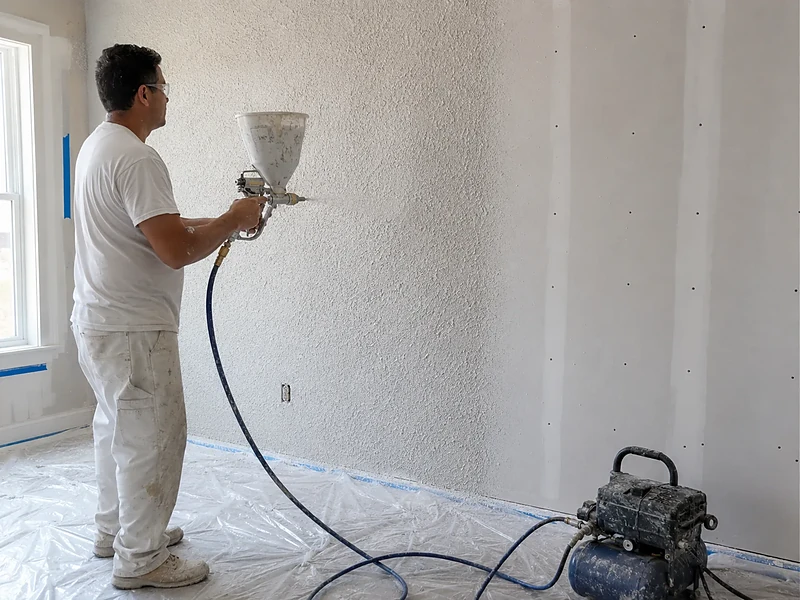
Spraying knockdown texture onto a finished drywall wall to match the surrounding surface

Texture matching also matters where an addition opens into an existing room. We blend the new surface with adjacent walls or ceilings so the transition disappears. If age, paint buildup, or an irregular hand pattern prevents a seamless repair, a whole-surface retexture gives the room a consistent appearance.

Drywall Types & Specialty Systems

Choosing the right drywall board for each room of your house is a key part of proper Sheetrock installation. We match standard board and specialty drywall to moisture exposure, fire assemblies, sound goals, traffic, and framing conditions.

Standard (White Board)

Stacked gypsum board ready for a Spring, TX installation

Bedrooms, offices, hallways, and living areas usually need a dependable panel for dry interior spaces. White board is the familiar interior wall panel used throughout these areas, and the common 1/2-inch standard board suits their typical conditions. It also covers many ceilings when the framing layout and project specification support its use.

Mold- & Moisture-Resistant

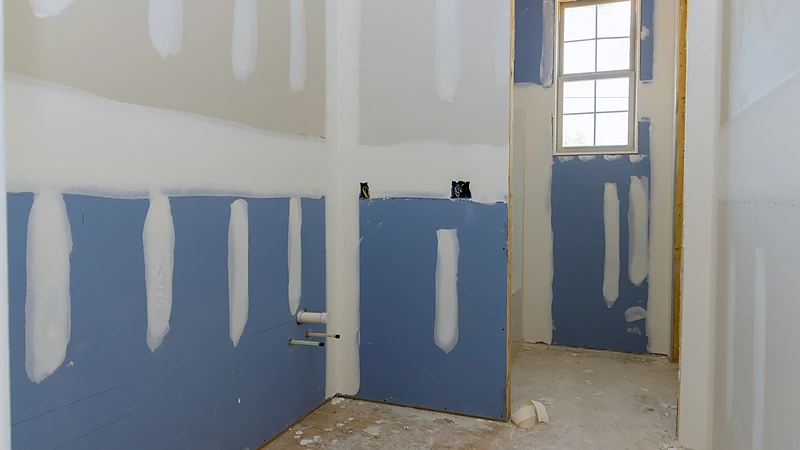
Moisture-resistant board on the wet-area walls of a bathroom remodel, with standard board above the splash line

Mold- & moisture-resistant board uses treated facings and a moisture-resistant core to limit surface mold in damp rooms, and it fits bathrooms outside the shower, kitchens, and laundry areas. Direct-wet tub and shower zones require an approved tile-backer board because drywall has a wet-area limit.

Fire-Resistant (Type X / Type C)

Fire-rated board being hung on a garage ceiling

Plans call for added fire resistance in garages, shared walls, multifamily buildings, and commercial spaces. We use 5/8-inch Type X board in those locations. Where a tested assembly specifies Type C instead, its core contains additives that expand under heat to offset the shrinkage that opens gaps, so it holds a rating longer. The fire rating belongs to the full tested fire-rated assembly, including framing, fasteners, layers, and joints.

Sound-Damping / Acoustic

Sound-damping wall assembly: mineral wool packed between studs before the acoustic board goes on

Sleep, work, and the room next door all suffer when noise passes between bedrooms, offices, media rooms, and shared partitions. A sound-damping panel uses a dense, layered core to reduce sound passing between rooms, and acoustic gypsum board works well in these locations. Effective noise control depends on the full wall assembly, including insulation, framing, penetrations, and perimeter sealing.

Impact- & Abuse-Resistant

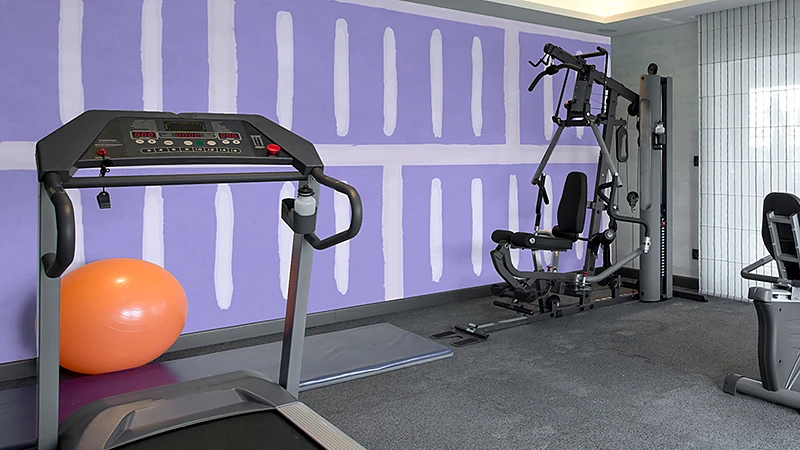
Purple abuse- and impact-resistant board on a fitness-room wall, a high-traffic surface that takes repeated contact

Carts, equipment, and repeated bumps can damage ordinary drywall in high-traffic parts of a building. Impact-resistant board has a reinforced core or facing that withstands harder contact than standard panels. An abuse-resistant panel suits a high-traffic corridor, school, garage, multifamily common area, or service space where your walls need to withstand that repeated contact.

Flexible & Specialty Gypsum

Flexible board formed to a curved stairwell wall and taped

A curve is only as good as the panel that follows it, and arches, rounded corners, and curved partitions all show flat spots when the board resists the shape. Flexible gypsum board bends across properly spaced framing to form these features, while a curved-wall panel reduces flat spots on tight architectural curves. We also select each specialty gypsum panel according to the listed assembly, required thickness, and intended interior application.

Some parts of a project face conditions ordinary interior drywall cannot handle. We install cement backer board and glass-mat tile backer for tiled wet areas, exterior sheathing for outside walls, and shaftliner panels for elevator and stair shafts when the application, tested assembly, or building code calls for them.

Our Drywall Process, From First Call to Walkthrough

The drywall process with Spring Drywall Co. keeps each decision clear, from your free on-site estimate and written line-item scope through surface protection, scheduling, and the final walkthrough.

  1. 1

    Inspection & Written Estimate

    We inspect the damaged or unfinished area and use a moisture meter check where leaks may be involved. After the free on-site estimate, you receive a line-item estimate that explains the work and price.

  2. 2

    Surface Protection & Preparation

    Your furniture, floors, and occupied rooms need protection from dust before the drywall work begins. Our crew moves or covers nearby furniture, installs floor protection, and then seals off the work area so dust stays contained.

  3. 3

    Repair or Installation

    Once you approve the work, our crew completes the repair or installation, including hanging board for new surfaces or cutting out and rebuilding damaged areas. Setting-type compound hardens chemically instead of drying by air, so most of the work is completed within a single visit.

  4. 4

    Taping, Finishing & Texture Matching

    The seams and surface texture need to match the surrounding wall or ceiling. We complete seam taping and finishing to the level listed in your scope, then match the texture of the repaired or installed area before paint.

  5. 5

    Cleanup & Final Walkthrough

    Before you sign off, you can review the finished surfaces without dust, loose debris, or protective coverings in the way. Vacuum-assisted cleanup removes the dust and debris, and we take down the coverings. During the final walkthrough, you review the completed surfaces with our crew before signing off on the work.

What Drywall Work Costs in Spring

If you want an early idea of the price, project photos can support an initial pricing range. An on-site inspection then confirms the access, damage, finish, and total scope before we provide a written line-item estimate with a firm number for everything we can scope on site. Financing is available for larger repairs, ceiling projects, and installations.

Repair Pricing

For most single-room repairs, pricing runs from $150 to $1,500, depending on the type of damage and the work involved. A clay-soil crack repair typically costs $150 to $450, while a small or medium hole ranges from $200 to $600. General ceiling repair costs $400 to $1,300. AC-condensate ceiling damage can reach $500 to $1,500 because removing wet material, working overhead, and gaining access add labor.

A water stain may cover only part of the damaged board, so water damage can raise the patch cost once the affected area is opened. Matching orange-peel texture adds about $150 to $350, depending on the area that must be blended. Easy wall access keeps your patch near the low end, while multi-spot ceiling work that requires texture and prime moves it toward the high end.

Installation Pricing

Floor area alone does not set the drywall installation cost. We base the price on the square footage of board that must be hung, taped, and finished, along with any framing that must be added. A quote for a 20-by-20 room also accounts for the wall height, ceiling, openings, and existing frame. The board type and specified finish level affect labor and material costs as well. Most installation work runs about $2.00 to $3.00 per square foot of board hung, taped, and finished to Level 4. Level 4 is the standard finish for most rooms, where the drywall is taped, coated, and sanded smooth enough for flat paint and light textures. A Level 5 surface costs more because it requires additional finishing. Water-damage rebuilds generally run from $600 to $2,500, depending on the area removed and rebuilt.

Serving Spring and the Communities Around It

If you live or manage property in Spring, you are in an unincorporated community in North Harris County near the Montgomery County line. Spring forms part of Greater Houston and follows the Interstate 45 corridor north of Houston. Old Town Spring anchors the community’s historic center, while the ExxonMobil corporate campus reflects its recent growth. Regional destinations include the Cynthia Woods Mitchell Pavilion and Mercer Arboretum and Botanic Gardens.

Spring’s humid subtropical Gulf climate brings homeowners long cooling seasons, heavy rain, and storm exposure. Wind-driven moisture can enter around roofs and exterior openings, while Beaumont Clay movement under the slab adds its own recurring cracks. Before recommending repair, replacement, or new installation, a local drywall contractor must recognize which of those conditions may be affecting your home.

Old Town Spring, the historic center of Spring, Texas

Spring-Area Neighborhoods and Communities

Whether you own a home or manage a property in an established Spring neighborhood or a newer community, Spring Drywall Co. serves homes and managed properties throughout the area with repair, installation, ceiling, and finishing work.

  • Northgate Crossing
  • Imperial Oaks
  • Rayford area
  • Harmony

Surrounding Cities and Communities

For residential and commercial drywall projects beyond Spring, our service area also reaches nearby North Harris and Montgomery communities throughout northern Greater Houston.

  • Klein
  • Tomball
  • Porter
  • Humble
  • Atascocita
  • Kingwood
  • Aldine
  • Westfield
  • Bammel
  • Champions Forest

What Spring Homeowners and Businesses Say

Customer reviews and testimonials reflect the different drywall problems our crews solve for homeowners, business owners, and property managers across the Spring area.

Drywall Questions We Hear in Spring

Our drywall FAQ answers the questions we hear most from Spring homeowners and businesses.

How Much Does Drywall Repair Cost in Spring?

Repair pricing depends on the size, location, access, damage cause, and required finish. Most single-room repairs run $150 to $1,500, and matching a sprayed texture adds roughly $150 to $350.

What Does Drywall Installation Cost in Spring?

Installation pricing depends on the square footage, board type, finish level, and any framing, and most installation work runs about $2.00 to $3.00 per square foot. A smooth Level 5 finish costs more than the standard Level 4, and a water-damage rebuild generally runs $600 to $2,500.

Can You Match My Existing Wall or Ceiling Texture?

Yes. We match orange peel, knockdown, skip trowel, and other hand-applied finishes, and when a localized repair cannot blend, we retexture the full surface.

Is It Cheaper to Repair or Replace Drywall?

Repair usually costs less when the board remains sound. We replace water-soaked or broadly failed panels and use a meter to confirm the board is dry before closing the wall; mold past a small area is work for a licensed remediator first.

What If There Is Mold Behind My Drywall?

Drywall and moisture are our lane. Testing for or removing mold are licensed activities in Texas, so we do not take them on. Where mold is suspected, a licensed mold assessor and remediator does that work first. Once the area is cleared and dried, we handle the drywall rebuild, replacing the water-damaged board and finishing to match.

Why Do My Walls Keep Cracking in the Same Spot?

Seasonal Beaumont Clay movement can keep stressing the same joint as soil moisture changes. A crack wider than 1/4 inch, or one that returns within a year, gets a foundation specialist's assessment before we plan the cosmetic repair.

Do You Remove Popcorn Ceilings?

Yes. We contain debris before removing popcorn from one room or a whole house. Older texture receives asbestos testing when its age warrants it, and we scrape only material the results clear as safe. We then smooth the ceiling or apply a new texture.

Do You Handle Commercial and Tenant Spaces?

Yes. Our commercial work covers offices, retail and medical spaces, schools, multifamily buildings, and managed portfolios. We offer after-hours or weekend scheduling, plus per-unit invoicing.

Do Drywall Repairs or Installation Need a Permit in Spring?

Spring is unincorporated, so there is no city building department; permitting falls to Harris County, or to Montgomery County near the county line. Routine drywall repair, replacement, and refinishing generally do not require a permit. Larger projects that involve structural changes, additions, or new electrical, plumbing, or HVAC work can, and we help confirm and coordinate that with the county when it applies.

Are You Insured, and Are Estimates Free?

Yes. Spring Drywall Co. carries general liability insurance, our on-site estimates are free, and financing is available for larger jobs. After the visit, you receive a written line-item estimate separating the work we have priced from allowances, placeholder amounts for anything we cannot scope until the wall is open.

Get Your Free Drywall Estimate in Spring

Schedule a no-charge visit for your repair or installation project. Spring Drywall Co. will look at the space and prepare a written, line-item quote so you can review the scope and cost before work begins. Call or use our quote form today to get started.