
Popcorn Ceiling Removal in Spring, TX | Spring Drywall Co.
Spring Drywall Co., a drywall contractor, handles popcorn ceiling removal for homes across Spring, TX, and this page explains that work. A cottage cheese ceiling is a sprayed acoustic texture that was blown onto the gypsum board overhead during the decades when a rough finish provided a cheap way to hide the joints between panels. Taking that texture off is the short part. What it has been hiding since the house was built is what sets the price and the schedule.
We read your ceiling before we quote the work. Where the material is suspect, it is tested before anything is disturbed. Once that is cleared, the texture comes off and the ceiling is refinished to a named finish level from the published finish levels used in the trade.
Fifteen years of drywall work, all of it in and around Spring. We are insured, the on-site estimate is free, and the scope arrives written out line by line. Call us at (936) 286-6045 or ask for an estimate and we will come and look at your ceiling.
What Kind of Popcorn Ceiling Do You Have?
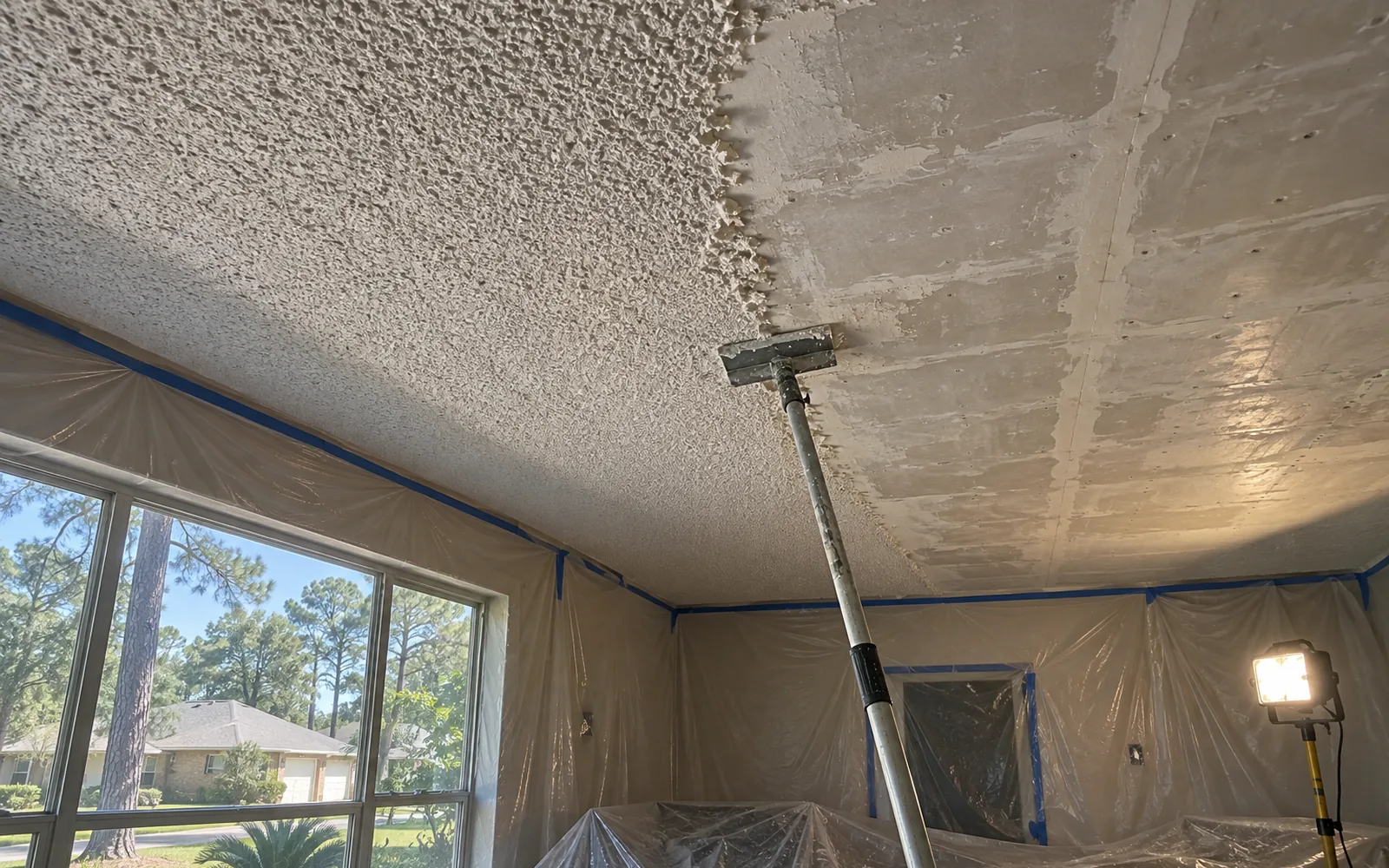
Which job you have depends on what is actually on the ceiling. Two types of texture are found in Spring homes, and they react very differently once water touches them, so identifying which one you have comes first. That determines the removal method, the time required and the price.
Unpainted Sprayed Acoustic Texture
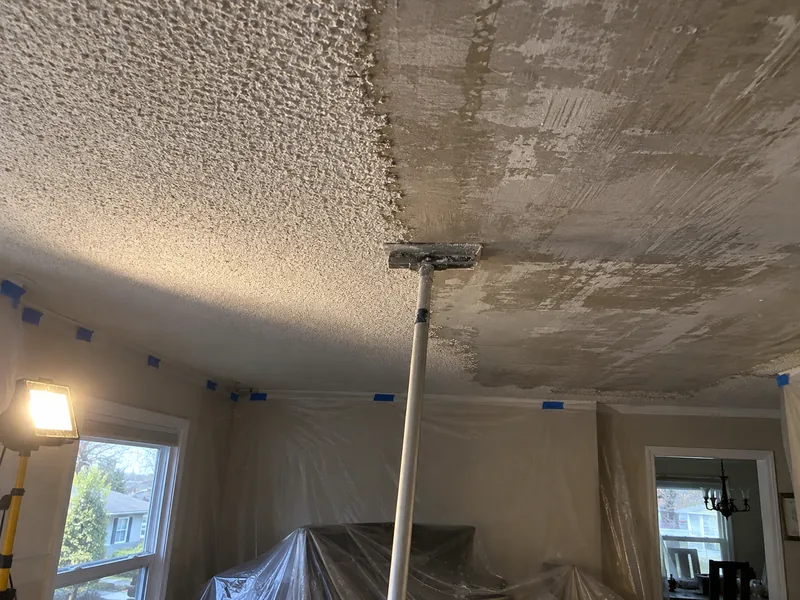
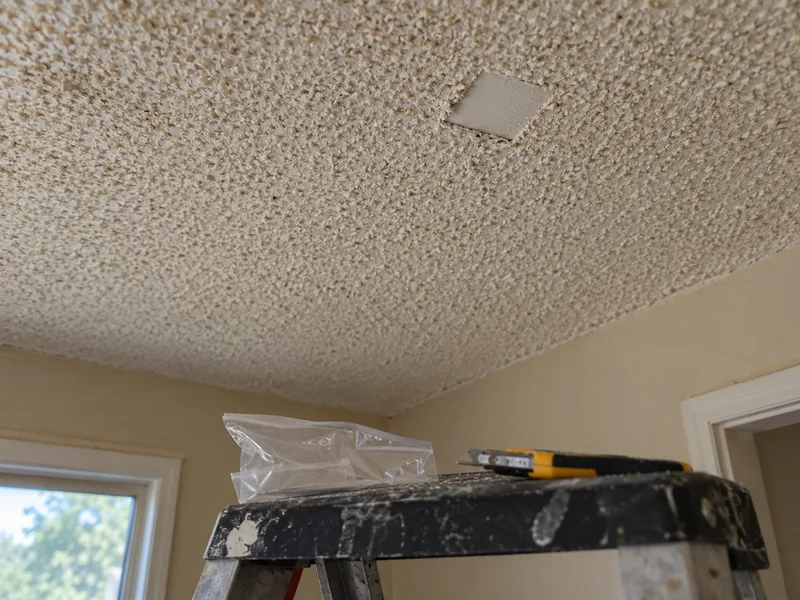
Sprayed acoustic texture was applied wet and left to dry raised above the ceiling board. Most of it was never painted or sealed, which makes removal straightforward: bare joint compound absorbs water, so a ceiling misted with a garden sprayer softens within minutes. Once softened, the texture comes off in wet sheets with a wide blade and creates almost none of the fine dust produced by dry removal. This is the cottage cheese ceiling most people picture, and you can usually identify it from the floor because the peaks look sharp and chalky rather than glossy, while a fingertip rubbed across a corner inside a closet leaves a smudge on your hand.
This version scrapes off most cleanly and is the cheapest to remove.
Texture That Has Been Painted Over
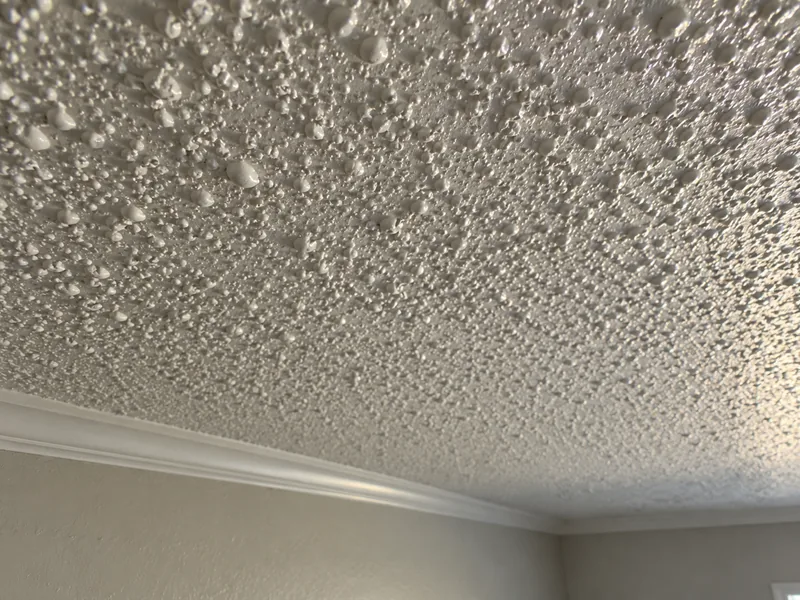
A coat of ceiling paint over the texture forms a thin skin that water does not penetrate, so a painted popcorn ceiling does not soften or come off in sheets. It has to be scraped away dry in chips and crumbs, which takes substantially longer than removing bare texture and puts far more dust into the air. Dry scraping also tears more of the board's face paper, so the repair afterward takes longer. From the floor, the paint catches the light and gives the peaks a faint sheen that bare texture does not have.
To check, dab a little water on a patch behind a door and watch what it does: if the water beads or sits on the surface instead of soaking in, the texture is sealed. In that case, ceiling texture removal is not always the answer, and skimming directly over painted texture is often the better approach. Of everything that affects the price of popcorn ceiling work, whether the texture is painted or bare has the biggest effect.
Finish Options After the Texture Comes Off
Removing the texture is only the first part of the job. Once it is off, the ceiling still has to be finished into a surface you are happy to leave exposed, and there is more than one way to do that. One of the options below skips scraping altogether.
A Flat Ceiling, Finished to a Named Level
A flat ceiling has joint compound skimmed across the entire surface and sanded smooth, rather than applied only over the seams and fastener heads. GA-214 is the drywall industry's published scale of finish levels, and it lets your estimate state exactly how far that finishing goes. A Level 5 finish sits at the top of that scale and is one available option, not another name for a flat ceiling: it is specified where low light across the ceiling, or paint with some sheen, would show every hollow. A smooth ceiling is frequently finished one level below that, and usually is.
Estimates name the GA-214 finish level as its own line item, so a Level 5 skim is a priced choice rather than a vague allowance. The flatter the finish you choose, the more work the board underneath needs before that finish goes on.
A Light Knockdown Texture Instead of Flat
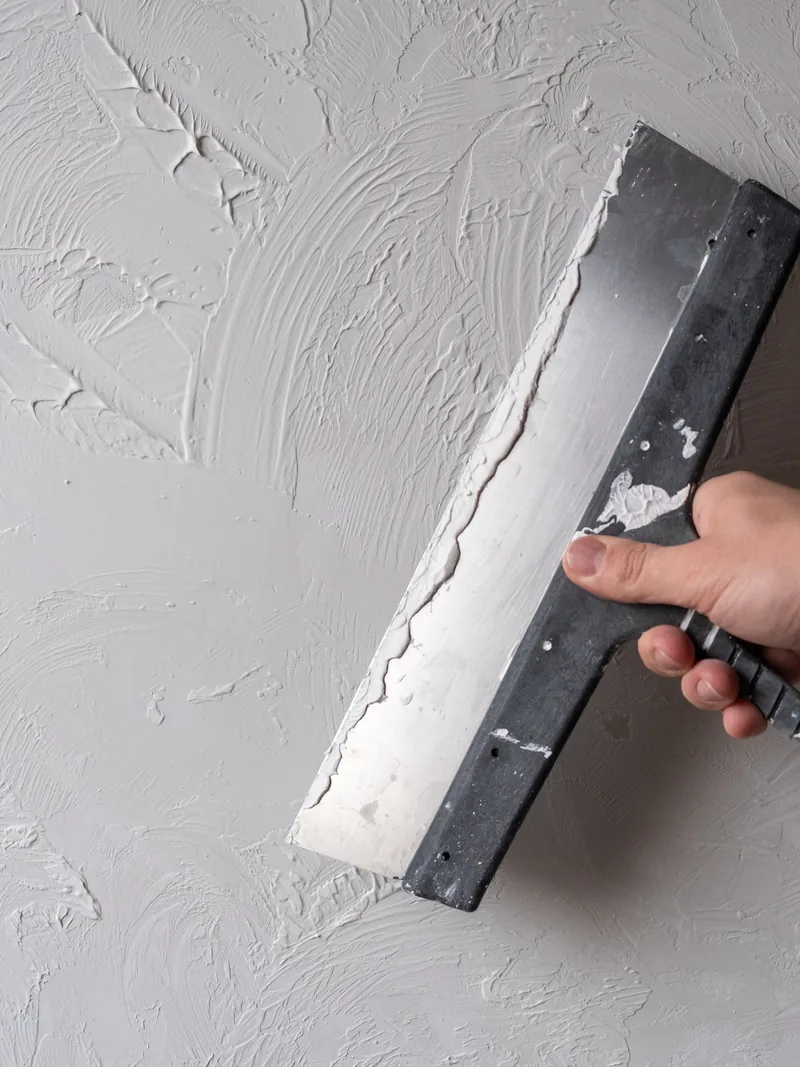
Knockdown texture is thinned joint compound sprayed onto the ceiling in droplets and flattened with a blade while it is still wet, leaving a shallow, mottled surface that sits much closer to level than the popcorn it replaces. That light texture breaks up the way the ceiling catches light, so small hollows and ridges in the board are less visible than they would be on a flat finish. Because it takes fewer skim coats to prepare the base, this type of retexture is usually the less expensive of the two finishes, and we can match the coarseness to the ceilings in the surrounding rooms. A light texture remains the standard ceiling finish around here.
Covering the Texture Instead of Taking It Off
Covering leaves the existing texture in place and creates a new surface over it, either a fresh layer of gypsum board screwed through the old ceiling into the framing or a laminating coat troweled across the existing face. Three conditions have to hold before that is sensible. The old ceiling must be sound and firmly fastened, since anything built on a loose plane moves with it; the room has to be able to lose about half an inch of height, which is noticeable on a low ceiling; and every light, vent and run of crown trim has to come down and be reset to the new face, with recessed cans and fan boxes extended rather than simply screwed back.
Where a ceiling sags between joists or has water stains, covering it only hides the problem instead of fixing it. Skipping the scraping does not remove the need for proper finishing.
Asbestos Testing Before Popcorn Ceiling Removal
Popcorn texture on an older ceiling can contain asbestos, and the risk comes from disturbing it and breathing in the fibers released into the air. Nothing on your ceiling is touched until the material has been identified. The removal date is set after that result is known, not before.
When a Ceiling Needs Asbestos Testing
Whether a ceiling needs a sample depends on its age and condition, not just the year on the deed. Texture that is crumbling, water-marked or flaking has a clear reason to be checked, and so does older material when nobody knows what was mixed into it. You cannot identify asbestos-bearing texture by looking up at it from the floor, and neither can we, which is why a sample is taken instead of making the call by eye. No law requires you to test your own house, but where the ceiling calls for it, we arrange asbestos testing rather than leave you to guess.
A qualified professional takes a small sample of the suspect material and sends it to an accredited lab for testing. Popcorn texture or other suspect material is tested by a qualified asbestos professional when its age or condition warrants testing before disturbance, and we scrape only material the results clear as safe. Where rooms were patched or re-textured at different times, each ceiling is sampled separately because the result from one room does not establish what is in the next.
What the Asbestos Test Result Decides
A clear test result puts the scraping work on the calendar and the job proceeds as quoted. If the ceiling texture testing finds asbestos, our work stops there. The ceiling remains undisturbed, you receive the report, and we refer you to the trade that handles that material. You still have another route to the room you want: an intact ceiling can be covered with new board over the existing texture, leaving the material in place.
We do not work on material that testing has not cleared, and we do not handle mold beyond a small contained area. We do not test for mold or treat it. Drywall that water has ruined is removed and replaced, using mold-resistant board where the room calls for it.

How Popcorn Ceiling Removal Works
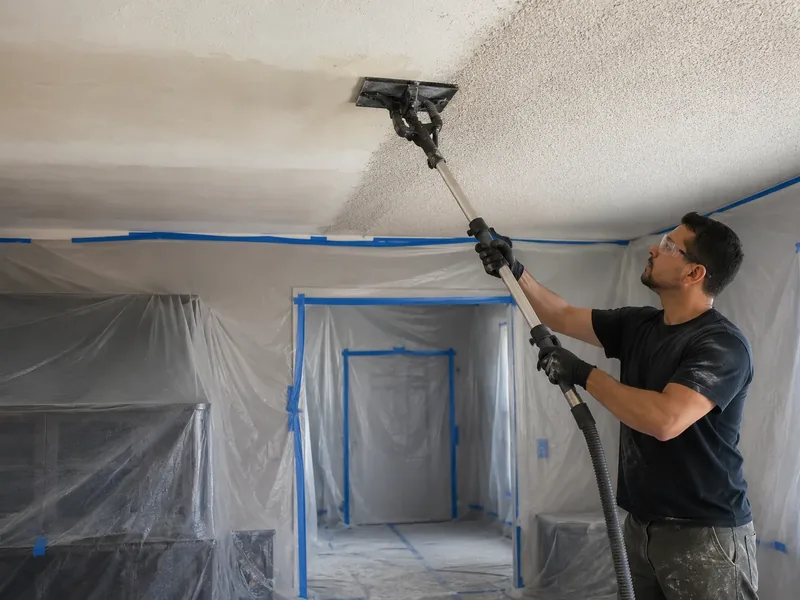
Getting the texture off your ceiling is the part of the work you will be living around, so this stage is judged by what stays contained in the room as well as by what comes off the ceiling. Popcorn texture comes down wet, which keeps the heavier material falling to the floor instead of spreading through the house, while the fine dust comes later during sanding. Both stay behind the plastic sheeting we put up before any water is sprayed, and we seal one room at a time for that reason. The containment is in the price of every occupied job.
Dust Containment: Sealing the Room and the Air Path
Sealing a room means closing every path dust could use to leave it, including the ones you cannot see. Plastic sheeting covers each doorway and opening, drop cloths protect the floors, and anything left in the room is covered in place. The air return and the supply vents are sealed as well, because your heating and cooling system moves air from one room to another, and an open return can carry dust into bedrooms where no work is being done. Plastic barriers, sealed doorways, and vacuum-assisted sanding are part of the base scope on every occupied-space job, not an add-on.
Vacuum sanding pulls fine residue from the ceiling at the sanding head before it reaches the air, and the vacuum is fitted with a HEPA filter that traps particles a shop vacuum would blow back into the room. Once the work is finished, your heating and cooling filter is changed because the system remained shut down and sealed behind plastic while we worked. Walk in before we spray, and you will find the room already closed.
Lights, Vents and the Unfinished Rings They Hide
Anything mounted to the ceiling comes down first, because working texture and water around a light fixture leaves a visible edge that stays there after the rest of the ceiling is finished. Ceiling fixtures, fans, vent covers and smoke alarms are lowered or removed, and the ceiling openings they leave are capped and protected before any water goes up. Under each one is a ring of ceiling that was never properly finished, with old texture, old paint or bare board hidden behind the fixture. That area is skimmed flat with the rest of the ceiling, and the fixtures are then reset against the finished surface.
How the Texture Is Misted and Scraped Off
Wet scraping depends on using the right amount of water and giving it enough time to work. We mist the texture in passes instead of soaking it, then let it absorb the water before a blade touches the ceiling. Finishers call that pause the dwell time, and it is what earns the water: texture that has softened comes away in sheets, while texture that is still dry resists the blade and tears the paper facing on the board underneath. Too much water causes the opposite problem by soaking through to the board and softening the gypsum core beyond repair.
Once the ceiling is bare, Spring's humid Gulf Coast air lengthens the drying time that every coat afterward depends on, so popcorn ceiling removal is scheduled around those conditions. The vents in the room stay closed while we scrape and are reopened between coats, when the air conditioning helps the ceiling dry properly.
What We Find Under the Texture
Once the texture is stripped, the board underneath is fully visible for the first time. That board cannot be properly graded any earlier, which is why this stage, rather than the scraping before it, determines the final price of the job. We check three things overhead: the paper facing on the sheets, the taped joints between them, and the condition of the ceiling board itself. Most ceilings need some repair at this point, while a few need extensive work. If yours needs a complete new ceiling instead of patching, that falls under a separate drywall repair and replacement service rather than this one.
Torn Drywall Paper and Why It Changes the Job
Gypsum board has a gypsum core wrapped in paper, and the face paper provides both strength and the surface the finish is built on. If a scraping blade is held too steep, it lifts that paper along with the texture. Torn face paper cannot be finished flat because wet joint compound soaks into the exposed fibers, making them swell and fuzz so the compound sits above the surrounding surface instead of lying level. Where the paper has lifted, we seal the area before skimming it; where the drywall paper damage is deeper, we cut out the damaged board and replace it.
Old Stains, Soft Board and Loose Tape
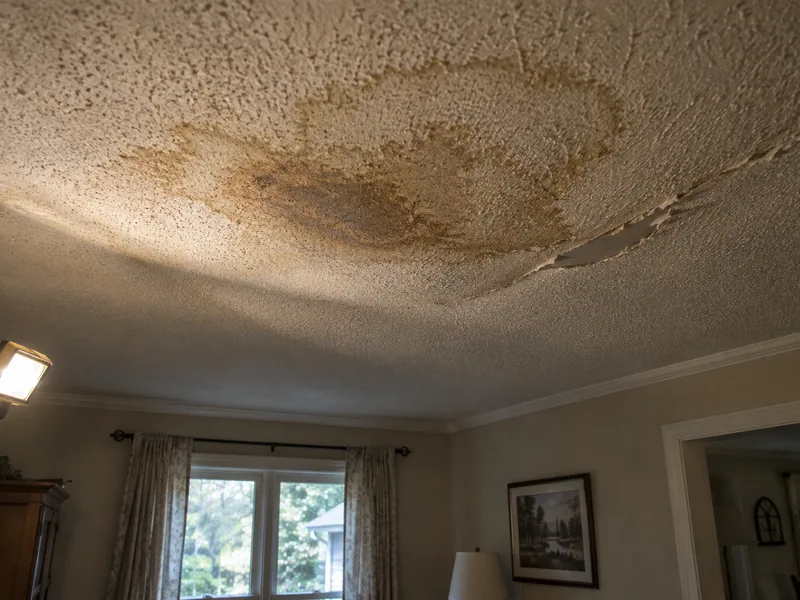
The joints beneath popcorn texture were finished to a lower standard because the sprayed texture was meant to hide them, and it did. It also hid other problems. Once the texture is removed, ceiling stains show as brown rings, and a ring means water reached the board at some point. Board that gives under a hand has lost its core and is replaced rather than skimmed, while loose tape along a seam shows where the sheets have moved.
Where a stain appears, the leak that caused it is fixed before we close the ceiling, because painting over the stain only lets it bleed back through the new finish. Finding that leak and rebuilding the drywall it damaged is a separate service.
Skimming and Sanding to a Flat Ceiling
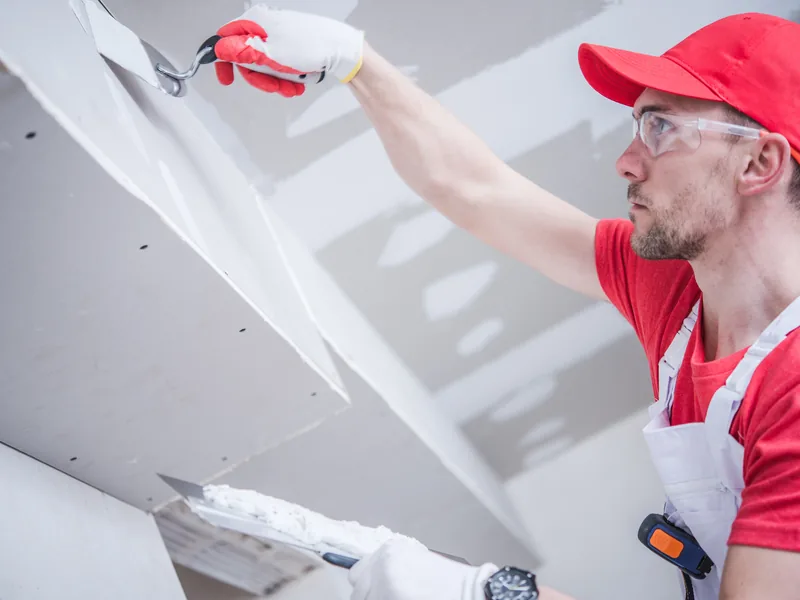
A smooth ceiling finish is built with several coats of joint compound spread across the entire ceiling, not just over the scrape marks, because filling only those marks leaves a patched surface instead of a flat one. Each skim coat has to dry before it is sanded and the next coat goes on. That finishing sequence takes longer than the scraping, and the damp air here increases the drying time between coats, so keeping your air conditioning running helps keep the schedule on track. We leave the ceiling ready for its final finish, and where you want us to prime and paint it as well, that work is included in the same scope and priced on its own line.
Why Choose Us
Why Spring Drywall Co. for Popcorn Ceiling Removal
Spring Drywall Co. has 15 years of drywall experience in and around Spring, with popcorn ceiling removal making up a large part of that work. Before you commit to the job, there are six things you can check:
- Fifteen years of drywall work in this area, and nowhere else.
- We are an insured drywall contractor, and our crews work to ASTM C840 for how gypsum panels are hung and fastened and to GA-214 for finish levels.
- We carry general liability insurance and can send our certificate of insurance before work begins.
- Dust containment is in the price rather than added when the crew arrives.
- The finish level is a named line on your estimate, and you choose it.
- Our on-site estimates are free, the written estimate is line-itemed before you commit, and financing is available on larger projects.
Call us at (936) 286-6045 to schedule your on-site visit.
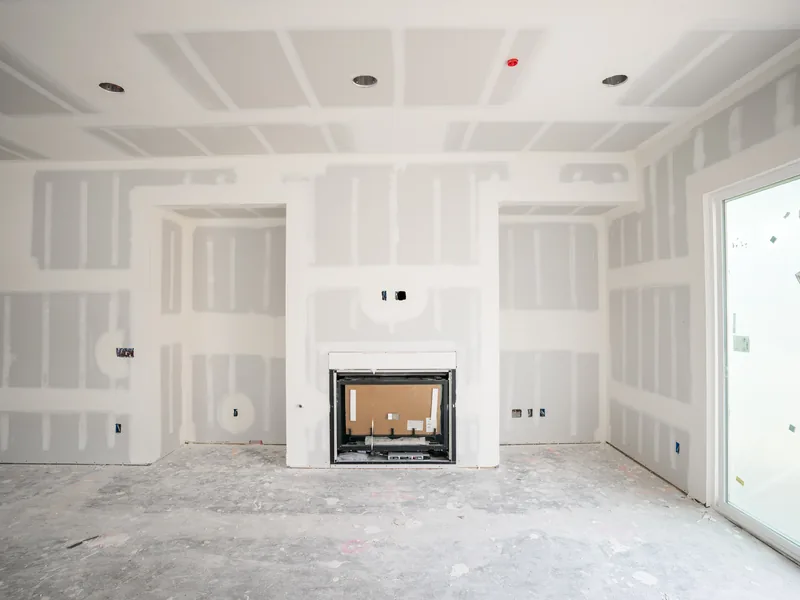
Popcorn Ceiling Removal Cost
Popcorn ceiling removal around Spring runs about $2.00 to $4.50 per square foot of ceiling, including both the scraping and the skim coat that follows, leaving a flat surface ready for paint. For a single 12-by-12 bedroom, that works out to about $290 to $650. Treat that as a market range rather than a quoted rate: your ceiling is priced on site, and the written estimate you approve is your actual price. The range reflects real differences in the work. Three conditions in your rooms move the popcorn ceiling removal cost within that range, the finish you choose affects it as well, and two additional costs fall outside it altogether.
Ceiling Area, and When It Is Not Your Floor Area
The ceiling removal price is based on the surface being scraped, not the size of your house. On a flat ceiling, that surface matches the room's footprint, so measuring the floor gives you the ceiling square footage in most rooms: a 12-by-12 bedroom has 144 square feet overhead. A vaulted or tray ceiling slopes, adding roughly 10 to 20 percent more surface above the same floor area at the 6:12 to 8:12 roof pitches common in this area.
Setup costs the same whether we scrape one ceiling or four, so a larger job costs less per square foot than several smaller visits. Scraping also comes before new flooring and before the walls are repainted, because the texture is cut back at the wall line.
Whether the Texture Has Been Painted
Painted texture takes substantially longer to remove because water cannot soften it. A painted popcorn ceiling cost therefore sits toward the upper end of the range, and it is one of the main reasons a price discussed over the phone changes after we inspect the ceiling.
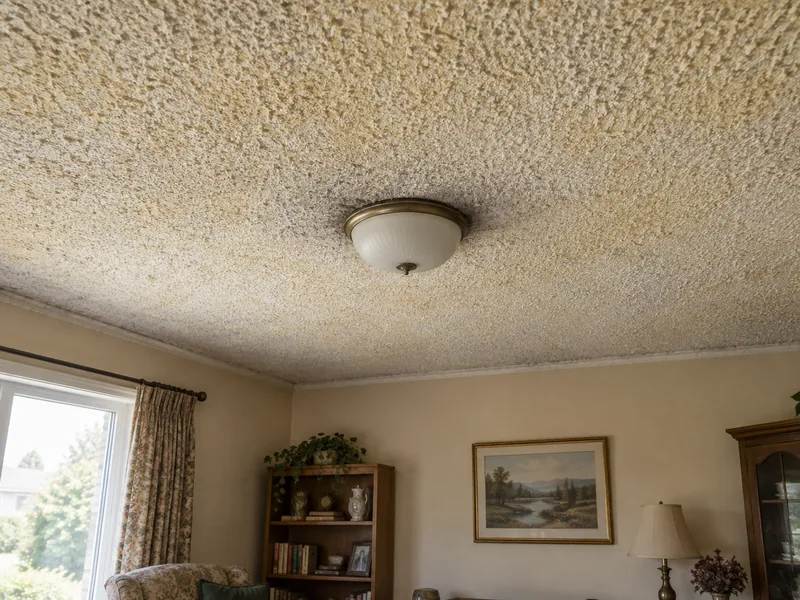
Ceiling Height and the Staging It Needs
A standard eight-foot ceiling needs no staging. Above that height, staging has to be built, moved and rebuilt as the work progresses across the room, adding labor before any texture is removed. A two-story entry is usually the most expensive ceiling in the house for that reason, with a vaulted living room close behind it.
High ceiling removal also needs a clear floor, so furniture has to be moved out or sealed in place. Anything you can remove from the room before we arrive reduces the price.
Asbestos Testing and Board Repairs
Two costs fall outside the square-foot range. The first is testing, which is billed by the professional who performs it rather than by us, and asbestos testing cost around Spring runs about $100 to $500 depending on how many rooms are sampled. On one small bedroom, that cost can rival the scraping itself. The second is the condition of the board above the texture: no ceiling repair cost can be set from the floor, so we show you what we find and price the repair before we touch it. Nothing is added to your invoice without your approval first. Call us at (936) 286-6045 or request your written estimate to have your ceilings measured and inspected.
The Popcorn Ceiling Removal Process, Start to Finish
The popcorn ceiling removal process follows a fixed order, and two of the five stages pause for your approval before we continue. Spring Drywall Co. handles the work in this sequence:
-
1
We come out, measure your ceilings and hand you a written estimate.
-
2
Where the ceiling calls for a test, the sample goes off and the start date waits on the result.
-
3
We seal the room, then take the texture down.
-
4
We walk the bare ceiling with you, price whatever it needs, and wait for your approval.
-
5
We build the surface back up with a skim coat, sand it and prime it.
Nothing is owed before the estimate, and the first visit is what gives you that price. If a sample is taken, the laboratory sets the timing, and we schedule the work once the result is back. The second point where the job pauses for your approval comes at step four.
Once the repairs are agreed, most of the schedule is taken up by the skim coats, drying time and sanding. The job finishes with a walk-through under your own lights, because those are the conditions you will see the ceiling under every day. Call us at (936) 286-6045 or request a written estimate to schedule the first visit.
Living With the Finished Ceiling
Once the furniture is back and you are using the room again, three changes are worth pointing out. The ceiling looks different from the one you were used to, it can finally be cleaned properly, and nobody can promise what a smooth ceiling will add to a sale. We do not put a figure on your home's value after popcorn ceiling removal because there is no reliable published number for it.
Light, Shadow and How the Ceiling Looks
Popcorn texture is made up of small peaks, and each one casts a shadow. Thousands of those shadows together are why the ceiling above you looks darker and busier than the paint on it really is. Remove the texture and the same paint on a flat surface looks lighter without changing the room's lighting. The tradeoff is that a flat ceiling hides nothing, so every ridge, hollow and old joint shows under low light. That is the argument for a careful skim coat rather than an argument against finishing flat.
Cleaning and Everyday Upkeep
Every crevice in a textured ceiling collects dust and cobwebs, and wiping it with a cloth catches on the peaks and pulls them loose, which is why textured ceilings are hard to clean properly. Ceiling cleaning on a finished flat surface is simply a matter of wiping it with a damp cloth on a pole. Smooth ceiling upkeep is easier for the same reason: a scuff or nail hole is filled, sanded and painted, and when the ceiling needs repainting you are matching paint rather than sprayed texture.
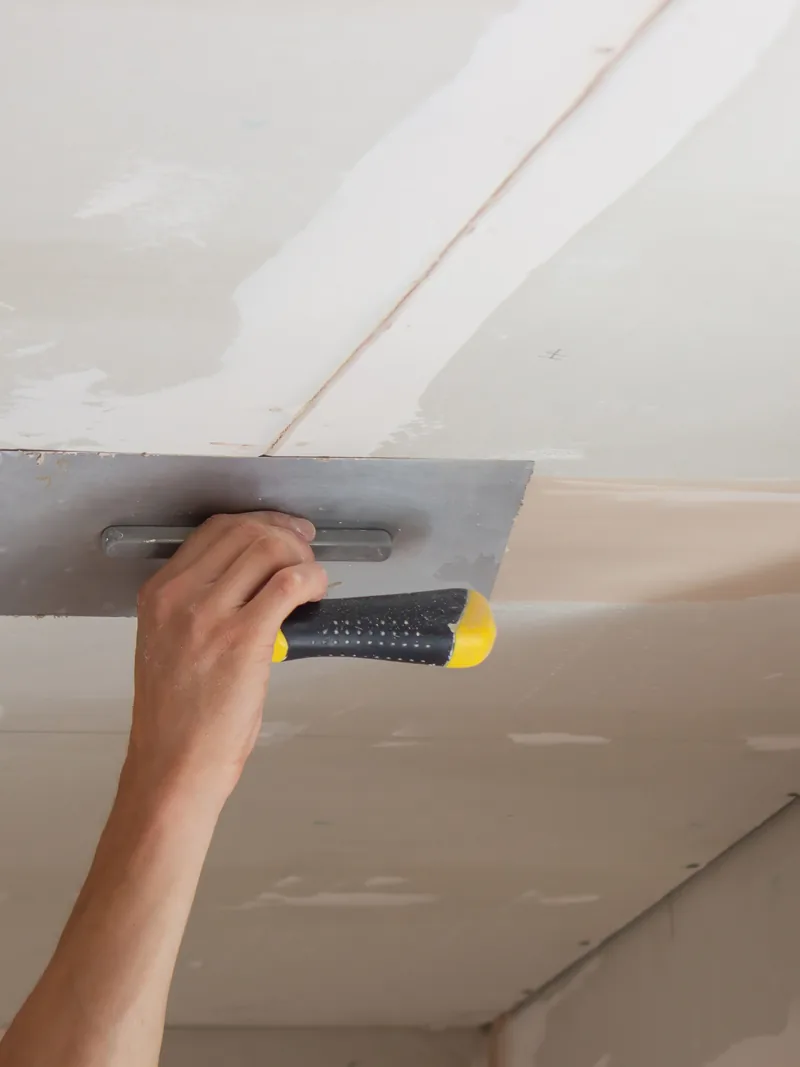
Permits and Debris on a Ceiling Scrape
Two questions come up on nearly every job once you decide to move ahead: whether the work needs a permit and where all the removed texture goes. Neither changes the price, and both are worth settling before the crew arrives.
Permitting in Unincorporated Spring
Spring is unincorporated, so there is no city building department; permitting falls to Harris County, or to Montgomery County near the county line. Routine drywall repair, replacement, and refinishing generally do not require a permit. For an address close to the county line, it is worth confirming which county has jurisdiction before a whole-house job begins. Scraping ceiling texture and refinishing the board underneath are routine drywall work, while replacing or altering lighting is separate work and follows its own requirements.
Where a House Worth of Texture Goes
Texture that has been wetted and scraped off is much heavier and bulkier than it looked on the ceiling because it holds the water it absorbed and piles up loose instead of lying flat. Even one bedroom ceiling fills more bags than most people expect from such a thin layer. All of that material leaves with the crew when the work is finished, so nothing is left bagged in your driveway waiting for collection day. That ceiling debris removal covers cleared material, which is the only kind we handle; anything that has not been cleared is outside our trade.
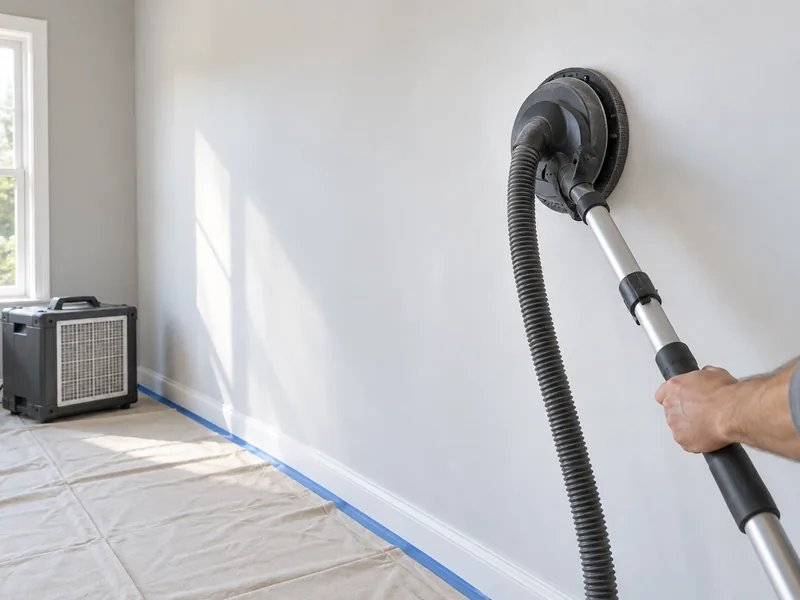
Popcorn Ceiling Removal Across Spring and the Surrounding Communities
Homes across Harris, Montgomery and Waller counties were built in the same periods and with the same methods, so the textured ceilings are put together much the same way from one county to the next. The humid air is the same across all three as well, and it lengthens the drying time between coats on a bare ceiling. We schedule work in all three counties from one place, so a ceiling in Tomball is handled on the same terms as one in Spring.
Wherever your home sits in that area, popcorn ceiling removal in Spring TX and the surrounding towns is handled by the same crew.
Where We Take Popcorn Ceilings Off
Spring Drywall Co. provides popcorn ceiling removal across Spring and the surrounding communities of north Harris and Montgomery counties, and west into Waller County:
- Tomball
- Klein
- Shenandoah
- Oak Ridge North
- Porter
- Humble
- Aldine
- Westfield
- Bammel
- Champion Forest
- Willowbrook
- Jersey Village
- Cypress
- Hockley
- Waller
- Magnolia
- Pinehurst
FAQ
Popcorn Ceiling Questions From Spring Homeowners
How much does it cost to remove popcorn ceiling?
Popcorn ceiling removal runs about $2.00 to $4.50 per square foot, which puts a 12-by-12 bedroom at roughly $290 to $650. Your written on-site estimate is the actual price for the work, while testing and any board repairs are priced separately.
Is it a good idea to remove a popcorn ceiling?
Worth doing if you want the room to look different, or a ceiling you can wipe clean. What it costs beyond money is the room for several days. Leave the texture alone and nothing goes wrong.
Is it better to remove popcorn from the ceiling or cover it?
Take the texture off where the ceiling underneath is sound and you can give up the room for a few days. Cover it where you cannot. Covering saves days, not money: the finishing costs the same either way.
Is it hard to sell a house with a popcorn ceiling?
No. Houses with textured ceilings still sell. Heavy texture affects how the ceiling looks to a buyer rather than whether the house sells at all, so treat it as something that changes how the home shows.
Will removing popcorn ceiling increase home value?
There is no published figure reliable enough to apply to your house, and the figures that do circulate vary widely, so we do not quote one. If you are selling, having the work done early and finished properly matters more.
What are the mistakes to avoid when removing popcorn ceiling?
Four mistakes cause most problems: soaking the ceiling instead of misting it, holding the blade too steep, patching instead of skimming the whole ceiling, and starting before the material is settled. The last one is the most costly.
What are people replacing popcorn ceilings with?
Most ceilings are finished as a flat surface to a named GA-214 level, while the rest receive a light knockdown texture. Most homeowners choose flat. Pick the finish level deliberately rather than letting it default.
Book a Popcorn Ceiling Removal Estimate
Before we price popcorn ceiling removal, we come to your house and inspect the ceilings room by room. Spring Drywall Co. then gives you a written estimate with each part of the work listed separately, including the finish level you chose. The on-site visit is free, and the written estimate sets out exactly what we are pricing at this stage. Call (936) 286-6045 or use our quote form for a clear, written price on your project.